


Wydawcy
Katalog tematyczny
- Archeologia (109)
- Ekonomia, finanse, business (13704)
- Filozofia (1445)
- Historia (3040)
- Języki i językoznawstwo (2356)
- Lifestyle, hobby i rozrywka (475)
- Medycyna (9704)
- Nauki humanistyczne (4)
- Nauki o Ziemi i środowisku (2638)
- Nauki ścisłe (20412)
- Astronomia (294)
- Biologia (5119)
- Chemia (6540)
- Chemia analityczna (361)
- Chemia fizyczna (346)
- Chemia nieorganiczna (137)
- Chemia organiczna (535)
- Krystalografia (27)
- Minerologia (46)
- Fizyka (3309)
- Matematyka (4574)
- Nauki ścisłe, ogólnie (503)
- Nauki społeczne (8486)
- Nauki techniczne (13450)
- Prawo (1696)
- Publikacje informacyjne i interdyscyplinarne (1288)
- Religia i wierzenia (917)
- Technika komputerowa (4067)
- Zdrowie, relacje międzyludzkie i rozwój osobisty (657)





Informacje szczegółowe o książce
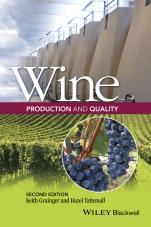
Wine Production and Quality
ISBN 9781118934555
Autor: Keith Grainger, Hazel Tattersall
Wydawca: Wiley
Dostępność: 3-6 tygodni
Cena: 414,75 zł
Przed złożeniem zamówienia prosimy o kontakt mailowy celem potwierdzenia ceny.
ISBN13: |
9781118934555 |
ISBN10: |
1118934555 |
Autor: |
Keith Grainger, Hazel Tattersall |
Oprawa: |
Hardback |
Rok Wydania: |
2016-03-04 |
Numer Wydania: |
2nd Edition |
Ilość stron: |
326 |
Wymiary: |
229x152 |
Tematy: |
PN |
Since the publication of Wine Production: Vine to Bottle (2005) and Wine Quality: Tasting and Selection (2009), there has been a great deal of change in the wine industry, and the perceptions of critics and expectations of consumers have shifted. Wine Production and Quality, Second Edition brings together its two predecessors in one updated and considerably expanded volume.
This comprehensive guide explores the techniques of wine production in the vineyard and winery, and considers their impact upon the taste, style and quality of wine in the bottle. Part 1 of the book provides a structured yet easily readable understanding of wine production, from vine to bottle. The impact of natural factors, including climate and soil, is considered, together with the decisions made and work undertaken in the vineyard and winery. Part 2 looks at quality in wines: the concepts and techniques of tasting are detailed, along with the challenges in recognising and assessing quality. Also discussed are the steps producers may take, and the limitations they may face, in creating quality wines.
The book will prove valuable to beverage industry professionals, wine trade students, wine merchants, sommeliers, restaurateurs , and wine lovers as well as those entering (or thinking of entering) the highly competitive world of wine production.
About the authors
Keith Grainger is a wine writer, educator and winemaker. His book Wine Quality Tasting and Selection won the Gourmand Award for Best Wine Education Book in the World 1995 –2014.
Hazel Tattersall is an experienced wine educator and consultant. She presents wine courses, seminars and tastings to wine trade professionals, societies and consumer groups.
Also Available from Wiley
Sweet, Reinforced and Fortified Wines: Grape Biochemistry, Technology and Vinification
Edited by Fabio Mencarelli and Pietro Tonutti
ISBN: 978–0–470–67224–2
Preface xv
Acknowledgements xvii
Part 1 Introduction to Part 1 Wine Production 1
Chapter 1 Viticulture the basics 5
1.1 The grape vine 5
1.2 Grape varieties 6
1.3 The structure of the grape berry 7
1.3.1 Stalks 7
1.3.2 Skins 8
1.3.3 Yeasts 9
1.3.4 Pulp 9
1.3.5 Pips 10
1.4 Crossings, hybrids, clonal and massal selection 10
1.4.1 Crossings 10
1.4.2 Hybrids 11
1.4.3 Clones and massal selection 11
1.5 Grafting 11
1.6 Phylloxera vastatrix 12
1.7 Rootstocks 13
1.8 The life of the vine 15
Chapter 2 Climate 16
2.1 World climate classifications 16
2.2 Climatic requirements of the grape vine 17
2.2.1 Sunshine 17
2.2.2 Warmth 17
2.2.3 Cold winter 17
2.2.4 Rainfall 18
2.3 Climatic enemies of the grape vine 18
2.3.1 Frost 18
2.3.2 Hail 19
2.3.3 Strong winds 20
2.3.4 Excessive heat 21
2.3.5 Drought 21
2.4 Mesoclimate and microclimate 22
2.4.1 Water 22
2.4.2 Altitude 22
2.4.3 Aspect 22
2.4.4 Woods and trees 23
2.5 The concept of degree days 23
2.6 Impact of climate 24
2.7 Weather 25
2.8 Climate Change 25
Chapter 3 Soil 28
3.1 Soil requirements of the grape vine 28
3.1.1 Good drainage 31
3.1.2 Fertility 31
3.1.3 Nutrients and minerals 31
3.2 Influence of soils upon wine style and quality 31
3.3 Soil types suitable for viticulture 32
3.3.1 Limestone 32
3.3.2 Chalk 32
3.3.3 Clay 32
3.3.4 Marl 32
3.3.5 Granite 33
3.3.6 Gravel 33
3.3.7 Greywacke 33
3.3.8 Sand 33
3.3.9 Schist 33
3.3.10 Slate 33
3.3.11 Basalt and other volcanic soils 34
3.4 Soil compatibility 34
3.5 Terroir 35
Chapter 4 The vineyard 36
4.1 Vineyard location and site selection 36
4.2 Density of planting of vines 37
4.3 Training systems 38
4.3.1 Main types of vine training 38
4.3.2 Other training systems 42
4.4 Pruning methods and canopy management 42
4.4.1 Pruning methods 45
4.4.2 Canopy management 45
4.5 Irrigation 45
4.6 The vineyard cycle and work in the vineyard 47
4.6.1 Winter 47
4.6.2 Spring 48
4.6.3 Summer 48
4.6.4 Autumn 49
4.7 Grape berry development 50
Chapter 5 Pests and diseases 51
5.1 Important vineyard pests 51
5.1.1 Insects, mites and worms 52
5.1.2 Animals and birds 53
5.2 Diseases 54
5.2.1 Fungal diseases 54
5.2.2 Bacterial diseases 56
5.2.3 Virus diseases 57
5.3 Prevention and treatments 58
Chapter 6 Environmentally sensitive vineyard practices 59
6.1 Conventional viticulture 59
6.2 IPM 60
6.3 Organic viticulture 61
6.4 Biodynamic viticulture 63
6.4.1 Rudolf Steiner 65
6.4.2 Biodynamic preparations 65
6.4.3 Certification 67
6.5 Natural wine 68
Chapter 7 The harvest 69
7.1 Grape ripeness and the timing of picking 69
7.2 Harvesting methods 70
7.2.1 Hand picking 70
7.2.2 Machine picking 72
7.3 Style and quality 74
Chapter 8 Vinification and winery design 75
8.1 Basic principles of vinification 75
8.2 Winery location and design 76
8.3 Winery equipment 78
8.3.1 Fermentation vats 78
Chapter 9 Red winemaking 82
9.1 Sorting, destemming and crushing 82
9.2 Must analysis 83
9.3 Must preparation 84
9.3.1 Sulfur dioxide (SO2) 84
9.3.2 Must enrichment (chaptalisation) 84
9.3.3 Acidification 85
9.3.4 De acidification 85
9.3.5 Yeast 85
9.3.6 Yeast nutrients 85
9.3.7 Tannin 86
9.4 Fermentation, temperature control and extraction 86
9.4.1 Fermentation 86
9.4.2 Temperature control 86
9.4.3 Extraction 87
9.4.4 Fermentation monitoring 88
9.5 Maceration 89
9.6 Racking 89
9.7 Pressing 89
9.8 Malolactic fermentation 90
9.9 Blending 90
9.10 Maturation 90
Chapter 10 Dry white winemaking 92
10.1 Crushing and pressing 92
10.1.1 Crushing 92
10.1.2 Pressing 93
10.2 Must preparation 93
10.3 Fermentation 93
10.4 MLF 94
10.5 Lees ageing 94
10.6 Maturation 95
Chapter 11 Red and white winemaking detailed processes 96
11.1 Must concentration 96
11.1.1 Must concentrators and reverse osmosis 96
11.1.2 Cryoextraction 98
11.2 Methods of extraction 98
11.2.1 Cold soaking (pre fermentation maceration) 98
11.2.2 Pump overs remontage 98
11.2.3 Rack and return (délestage) 99
11.2.4 Punching down pigeage 100
11.2.5 Rotary vinifiers 100
11.2.6 Thermo vinification heat extraction 100
11.2.7 Flash détente 100
11.2.8 Whole grape fermentation, carbonic and semi carbonic maceration 101
11.2.9 Fixing colour 101
11.2.10 Post fermentation maceration 101
11.3 Macro , micro and hyper oxygenation 101
11.3.1 Hyper oxygenation 102
11.3.2 Macro oxygenation 102
11.3.3 Micro oxygenation 103
11.4 Removal of excess alcohol 103
11.5 The choice of natural or cultured yeasts 103
11.6 De stemming 104
11.7 Fermenting high density musts to dryness 105
11.8 Wine presses and pressing 105
11.8.1 Continuous press 105
11.8.2 Batch press 106
11.8.3 Horizontal plate press 106
11.8.4 Horizontal pneumatic press 106
11.8.5 Vertical basket press 107
11.9 Technology and the return to tradition 109
Chapter 12 Barrel maturation and oak treatments 110
12.1 History of barrel usage 110
12.2 Oak and oaking 111
12.3 The influence of the barrel 111
12.3.1 Size of the barrel 112
12.3.2 Type and origin of oak (or other wood) 112
12.3.3 Manufacturing techniques including toasting 113
12.3.4 Stave thickness 113
12.3.5 Amount of time spent in barrel 113
12.3.6 Where barrels are stored 114
12.4 Oak treatments 115
Chapter 13 Preparing wine for bottling 116
13.1 Fining 116
13.2 Filtration 117
13.2.1 Traditional methods in common use 117
13.2.2 Sheet filtration (sometimes called plate filtration) 119
13.2.3 Membrane filtration and other methods of achieving biological stability 120
13.3 Stabilisation 121
13.4 Adjustment of sulfur dioxide levels 123
13.5 Choice of bottle closures 123
Chapter 14 Making other types of still wine 126
14.1 Medium sweet and sweet wines 126
14.1.1 Medium sweet wines 127
14.1.2 Sweet wines 127
14.2 Rosé wines 130
14.2.1 Blending 130
14.2.2 Skin contact 130
14.2.3 Saignée 131
14.3 Fortified (liqueur) wines 131
14.3.1 Sherry production 131
14.3.2 Port production 133
14.3.3 Other well known fortified wines 134
Chapter 15 Sparkling wines 136
15.1 Fermentation in a sealed tank 136
15.2 Second fermentation in bottle 137
15.3 Traditional method 138
15.3.1 Pressing 138
15.3.2 Débourbage 138
15.3.3 First fermentation 138
15.3.4 Assemblage 139
15.3.5 Addition of liqueur de tirage 139
15.3.6 Second fermentation 139
15.3.7 Maturation 139
15.3.8 Rémuage 140
15.3.9 Stacking sur pointes 141
15.3.10 Dégorgement 141
15.3.11 Dosage (liqueur d expedition) 142
15.3.12 Corking and finishing 142
15.4 Styles 142
Part 2 Introduction to part 2 wine quality 143
Chapter 16 wine Tasting 147
16.1 Wine tasting and laboratory analysis 148
16.2 What makes a good wine taster? 149
16.3 Where and when to taste suitable conditions 150
16.4 Appropriate equipment 151
16.4.1 Tasting glasses 151
16.4.2 Water 155
16.4.3 Spittoons 155
16.4.4 Tasting sheets 156
16.4.5 Use of tasting software 156
16.4.6 Tasting mats 157
16.5 Tasting order 158
16.6 Temperature of wines for tasting 159
16.7 Tasting for specific purposes 159
16.8 Structured tasting technique 160
16.8.1 Appearance 160
16.8.2 Nose 161
16.8.3 Palate 161
16.8.4 Conclusions 162
16.9 The importance of keeping notes 163
Chapter 17 Appearance 164
17.1 Clarity and brightness 164
17.2 Intensity 165
17.3 Colour 167
17.3.1 White wines 167
17.3.2 Rosé wines 167
17.3.3 Red wines 168
17.3.4 Rim/core 170
17.4 Other observations 171
17.4.1 Bubbles 171
17.4.2 Legs 172
17.4.3 Deposits 173
Chapter 18 Nose 175
18.1 Condition 176
18.2 Intensity 176
18.3 Development 176
18.3.1 Primary aromas 177
18.3.2 Secondary aromas 177
18.3.3 Tertiary aromas 177
18.4 Aroma characteristics 178
Chapter 19 Palate 181
19.1 Sweetness/bitterness/acidity/saltiness/umami 182
19.2 Dryness/sweetness 182
19.3 Acidity 184
19.4 Tannin 184
19.5 Alcohol 186
19.6 Body 187
19.7 Flavour intensity 187
19.8 Flavour characteristics 188
19.9 Other observations 188
19.10 Finish 191
Chapter 20 Tasting conclusions 192
20.1 Assessment of quality 192
20.1.1 Quality level 192
20.1.2 Reasons for assessment of quality 192
20.2 Assessment of readiness for drinking/potential for ageing 193
20.2.1 Level of readiness for drinking/potential for ageing 194
20.2.2 Reasons for assessment 195
20.3 The wine in context 195
20.3.1 Origins/variety/theme 195
20.3.2 Price category 195
20.4 Grading wine the award of points 196
20.4.1 Grading on a 20 point scale 197
20.4.2 Grading on a 100 point scale 197
20.5 Blind tasting 198
20.5.1 Why taste blind? 198
20.5.2 Blind or sighted? 199
20.5.3 Tasting for quality 199
20.5.4 Practicalities 199
20.5.5 Examination tastings 199
Chapter 21 Wine faults and flaws 201
21.1 Chloroanisoles and bromoanisoles 202
21.2 Fermentation in the bottle and bacterial spoilage 203
21.3 Protein haze 204
21.4 Oxidation 204
21.5 Excessive volatile acidity 205
21.6 Excessive sulfur dioxide 205
21.7 Reductivity 206
21.8 Brettanomyces 207
21.9 Dekkera 208
21.10 Geraniol 208
21.11 Geosmin 208
21.12 Ethyl acetate 208
21.13 Excessive acetaldehyde 209
21.14 Candida acetaldehyde 209
21.15 Smoke taint 209
Chapter 22 Quality assurances and guarantees 210
22.1 Compliance with PDO and PGI legislation as an assurance of quality? 210
22.1.1 The EU and third countries 210
22.1.2 PDO, PGI and wine 211
22.1.3 The concept of AOP (AC) 213
22.2 Tasting competitions and critical scores as an assessment of quality? 215
22.3 Classifications as an official assessment of quality? 216
22.4 ISO 9001 certification as an assurance of quality? 218
22.5 Established brands as a guarantee of quality? 219
22.6 Price as an indication of quality? 221
Chapter 23 The natural factors and a sense of place 223
23.1 Conceptual styles 223
23.2 Typicity and regionality 224
23.3 The impact of climate upon quality wine production 225
23.4 The role of soils 226
23.5 Terroir 226
23.6 The Vintage factor 231
Chapter 24 Constraints upon quality wine production 233
24.1 Financial 233
24.1.1 Financial constraints upon the grower 234
24.1.2 Financial constraints upon the winemaker 236
24.2 Skills and diligence 238
24.3 Legal 240
24.4 Environmental 240
Chapter 25 Production of quality wines 242
25.1 Yield in vineyard 242
25.2 Density of planting 243
25.3 Age of vines 244
25.4 Winter pruning and vine balance 245
25.5 Stressing the vines, vine and nutrient balance. 246
25.6 Green harvesting 248
25.7 Harvesting 248
25.7.1 Mechanical harvesting 249
25.7.2 Hand picking 249
25.8 Delivery of fruit 250
25.9 Selection and sorting 250
25.10 Use of pumps/gravity 251
25.11 Control of fermentations and choice of fermentation vessel 254
25.12 Use of gases 256
25.13 Barrels 257
25.14 Selection from vats or barrels 258
25.15 Storage 259
Chapter 26 Selection by buyers 260
26.1 Supermarket dominance 262
26.2 Price point/margin 263
26.3 Selecting wines for market and customer base 264
26.4 Styles and individuality 264
26.5 Continuity 265
26.6 The place of individual wines in the range 267
26.7 Exclusivity 267
26.8 Specification 267
26.9 Technical analysis 268
Appendix WSET Diploma Systematic Approach to Tasting Wine® 271
Glossary 273
Bibliography 285
Useful websites 288
Wine and vineyard & winery equipment exhibitions 291
Index 000
Koszyk
Książek w koszyku: 0 szt.
Wartość zakupów: 0,00 zł
Informacje


Kontakt
Gambit
Centrum Oprogramowania
i Szkoleń Sp. z o.o.
Al. Pokoju 29b/22-24
31-564 Kraków
Siedziba Księgarni
ul. Kordylewskiego 1
31-542 Kraków
+48 12 410 5991
+48 12 410 5987
+48 12 410 5989
Subskrypcje
Administratorem danych osobowych jest firma Gambit COiS Sp. z o.o. Na podany adres będzie wysyłany wyłącznie biuletyn informacyjny.
Autoryzacja płatności

Informacje na temat autoryzacji płatności poprzez PayU.

© Copyright 2012: GAMBIT COiS Sp. z o.o. Wszelkie prawa zastrzeżone.
Projekt i wykonanie: Alchemia Studio Reklamy