


Wydawcy
Katalog tematyczny
- Archeologia (109)
- Ekonomia, finanse, business (13704)
- Filozofia (1445)
- Historia (3040)
- Języki i językoznawstwo (2356)
- Lifestyle, hobby i rozrywka (475)
- Medycyna (9704)
- Nauki humanistyczne (4)
- Nauki o Ziemi i środowisku (2638)
- Nauki ścisłe (20412)
- Nauki społeczne (8486)
- Nauki techniczne (13450)
- Prawo (1696)
- Publikacje informacyjne i interdyscyplinarne (1288)
- Religia i wierzenia (917)
- Technika komputerowa (4067)
- Zdrowie, relacje międzyludzkie i rozwój osobisty (657)





Informacje szczegółowe o książce
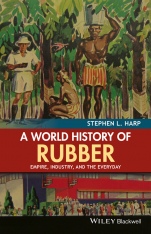
A World History of Rubber: Empire, Industry, and the Everyday
ISBN 9781118934227
Autor: Stephen L. Harp
Wydawca: Wiley
Dostępność: 3-6 tygodni
Cena: 151,20 zł
Przed złożeniem zamówienia prosimy o kontakt mailowy celem potwierdzenia ceny.
ISBN13: |
9781118934227 |
ISBN10: |
1118934229 |
Autor: |
Stephen L. Harp |
Oprawa: |
Paperback |
Rok Wydania: |
2015-12-11 |
Ilość stron: |
212 |
Wymiary: |
217x139 |
Tematy: |
HBG |
A World History of Rubber helps readers understand and form new insights into the social and cultural contexts of global production and consumption from the nineteenth century to the present. Stephen Harp uses rubber as a lens through which readers can view many key themes and events of the nineteenth and twentieth centuries, including imperialism, industrialization, racism, and inequality.
The book illuminates the complex journey of rubber from plantations in far–flung European colonies, to factories in Midwest America, to products in American homes and abroad. It is divided into five thematic sections: race, migration, and labor; gender on plantations and in factories; demand and everyday consumption; World Wars and nationalism; and resistance and independence. The story highlights the interrelatedness of our world long before the current era of globalization, as well as the global social inequalities that persist today. With an engaging and accessible narrative that will resonate with students of all levels as well as general readers, this account of a single commodity skillfully ties together the history of many people, places, and ideas the whole world over.
Acknowledgments ix
Timeline xi
Global Rubber and Tire Companies xvii
Introduction: Why Rubber? 1
Global Connections 8
1 Race, Migration, and Labor 10
Wild Rubber and Early Industry 11
Wild Rubber and Empire 14
Plantations Progress: Rationality and Efficiency 17
Plantation Hierarchies 21
Race and Industry in the United States and Europe 29
2 Women and Gender on Plantations and in Factories 40
Gendering the Jungle and the Plantation 42
Asian Women on Plantations 44
European Women and Racism 48
The Colonizing Woman 50
Gendered Production in the United States and Europe 52
Rubber and Sex in Indochine 56
3 Demand and Everyday Consumption 61
Everyday Consumption on Southeast Asian Plantations 62
Class and Consumption in North America and Europe 64
Race and Consumption in Europe and North America 68
Gender and Consumption in Europe and North America 71
Gendering Reproduction 77
4 World Wars, Nationalism, and Imperialism 83
World War I 84
See America First on Good Roads 86
Flying for the Nation 88
Restricting Rubber in the Wake of War 90
American Assertions: Herbert Hoover and US Trade 91
Firestone and Friends 94
Firestone in Liberia 96
Germany: Colonies and Chemicals 99
World War II and the US Scramble for Rubber 102
Nazi Racism and Buna at Auschwitz 105
Imperialism and Nationalism in the Wake of World War II 107
5 Resistance and Independence 111
Plantations and Resistance 112
Global Economic Crisis and Plantation Labor 118
Success of the Smallholders 120
Plantations under the Japanese 124
Independence and Decolonization 126
United Rubber Workers 131
Conclusion: Forgetting and Remembering Rubber 137
Suggested Readings 142
Index 157
Stephen L. Harp is Professor of History, Professor of French, and Director of Humanities at the University of Akron, USA. He is a social and cultural historian focused on transnational European and world history. He is the author of Au Naturel: Naturism, Nudism, and European Tourism in Twentieth–Century France (2014), Marketing Michelin: Advertising and Cultural Identity in Twentieth–Century France (2001), and Learning to Be Loyal: Primary Schooling as Nation Building in Alsace and Lorraine, 1850–1940 (1998). He resides in Akron, Ohio, the former global rubber capital.
Koszyk
Książek w koszyku: 0 szt.
Wartość zakupów: 0,00 zł
Informacje


Kontakt
Gambit
Centrum Oprogramowania
i Szkoleń Sp. z o.o.
Al. Pokoju 29b/22-24
31-564 Kraków
Siedziba Księgarni
ul. Kordylewskiego 1
31-542 Kraków
+48 12 410 5991
+48 12 410 5987
+48 12 410 5989
Subskrypcje
Administratorem danych osobowych jest firma Gambit COiS Sp. z o.o. Na podany adres będzie wysyłany wyłącznie biuletyn informacyjny.
Autoryzacja płatności

Informacje na temat autoryzacji płatności poprzez PayU.

© Copyright 2012: GAMBIT COiS Sp. z o.o. Wszelkie prawa zastrzeżone.
Projekt i wykonanie: Alchemia Studio Reklamy