


Wydawcy
Katalog tematyczny
- Archeologia (109)
- Ekonomia, finanse, business (13704)
- Filozofia (1445)
- Historia (3040)
- Języki i językoznawstwo (2356)
- Lifestyle, hobby i rozrywka (475)
- Medycyna (9704)
- Nauki humanistyczne (4)
- Nauki o Ziemi i środowisku (2638)
- Nauki ścisłe (20412)
- Nauki społeczne (8486)
- Nauki techniczne (13450)
- Prawo (1696)
- Publikacje informacyjne i interdyscyplinarne (1288)
- Religia i wierzenia (917)
- Technika komputerowa (4067)
- Zdrowie, relacje międzyludzkie i rozwój osobisty (657)








Informacje szczegółowe o książce
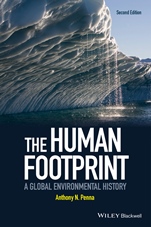
The Human Footprint: A Global Environmental History
ISBN 9781118912461
Autor: Anthony N. Penna
Wydawca: Wiley
Dostępność: 3-6 tygodni
Cena: 246,75 zł
Przed złożeniem zamówienia prosimy o kontakt mailowy celem potwierdzenia ceny.
ISBN13: |
9781118912461 |
ISBN10: |
1118912462 |
Autor: |
Anthony N. Penna |
Oprawa: |
Paperback |
Rok Wydania: |
2014-12-19 |
Numer Wydania: |
2nd Edition |
Ilość stron: |
384 |
Wymiary: |
228x161 |
Tematy: |
HBG |
Updated to reflect the most recent research, the second edition of The Human Footprint expands upon Anthony N. Penna’s multidisciplinary global history of Earth from its beginnings to the present day. While initial chapters focus on “big history,” placing human history within a cosmic framework, succeeding chapters reveal the great natural and human transformations that have shaped civilization over millennia. Utilizing the most up–to–date research from geologists, anthropologists, archaeologists, economists, historians, and others, individual chapters expand upon single topics within broader themes relating to Earth’s history and human origins; mass migrations and the rise of agriculture; nutrition and population growth and the rise of cities, manufacturing, and industry; world trade, mass consumption, and new world ecology; modes of energy use, and more. New research into the world’s warming climate serves to reinforce the fragile nature of world/human history interdependencies. Timely and essential, The Human Footprint provides illuminating insights into the future of our planet by revealing the interconnectedness of humans and nature throughout our past.
List of Figures Acknowledgments Introduction The Nature of World History The Nature of Big History The Nature of World Environmental History Earth History and Human Origins Mass Migrations and the Rise of Agriculture Population Growth and the Rise of Cities Cities and the Rise of Manufacturing and Industry World Trade and New World Ecology Fossil Fuels and Climate Change 1 An Evolving Earth Introduction The Origins of the Earth and Its Unique Atmosphere: From Hot to Cold Planet Icehouse Planet/Greenhouse Planet Plate Tectonics, Super–Continents, and Climate Change The Warming The Cooling The Elevation of the Tibetan Plateau and Its Effect on the Global Climate The Birth, Death, and Rebirth of the Mediterranean Sea and its Hemispheric Environmental Effects The Impact of the Isthmus of Panama on Global Climate Change The Mid–Pliocene, Glacial and Interglacial Cycles, and "Modern" Times 2 Evolving Humanity Introduction Climatic Changes and Evolution Another Effect of the Closing of the Mediterranean Sea Human Ancestry The Birth of Human Intelligence Early Diets and Their Nutritional Value Translating Human Intelligence into Action Tectonic Upheavals, Changing Landscapes and Climate Population Migration and Expansion Homo neanderthalensis vs. Homo sapiens The Broad Spectrum – an Economic Revolution 3 Foraging, Cultivating, and Food Production Introduction Early Farming and a Warming Climate Settlement and Domestication Early Agricultural Communities Early Agriculture in China Early Agriculture in Africa Early Agriculture in Mesoamerica Early Agriculture in Europe World Agriculture During the Age of Manufacture and Industry The First Green Revolution The Second Green Revolution Agro–business, Food Prices and Climate Change 4 Populating the Earth: Diet, Domestication, and Disease Introduction A Modern Demographic Scenario The Role of Disease in Calculating Population Size The Impact of Migration and Settlement on Global Population Growth The Role of Nutrition in Early Population Growth The Role of Animal Domestication in the Spread of Infectious Disease Nutrition, Climate Change, and Population A Population Bomb or Not? 5 The Making of an Urban World Introduction What Does Urban Mean? Early Urbanization and Its Environmental Effects Ancient Urbanization The Origin of Writing The Impact of Changing Rivers on Environmental Quality Urbanization in the Indus Valley China′s Early Cities Ancient Mesoamerican Cities Early European Cities 6 Mining, Making, and Manufacturing Introduction The Age of Copper and Bronze The Effects of Ancient Mining on Human Health and the Environment Mining in the Roman World The Age of Iron Iron Making in China and India Iron Making in pre–Modern Europe Manufacturing in West Africa 1350–1800 Manufacturing in Colonial America Manufacturing in the Modern World 7 Industrial Work Introduction China and India’s Economy European Hegemony and British Industrialization Economic Developments in China, Japan, and India Harnessing the Power of Water Disease, Death and a Public Health Response The Power of Steam The Role of Invention and Innovation Comparing Industrialization in the United States and in Britain Coal, Iron, and Steel Industrial Transformation and Global Auto Mobility 8 Trade and Consumption Introduction Global Trading Networks Distancing Consumers from Producers Material Goods Luxury Foods Become Commodities Tobacco Sugar Coffee and Tea Environmental Effects of Increased Cultivation of Coffee Conspicuous Consumption Global Consumption The Automobile and Electronics in Emerging Markets 9 Fossil Fuels, Wind, Water, Nuclear and Solar Energy Introduction The Eotechnic World: Waterwheels and Windmills The Paleotechnic World: Energy from Coal The Neotechnic World: Energy from Oil The Developing World’s Demands for Energy The Case for Natural Gas: A Neotechnic Energy Solution The Case for Nuclear Energy: Another Neotechnic Solution The Case for Renewable Wind and Solar Power: A Return to the Eotechnic 10 A Warming Climate Introduction The Rise and Fall of the Mayan Civilization The Medieval Warm Period (1000–1300 ce) and Little Ice Age (1300–1850 ce) Current Global Climate Conditions The Role of Solar Energy The Role of the Atlantic Circulation Energy Exchange The Role of Fossil Fuel Emissions What Is to Be Done? Epilogue Notes Index
Anthony N. Penna is Professor Emeritus of History, Northeastern University. His books include Nature’s Bounty: Historical and Modern Environmental Perspectives (1999), Remaking Boston: An Environmental History of the City and Its Surroundings (co–editor, 2009), and Natural Disasters in a Global Environment (co–author; Wiley, 2013).
Koszyk
Książek w koszyku: 0 szt.
Wartość zakupów: 0,00 zł
Informacje


Kontakt
Gambit
Centrum Oprogramowania
i Szkoleń Sp. z o.o.
Al. Pokoju 29b/22-24
31-564 Kraków
Siedziba Księgarni
ul. Kordylewskiego 1
31-542 Kraków
+48 12 410 5991
+48 12 410 5987
+48 12 410 5989
Subskrypcje
Administratorem danych osobowych jest firma Gambit COiS Sp. z o.o. Na podany adres będzie wysyłany wyłącznie biuletyn informacyjny.
Autoryzacja płatności

Informacje na temat autoryzacji płatności poprzez PayU.

© Copyright 2012: GAMBIT COiS Sp. z o.o. Wszelkie prawa zastrzeżone.
Projekt i wykonanie: Alchemia Studio Reklamy