


Wydawcy
Katalog tematyczny
- Archeologia (109)
- Ekonomia, finanse, business (13704)
- Filozofia (1445)
- Historia (3040)
- Języki i językoznawstwo (2356)
- Lifestyle, hobby i rozrywka (475)
- Medycyna (9704)
- Nauki humanistyczne (4)
- Nauki o Ziemi i środowisku (2638)
- Nauki ścisłe (20412)
- Nauki społeczne (8486)
- Edukacja (229)
- Kryminologia, opieka spełeczna (284)
- Obronność (10)
- Polityka (1389)
- Psychologia (777)
- Socjologia (410)
- Społeczeństwo i kultura (187)
- Nauki techniczne (13450)
- Prawo (1696)
- Publikacje informacyjne i interdyscyplinarne (1288)
- Religia i wierzenia (917)
- Technika komputerowa (4067)
- Zdrowie, relacje międzyludzkie i rozwój osobisty (657)





Informacje szczegółowe o książce
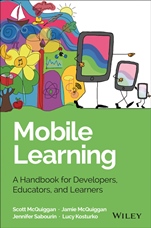
Mobile Learning: A Handbook for Developers, Educators, and Learners
ISBN 9781118894309
Autor: Scott McQuiggan, Jamie McQuiggan, Jennifer Sabourin, Lucy Kosturko
Wydawca: Wiley
Dostępność: 3-6 tygodni
Cena: 233,10 zł
Przed złożeniem zamówienia prosimy o kontakt mailowy celem potwierdzenia ceny.
ISBN13: |
9781118894309 |
ISBN10: |
1118894308 |
Autor: |
Scott McQuiggan, Jamie McQuiggan, Jennifer Sabourin, Lucy Kosturko |
Oprawa: |
Hardback |
Rok Wydania: |
2015-04-24 |
Ilość stron: |
400 |
Wymiary: |
239x164 |
Tematy: |
JN |
A Handbook for Improving Education by Delivering on the Promise of Mobile Learning
For educators and developers alike, mobile technologies represent a significant source of untapped potential. The authors of Mobile Learning have taken on the important task of creating alignment among teachers, developers, and learners, helping you contribute to the next phase in both classroom and informal education. In this book, you′ll learn how the science of learning can guide you in the goal of supporting learning with educational apps designed for tablets.
Mobile Learning serves as a guide to every step in the process of building transformative mobile learning from development business models, design principles, and best practices to logistical guidance for the safe, effective, and responsible use of mobile apps in the classroom. Resources like The Great App Checklist will help you determine whether apps meet the needs of your audience, whether you′re developing the apps yourself or using them with students. Mobile Learning is the only book to bring the goals of educators and developers into alignment for the good of students.
The research–based ideas in Mobile Learning frame the issue of technology in the classroom in a uniquely balanced and effective way. Read this book to learn just how far–reaching the potential of educational apps are, particularly for preschool and special populations. If today′s students are to succeed in the marketplace after graduation, educators must address higher–order thinking skills and digital literacy. In Mobile Learning, you′ll discover how teachers and developers can work together to meet the most urgent educational needs of our time.
Preface ix
Acknowledgments xiii
Chapter 1 Changing Education with Mobile Learning 1
A Brief History of Educational Technology: What Will Revolutionize the System? 3
Mobile Learning: Reaching Kids Today 6
What Is Mobile Learning? 8
Benefits and Challenges of Mobile Learning 9
How to Make Mobile Learning Work 16
Conclusion 19
Notes 20
Section 1 The Mobile Classroom 23
Chapter 2 The Science of Learning 25
Introduction 25
Information Processing and Learning 27
Other Critical Facets of Learning 33
Implications for Mobile Learning 37
Conclusion 45
Notes 46
Chapter 3 What Is It About These Devices? 49
Connected 50
Aware 52
Multimodal 55
Familiar 56
Personal 57
Comprehensive 59
Consolidated 60
Portable 61
Relevant 62
Secure 63
Conclusion 64
Notes 64
Chapter 4 Creating the Mobile Classroom 67
Theoretical Foundations 68
Instructional Methods 70
Problem–Based, Inquiry–Based, and Experiential Learning 77
Alternative Learning Environments 78
Conclusion 82
Notes 82
Chapter 5 Higher–Order Thinking Skills and Digital Fluency 85
Higher–Order Thinking Skills 88
Leveraging Mobile Learning 93
Critical Thinking 104
Classrooms for Higher–Order Thinking 107
Conclusion 109
Notes 110
Chapter 6 Instructional Management and Levels of Technology Access 115
Mobile Learning Programs 117
Levels of Access in the Mobile Classroom 122
1:Teacher 123
1:Many 125
1:1 128
Bring Your Own Device (BYOD) 132
Conclusion 137
Notes 137
Section 2 Creating the Mobile Learning Experience 141
Chapter 7 Mobile Technology s Defining Features 143
Hardware 144
Software 149
Accessories 156
Conclusion 159
Notes 160
Chapter 8 The Educational App Development Process 161
Research Stage: Is It a Good Idea? 162
Building the Right Team: Capturing a Variety of Expertise 164
Building the App 169
Case Study: App Development at SAS
Curriculum Pathways 175
Conclusion 177
Notes 177
Chapter 9 Design and User Experience 179
Designing a Great App: Make It Easy 179
Putting Great Design to Work 187
Conclusion 191
Notes 192
Chapter 10 Data, Evaluation, and Learning Analytics 195
Asking the Questions 196
Gathering Data 200
Sample Data Collection 206
Mobile Data Analytics: Turning Data into Information 209
Conclusion 212
Notes 213
Chapter 11 The Business of Educational Apps 215
The Educational App Market Is 215
How to Sell Your App: Pricing Models 222
How Users Buy Your App 228
Marketing 230
Conclusion 233
Notes 233
Section 3 Mobile Learning for Everyone 237
Chapter 12 Informal Learning 239
Developing Lifelong Learners 240
Bridging Formal and Informal Learning 241
Conclusion 251
Notes 252
Chapter 13 Engaging Young Users: Apps for Preschoolers 255
Key Skills for Preschool Apps 256
What Makes an Engaging Preschool App? 264
Challenges 270
Conclusion 276
Notes 277
Chapter 14 Making Accessible Apps: Autism and Visual Impairment 281
Introduction 281
Advantages of the iPad for Special Populations 281
Autism and Autism Spectrum Disorders (ASD) 285
Visual Impairment 291
Developing Accessible Apps 297
Conclusion 300
Notes 301
Chapter 15 Balancing Power: Data Use, Privacy, and Digital Citizenship 305
Privacy 306
Privacy Legislation 311
Open Issues 312
Digital Citizenship: Teaching Responsible Use 318
Conclusion 321
Notes 322
Chapter 16 Mobile Learning Today and Tomorrow 325
Introduction 325
Making Mobile Learning Work 326
The Future 333
Conclusion 338
Notes 339
Appendix A List of Apps by Chapter 341
Appendix B The Great App Checklist 359
How to Use This Checklist 360
The Great App Checklist 361
Notes 363
About the Authors 365
Index 367
SCOTT MCQUIGGAN leads SAS Curriculum Pathways, an interdisciplinary team focused on the development of no–cost educational software. He developed his first app, SAS Flash Cards, in 2010.
LUCY KOSTURKO is a research scientist and curriculum specialist for SAS Curriculum Pathways. Kosturko′s research interests include self–regulated learning and educational technologies.
JAMIE MCQUIGGAN is a writer for SAS Institute Inc. She coauthored Implement, Improve and Expand your Statewide Longitudinal Data System: Creating a Culture of Data in Education.
JENNIFER SABOURIN is a research scientist and a software developer at SAS Institute Inc. Her research focuses on educational technologies and data analytics.
Koszyk
Książek w koszyku: 0 szt.
Wartość zakupów: 0,00 zł
Informacje


Kontakt
Gambit
Centrum Oprogramowania
i Szkoleń Sp. z o.o.
Al. Pokoju 29b/22-24
31-564 Kraków
Siedziba Księgarni
ul. Kordylewskiego 1
31-542 Kraków
+48 12 410 5991
+48 12 410 5987
+48 12 410 5989
Subskrypcje
Administratorem danych osobowych jest firma Gambit COiS Sp. z o.o. Na podany adres będzie wysyłany wyłącznie biuletyn informacyjny.
Autoryzacja płatności

Informacje na temat autoryzacji płatności poprzez PayU.

© Copyright 2012: GAMBIT COiS Sp. z o.o. Wszelkie prawa zastrzeżone.
Projekt i wykonanie: Alchemia Studio Reklamy