


Wydawcy
Katalog tematyczny
- Archeologia (109)
- Ekonomia, finanse, business (13704)
- Filozofia (1445)
- Historia (3040)
- Języki i językoznawstwo (2356)
- Lifestyle, hobby i rozrywka (475)
- Medycyna (9704)
- Nauki humanistyczne (4)
- Nauki o Ziemi i środowisku (2638)
- Nauki ścisłe (20412)
- Astronomia (294)
- Biologia (5119)
- Biochemia (575)
- Biologia człowieka (14)
- Biologia komórkowa (377)
- Biologia molekularna (398)
- Biologia rozwoju (130)
- Biologia, ogólnie (1277)
- Botanika (280)
- Hydrobiologia (92)
- Mikrobiologia (363)
- Mykologia (22)
- Zoologia (303)
- Chemia (6540)
- Fizyka (3309)
- Matematyka (4574)
- Nauki ścisłe, ogólnie (503)
- Nauki społeczne (8486)
- Nauki techniczne (13450)
- Prawo (1696)
- Publikacje informacyjne i interdyscyplinarne (1288)
- Religia i wierzenia (917)
- Technika komputerowa (4067)
- Zdrowie, relacje międzyludzkie i rozwój osobisty (657)





Informacje szczegółowe o książce
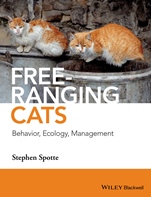
Free–ranging Cats: Behavior, Ecology, Management
ISBN 9781118884010
Autor: Stephen Spotte
Wydawca: Wiley
Dostępność: 3-6 tygodni
Cena: 397,95 zł
Przed złożeniem zamówienia prosimy o kontakt mailowy celem potwierdzenia ceny.
ISBN13: |
9781118884010 |
ISBN10: |
1118884019 |
Autor: |
Stephen Spotte |
Oprawa: |
Hardback |
Rok Wydania: |
2014-09-19 |
Ilość stron: |
320 |
Wymiary: |
249x192 |
Tematy: |
PS |
Feral and stray domestic cats occupy many different habitats. They can resist dehydration for months by relying exclusively on the tissue water of their prey allowing them to colonize remote deserts and other inhospitable places. They thrive and reproduce in humid equatorial rainforests and windswept subantarctic islands. In many areas of the world feral cats have driven some species of birds and mammals to extinction and others to the edge, becoming a huge conservation concern. With the control of feral and stray cats now a top conservation priority, biologists are intensifying efforts to understand cat behaviour, reproductive biology, use of space, intraspecies interaction, dietary requirements, prey preferences, and vulnerability to different management strategies. This book provides the most comprehensive review yet published on the behavior, ecology and management of free–ranging domestic cats, whether they be owned, stray, or feral. It reviews management methods and their progress, and questions several widely accepted views of free–ranging cats, notably that they live within dominance hierarchies and are highly social. Insightful and objective, this book includes: a functional approach, emphasizing sensory biology, reproductive physiology, nutrition, and space partitioning; clear treatment of how free–ranging cats should be managed; extensive critical interpretation of the world’s existing literature; results of studies of cats in laboratories under controlled conditions, with data that can also be applied to pet cats. Free–ranging Cats: Behavior, Ecology, Management is valuable to ecologists, conservation scientists, animal behaviorists, wildlife nutritionists, wildlife biologists, research and wildlife veterinarians, clinical veterinarians, mammalogists, and park and game reserve planners and administrators.
Preface List of Abbreviations Chapter 1 Dominance 1.1 Dominance defined 1.2 Dominance status and dominance hierarchies 1.3 Dominant–submissive behavior 1.4 Dominance in free–ranging cats Chapter 2 Space 2.1 Space defined 2.2 Diel activity 2.3 Dispersal 2.4 Inbreeding avoidance 2.5 Home–range boundaries 2.6 Determinants of home–range size 2.7 Habitat selection 2.8 Scent–marking Chapter 3 Interaction 3.1 The asocial cat 3.2 Solitary or social? 3.3 Cooperative or not? 3.4 The kinship dilemma 3.5 What it takes to be social Chapter 4 Reproduction 4.1 Female reproductive biology 4.2 Male reproductive biology 4.3 The cat mating system: promiscuity or polygyny? 4.4 Female mating behavior 4.5 Male mating behavior 4.6 Female choice Chapter 5 Development 5.1 Intrauterine development 5.2 Dens 5.3 Parturition 5.4 Early maturation 5.5 Nursing 5.6 Weaning 5.7 Survival 5.8 Effect of early weaning 5.9 Early predatory behavior Chapter 6 Emulative Learning and Play 6.1 Emulative learning 6.2 Play 6.3 Ontogenesis of play 6.4 What is play? Chapter 7 Nutrition 7.1 Proximate composition 7.2 Proteins 7.3 Fats 7.4 Carbohydrates 7.5 Fiber 7.6 Vitamins Chapter 8 Water Balance and Energy 8.1 Water balance 8.2 Energy 8.3 Energy needs of free–ranging cats 8.4 Energy costs of pregnancy and lactation 8.5 Obesity Chapter 9 Foraging 9.1 Cats as predators 9.2 Scavenging 9.3 When cats hunt 9.4 Food intake of feral cats 9.5 How cats detect prey 9.6 How cats hunt 9.7 What cats hunt 9.8 Prey selection 9.9 Motivation to hunt Chapter 10 Management 10.1 Effect of free–ranging cats on wildlife 10.2 Trap–neuter–release (TNR) 10.3 Biological control 10.4 Poisoning and other eradication methods 10.5 Integrated control 10.6 Preparation for eradication programs 10.7 “Secondary” prey management References Index
Dr Stephen Spotte is a marine scientist and an adjunt scientist at Mote Marine Laboratory (Sarasota, Florida). He is an author or co–author of more than 80 scientific papers and has written 18 books.
Koszyk
Książek w koszyku: 0 szt.
Wartość zakupów: 0,00 zł
Informacje


Kontakt
Gambit
Centrum Oprogramowania
i Szkoleń Sp. z o.o.
Al. Pokoju 29b/22-24
31-564 Kraków
Siedziba Księgarni
ul. Kordylewskiego 1
31-542 Kraków
+48 12 410 5991
+48 12 410 5987
+48 12 410 5989
Subskrypcje
Administratorem danych osobowych jest firma Gambit COiS Sp. z o.o. Na podany adres będzie wysyłany wyłącznie biuletyn informacyjny.
Autoryzacja płatności

Informacje na temat autoryzacji płatności poprzez PayU.

© Copyright 2012: GAMBIT COiS Sp. z o.o. Wszelkie prawa zastrzeżone.
Projekt i wykonanie: Alchemia Studio Reklamy