


Wydawcy
Katalog tematyczny
- Archeologia (109)
- Ekonomia, finanse, business (13704)
- Filozofia (1445)
- Historia (3040)
- Języki i językoznawstwo (2356)
- Lifestyle, hobby i rozrywka (475)
- Medycyna (9704)
- Nauki humanistyczne (4)
- Nauki o Ziemi i środowisku (2638)
- Nauki ścisłe (20412)
- Nauki społeczne (8486)
- Edukacja (229)
- Kryminologia, opieka spełeczna (284)
- Obronność (10)
- Polityka (1389)
- Psychologia (777)
- Socjologia (410)
- Społeczeństwo i kultura (187)
- Nauki techniczne (13450)
- Prawo (1696)
- Publikacje informacyjne i interdyscyplinarne (1288)
- Religia i wierzenia (917)
- Technika komputerowa (4067)
- Zdrowie, relacje międzyludzkie i rozwój osobisty (657)





Informacje szczegółowe o książce
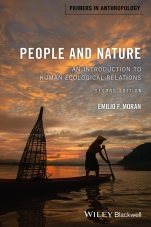
People and Nature: An Introduction to Human Ecological Relations
ISBN 9781118877470
Autor: Emilio F. Moran
Wydawca: Wiley
Dostępność: 3-6 tygodni
Cena: 241,50 zł
Przed złożeniem zamówienia prosimy o kontakt mailowy celem potwierdzenia ceny.
ISBN13: |
9781118877470 |
ISBN10: |
1118877470 |
Autor: |
Emilio F. Moran |
Oprawa: |
Paperback |
Rok Wydania: |
2016-08-16 |
Numer Wydania: |
2nd Edition |
Ilość stron: |
272 |
Wymiary: |
238x162 |
Tematy: |
JHBK |
Exceedingly welcome, highly readable and very much up to date, People and Nature plumbs the complex environmental challenge we have created, but also lights the ways forward to reconciliation between humanity and the environment.
Thomas E. Lovejoy, George Mason University
Addresses the reciprocal interactions between people and nature, highlighting the current urgency of many global situations there are no truly global solutions, instead, the author discusses the large variety of possible pathways and strategies we, as a society, can take to achieve sustainability. The second edition adds and expands discussion of the challenges to sustainability, the crisis of the growing human population, and climate change. People and Nature fills an ever–increasing need in addressing our current global environmental problems tied to past, current and future societal issues and behaviors.
Jane Southworth, University of Florida
Now updated and expanded, People and Nature is a lively, accessible introduction to environmental anthropology written by a respected scholar in the field. Concise yet multi–disciplinary, it focuses on the interactions between people, culture, and nature around the world and brings together insights from a range of fields, including geography, ecology, and environmental studies.
As with the first edition, it explains key theoretical issues in the field, as well as the most important research, at a level appropriate for readers coming to the topic for the first time. It also addresses new and evolving issues of importance, including climate change, population change, the rise of the slow food and farm–to–table movements, and consumer–driven shifts in sustainability. The author uses examples both historical and contemporary to bring the narrative to life and imbue it with the sense of urgency it deserves. He discusses the challenges we face in ensuring a livable future for generations to come and explores solutions for correcting the damage already done to our environment. In doing so, he offers a powerful and hopeful vision for the future in which improved relations between humans and nature allow us to embrace the idea of community needs rather than consumption wants, and the importance of building trust as a foundation for a sustainable future.
Emilio F. Moran is John A. Hannah Distinguished Professor at the Center for Global Change and Earth Observations, the Center for System Integration and Sustainability, and the Department of Geography at Michigan State University, USA. Until 2012, he was Distinguished Professor and the James H. Rudy Professor of Anthropology at Indiana University, USA. He is the author of ten books, fifteen edited volumes, and more than 190 journal articles and book chapters, which address human interaction with the environment under conditions of change. Most recently, he is the author of Environmental Social Science: Human–Environment Interactions and Sustainability (Wiley Blackwell, 2010). He is a Fellow of the Linnean Society of London, the American Anthropological Association, the Society for Applied Anthropology, and the American Association for the Advancement of Science. He was elected to the National Academy of Sciences in 2010.
Preface to the Second Edition
Acknowledgements
1. Human Agency and the State of the Earth
Introduction
Can one conceive of ecosystems without human agents?
Human agency: individuals making a difference
Overwhelming evidence for concern with the condition of the Earth system
Looking back and looking forward
2. A Reminder: How Things Were. . . .
The study of human ecological relations
The contemporary study of environmental issues
The evolution of human environment interactions
Hunter–gatherers: Setting our preferences
How did we decide to become farmers?
Herding and farming: An uneasy relationship
More food for the masses
3. The Great Forgetting
Earth transformations in prehistory
The archaeology of environmental change
The urban industrial revolution and the unleashing of Prometheus
The contemporary situation: Human–dominated ecosystems
4. The Web of Life: Are We In It?
The web of life and trophic relations: Thinking ecologically
Ecosystem productivity and net primary production
Land use and long term disturbance
5. What Makes People Do That?
Learning, adaptation, and information
Mitigation and the cautionary principle
Transforming the face of the Earth: Making better decisions
6. Population and the environment
Theories about Population
The Demographic Transition
Aging and International Flows of Labor
Addressing the Needs of 10 Billion People
Changing the Population and environment nexus
7. Rebuilding Communities and Institutions
Community in human evolution
What is sacred in human evolution?
Tragedies of the commons
Institutions and self–organization
Bioregionalism, deep ecology, and embedding people in nature
8. Can We Learn When We Have Enough?
Material boys and material girls
Patterns of consumption in developed countries
Patterns of consumption in developing countries
A feeding frenzy and a crisis in public health
Burning fossil fuels instead of calories
Do we have enough material goods now?
9. Quality of Life: When Less Is More
Resource abundance versus resource scarcity
When less is more
The scale of the problem and the scale of the solution
Restoring our balance: Valuing community and trust, rather than more stuff
Are we happier when we have more?
Index
Koszyk
Książek w koszyku: 0 szt.
Wartość zakupów: 0,00 zł
Informacje


Kontakt
Gambit
Centrum Oprogramowania
i Szkoleń Sp. z o.o.
Al. Pokoju 29b/22-24
31-564 Kraków
Siedziba Księgarni
ul. Kordylewskiego 1
31-542 Kraków
+48 12 410 5991
+48 12 410 5987
+48 12 410 5989
Subskrypcje
Administratorem danych osobowych jest firma Gambit COiS Sp. z o.o. Na podany adres będzie wysyłany wyłącznie biuletyn informacyjny.
Autoryzacja płatności

Informacje na temat autoryzacji płatności poprzez PayU.

© Copyright 2012: GAMBIT COiS Sp. z o.o. Wszelkie prawa zastrzeżone.
Projekt i wykonanie: Alchemia Studio Reklamy