


Wydawcy
Katalog tematyczny
- Archeologia (109)
- Ekonomia, finanse, business (13704)
- Filozofia (1445)
- Historia (3040)
- Języki i językoznawstwo (2356)
- Lifestyle, hobby i rozrywka (475)
- Medycyna (9704)
- Nauki humanistyczne (4)
- Nauki o Ziemi i środowisku (2638)
- Nauki ścisłe (20412)
- Nauki społeczne (8486)
- Nauki techniczne (13450)
- Prawo (1696)
- Publikacje informacyjne i interdyscyplinarne (1288)
- Religia i wierzenia (917)
- Technika komputerowa (4067)
- Zdrowie, relacje międzyludzkie i rozwój osobisty (657)





Informacje szczegółowe o książce
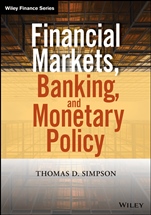
Financial Markets, Banking, and Monetary Policy
ISBN 9781118872239
Autor: Thomas D. Simpson
Wydawca: Wiley
Dostępność: 3-6 tygodni
Cena: 449,40 zł
Przed złożeniem zamówienia prosimy o kontakt mailowy celem potwierdzenia ceny.
ISBN13: |
9781118872239 |
ISBN10: |
1118872231 |
Autor: |
Thomas D. Simpson |
Oprawa: |
Hardback |
Rok Wydania: |
2014-09-12 |
Ilość stron: |
384 |
Wymiary: |
261x180 |
Tematy: |
KF |
Praise for Financial Markets, Banking, and Monetary Policy A lucid treatment that takes on board, shadow–banking, Dodd–Frank, the zero lower bound and forward guidance, in short all the key post–crisis issues. Anil Kashyap, Edward Eagle Brown Professor of Economics and Finance, University of Chicago The financial sector is a vital component of the US economic machinery. The Federal Reserve works within this sector to promote its congressional mandates of maximum employment and low inflation. Unfortunately, the contribution of the financial system to the economys performance is not well understood. Students of standard college courses on money, banking, and monetary policy often find that the textbooks have not kept pace with the evolution of the financial sector, including the rise of securitized finance and the Federal Reserves evolving monetary operations. Tom Simpsons book represents a huge step forward in this regard. His comprehensive exposition of the essential parts of the financial system and modern explanation of how the Federal Reserve supports the economy gives readers a much better understanding of the US financial system and the Federal Reserve. James Glassman, Managing Director and Head Economist for the Commercial Bank, JPMorgan Chase Co. Financial Markets, Banking, and Monetary Policy by Tom Simpson provides a comprehensive introduction to the financial system, including the markets, institutions, and mechanisms of finance, as well as the role of the Federal Reserve and monetary policy. The economic principles underlying finance are woven through the chapters, and the book includes an insightful introduction into the causes of and responses to the recent financial crisis. Tom Simpson has had a front–row seat on financial developments in recent decades and has written a book that provides an ideal introduction to the financial system and monetary policy. Dan Sichel, Professor of Economics, Wellesley College
Preface Chapter 1: Introduction What You Will Learn In This Chapter Overview Where We Are Going in This Book Contributions Made By the Financial System Recurring Themes in the Chapters Ahead Resources Chapter 2: Overview of the Financial System What You Will Learn In This Chapter Introduction Features of An Effective Financial System Direct Methods of Finance Indirect Methods of Finance Primary versus Secondary Markets Chapter 3: The Special Role of Commercial Banks What You Will Learn In This Chapter Background Commercial Bank Balance Sheet Payment System and Money Liquidity Provision Dealing with Asymmetric Information Maturity Transformation The Safety Net and Regulatory Policy Chapter 4: The Pricing of Financial Assets What You Will Learn In This Chapter Background Present Value Maturity and Price Sensitivity Holding Periods versus Maturities Return versus Yield Duration Nominal versus Real Yields Appendix A: Variations Of The Valuation Relationship Appendix B:Solutions Using A Financial Calculator Chapter 5: Factors Affecting Yields What You Will Learn In This Chapter Background The Term Structure of Interest Rates Credit Risk Liquidity Taxation Embedded Options Flights to Safety Chapter 6: Principles of Portfolio Selection and Efficient Markets What You Will Learn In This Chapter Overview Uncertainty, Expected Return, and Risk Selecting a Portfolio Efficient Portfolops And Risk–Return Trade–Offs Efficient Markets Hypothesis Chapter 7: The Money Market What You Will Learn In This Chapter Background and Basic Features of the Money Market Pricing Treasury Bills The Role of Commercial Banks in the Money Market Letters of Credit and Bankers Acceptances Monetary Policy Effects on the Money Market Chapter 8: The Bond Market What You Will Learn In This Chapter Background Treasury Notes and Bonds Corporate Bonds Munis Government–Sponsored Enterprises (GSEs) The Impact of Monetary Policy on the Bond Market Chapter 9: Securitization What You Will Learn In This Chapter Background Obstacles to Overcome Beginnings of Securitization–MBS Other Securitized Loans–Consumer ABS ABS Involving Business Credit–CDOs and Structured Securities Securitization and the Integration of Credit Markets Monetary Policy and Securitization Chapter 10: The Mortgage Market What You Will Learn In This Chapter Background Home Mortgages Commercial Mortgages The Mortgage Market and Monetary Policy Chapter 11: The Equity Market What You Will Learn In This Chapter Background Equities as a Source of Corporate Finance Preferred versus Common Shares Primary and Secondary Markets Valuation of Individual Shares Price–earnings Extending These Principles to the Stock Market Monetary Policy and the Stock Market Indexes of Stock Prices Chapter 12: Central Banking and the Federal Reserve What You Will Learn In This Chapter Background Origins of Central Banks Constitutional Foundations The Century And A Quarter Without A Central Bank Creation of the Federal Reserve Early Years of the Federal Reserve Reforms of the 1930s Fed Independence Central Bank Accountability and Transparency Central Bank Responsibilities Monetary Operations Chapter 13: Monetary Policy: The Basics What You Will Learn In This Chapter Background The Operational Counterparts to Maximum Employment and Price Stability Aggregate Demand and Aggregate Supply The Model Addressing Inflation Addressing a Shortfall in Output Okun′s Law Chapter 14: Monetary Policy: Challenges Faced by Policymakers What You Will Learn In This Chapter Background Other Forces Affecting Output and Inflation Lags and Other Complications Policy Rules Expectations and Central Bank Credibility Inflation Targeting The Zero–Bound Constraint and the Slow Recovery from the Great Contraction Chapter 15: Financial Crises What You Will Learn In This Chapter Background Classic Banking Panics The Nightmare of the Great Depression The Financial Crisis Common Threads Chapter 16: The Foreign Exchange Market and Exchange Rate Regimes What You Will Learn In This Chapter Background Features of the Market The Relation Between Spot and Forward Exchange Rates Long Run Exchange Rate Relationships The Real Exchange Rate Exchange Rate Determination in the Shorter Run Floating Exchange Rate Regime Fixed Exchange Rate Regime Chapter 17: Depository Institutions What You Will Learn In This Chapter Background Organization of Commercial Banks and Other Depository Institutions Economic Functions of Depository Institutions The Balance Sheet of the Commercial Banking System The Balance Sheet of Savings Institutions The Balance Sheet of Credit Unions Deposit Insurance Regulation and Supervision of Depository Institutions Depository Institutions and Monetary Policy Chapter 18: Mutual Funds What You Will Learn In This Chapter Background History SEC Regulation Role of Mutual Fund Complexes Types of Funds Open–End Funds Exchange–Traded Funds Closed–End Funds Mutual Funds and Monetary Policy Chapter 19: Hedge, Venture Capital, and Private Equity Funds What You Will Learn In This Chapter Background Commonalities In Structure Hedge Funds Venture Capital Funds Private Equity Funds Alternative Investment Funds and Monetary Policy Chapter 20: Large Institutional Investors What You Will Learn In This Chapter Background Pension Funds Life Insurance Companies Property and Casualty Insurance Companies Large Institutional Investors and Monetary Policy About the Author Index
THOMAS D. SIMPSON served as a senior officer at the Board of Governors of the Federal Reserve System. In addition to his other responsibilities, he was an officer of the Federal Open Market Committee. Simpson is on the faculty at the University of North Carolina Wilmington.
Koszyk
Książek w koszyku: 0 szt.
Wartość zakupów: 0,00 zł
Informacje


Kontakt
Gambit
Centrum Oprogramowania
i Szkoleń Sp. z o.o.
Al. Pokoju 29b/22-24
31-564 Kraków
Siedziba Księgarni
ul. Kordylewskiego 1
31-542 Kraków
+48 12 410 5991
+48 12 410 5987
+48 12 410 5989
Subskrypcje
Administratorem danych osobowych jest firma Gambit COiS Sp. z o.o. Na podany adres będzie wysyłany wyłącznie biuletyn informacyjny.
Autoryzacja płatności

Informacje na temat autoryzacji płatności poprzez PayU.

© Copyright 2012: GAMBIT COiS Sp. z o.o. Wszelkie prawa zastrzeżone.
Projekt i wykonanie: Alchemia Studio Reklamy