


Wydawcy
Katalog tematyczny
- Archeologia (109)
- Ekonomia, finanse, business (13704)
- Filozofia (1445)
- Historia (3040)
- Języki i językoznawstwo (2356)
- Lifestyle, hobby i rozrywka (475)
- Medycyna (9704)
- Chirurgia (272)
- Inne gałęzie medycyny (1871)
- Medycyna kliniczna (4187)
- Choroby wewnętrzne (514)
- Dermatologia (51)
- Diagnostyka medyczna (3)
- Endokrynologia (144)
- Gastroenterologia (27)
- Geriatria (50)
- Ginekologia i położnictwo (134)
- Hematologia (46)
- Hepatologia (10)
- Kardiologia (71)
- Laryngologia (12)
- Nefrologia (10)
- Neurologia (500)
- Oftalmologia (50)
- Pediatria (33)
- Pulmunologia (32)
- Reumatologia (14)
- Terapia genowa (1)
- Układ mięśniowo-szkieletowy (1)
- Urologia (14)
- Medycyna niekonwencjonalna (14)
- Medycyna przedkliniczna (269)
- Medycyna, ogólnie (1740)
- Medyczne służby pomocnicze (745)
- Studia medyczne (16)
- Weterynaria (548)
- Nauki humanistyczne (4)
- Nauki o Ziemi i środowisku (2638)
- Nauki ścisłe (20412)
- Nauki społeczne (8486)
- Nauki techniczne (13450)
- Prawo (1696)
- Publikacje informacyjne i interdyscyplinarne (1288)
- Religia i wierzenia (917)
- Technika komputerowa (4067)
- Zdrowie, relacje międzyludzkie i rozwój osobisty (657)





Informacje szczegółowe o książce
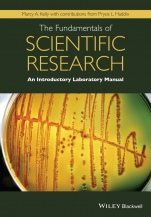
The Fundamentals of Scientific Research: An Introductory Laboratory Manual
ISBN 9781118867846
Autor: Marcy A. Kelly, Pryce L. Haddix
Wydawca: Wiley
Dostępność: 3-6 tygodni
Cena: 257,25 zł
Przed złożeniem zamówienia prosimy o kontakt mailowy celem potwierdzenia ceny.
ISBN13: |
9781118867846 |
ISBN10: |
111886784X |
Autor: |
Marcy A. Kelly, Pryce L. Haddix |
Oprawa: |
Paperback |
Rok Wydania: |
2016-02-26 |
Ilość stron: |
208 |
Wymiary: |
244x173 |
Tematy: |
MJ |
The Fundamentals of Scientific Research: An Introductory Laboratory Manual is a laboratory manual geared toward first–semester undergraduates enrolled in general biology courses focusing on cell biology. This laboratory curriculum centers on studying a single organism throughout the entire semester Serratia marcescens or S. marcescens a bacterium unique in its production of the red pigment prodigiosin.
The manual separates the laboratory course into three separate modules. The first two modules familiarizes students with the organism and lab equipment by performing growth curves, Lowry protein assays, quantifying prodigiosin and ATP production, and by performing complementation studies to understand the biochemical pathways responsible for prodigiosin production. Students learn how to use Microsoft Excel to prepare and present data in graphical format and how to calculate their data into meaningful numbers that can be compared across experiments. The third module requires that the students employ UV mutagenesis to generate hyper–pigmented mutants of S. marcescens for further characterization. Students use experimental data and protocols learned in the first module to help them develop their own hypotheses and experimental protocols, and to analyze their own data.
Before each laboratory, students are required to answer questions designed to probe their understanding of required pre–laboratory reading materials. Questions also guide the students through the development of hypotheses and predictions. Following each laboratory, students then answer a series of post–laboratory questions to guide them through the presentation and analysis of their data, and how to place their data into the context of primary literature. Students are also asked to review their initial hypotheses and predictions to determine if their conclusions are supportive. A formal laboratory report is also to be completed after each module, in a format similar to that of primary scientific literature.
The Fundamentals of Scientific Research: An Introductory Laboratory Manual is an invaluable resource to undergraduates majoring in the life sciences.
Text focuses on one organism, S. marcescens, throughout the semester with a focused goal: to enhance the organism s production of prodigiosin
Teaches students how to use laboratory equipment correctly and effectively
Follows structure of laboratory curriculum similar to professional research environment
Prompts first–year undergraduates to read, evaluate, and use their own data in the context of primary scientific literature
Preface xi
Acknowledgments xv
About the Companion Website xvii
Introduction xix
Module 1 Working with and Learning About Common Laboratory Techniques and Equipment 1
Exercise 1A Using Common Laboratory Tools to Evaluate Measurements Pre–laboratory Thinking Questions 3
Exercise 1B Using Common Laboratory Tools to Evaluate Measurements 4
Exercise 1C Using Common Laboratory Tools to Evaluate Measurements Post–laboratory Thinking Questions 18
Exercise 2A Using Microscopy to Evaluate Cell Size and Complexity Pre–laboratory Thinking Questions 19
Exercise 2B Using Microscopy to Evaluate Cell Size and Complexity 20
Exercise 2C Using Microscopy to Evaluate Cell Size and Complexity Post–laboratory Thinking Questions 32
Exercise 3A The Bacterial Growth Curve Pre–laboratory Thinking Questions 35
Exercise 3B The Bacterial Growth Curve 36
Exercise 3C The Bacterial Growth Curve Post–laboratory Thinking Questions 55
Module 2 Working with and Learning About Serratia marcescens in the Laboratory 57
Exercise 4A Protein Concentration Versus Growth Stage Pre–laboratory Thinking Questions 59
Exercise 4B Protein Concentration Versus Growth Stage 60
Exercise 4C Protein Concentration Versus Growth Stage Post–laboratory Thinking Questions 69
Exercise 5A Measuring Prodigiosin Pre–laboratory Thinking Questions 71
Exercise 5B Measuring Prodigiosin 72
Exercise 5C Measuring Prodigiosin Post–laboratory Thinking Questions 84
Exercise 6A Conditions Affecting the Growth of and Prodigiosin Production by Serratia marcescens Pre–laboratory Thinking Questions 87
Exercise 6B Conditions Affecting the Growth of and Prodigiosin Production by S. marcescens 91
Exercise 6C Formal Laboratory Report Describing the Conditions Affecting the Growth of and Prodigiosin Production by S. marcescens 95
Exercise 7A Biochemistry of Prodigiosin Production Pre–laboratory Thinking Questions 101
Exercise 7B Biochemistry of Prodigiosin Production 102
Exercise 7C Biochemistry of Prodigiosin Production Post–laboratory Thinking Questions 112
Exercise 8A The Probability Basis for Mutation Rate Calculation: A Dice ]Roll Exercise Pre–laboratory Thinking Questions 113
Exercise 8B The Probability Basis for Mutation Rate Calculation: A Dice ]Roll Exercise 114
Exercise 8C The Probability Basis for Mutation Rate Calculation: A Dice ]Roll Exercise Post–laboratory Thinking Questions 120
Exercise 9A Understanding Evolution by the Generation of UV Light ]Induced Prodigiosin Mutants Pre–laboratory Thinking Questions 121
Exercise 9B Understanding Evolution by the Generation of UV Light ]Induced Prodigiosin Mutants 122
Exercise 9C Understanding Evolution by the Generation of UV Light ]Induced Prodigiosin Mutants Post–laboratory Thinking Questions 131
Exercise 10A Understanding the Energy Spilling Properties of Prodigiosin Pre–laboratory Thinking Questions 137
Exercise 10B Understanding the Energy Spilling Properties of Prodigiosin 139
Exercise 10C Understanding the Energy Spilling Properties of Prodigiosin Post–laboratory Thinking Questions 146
Module 3 Initial Characterization of Novel Serratia marcescens Prodigiosin Mutants 147
Exercise 11A Prodigiosin Mutant Study Part 1 Pre–laboratory Thinking Questions 149
Exercise 11B Prodigiosin Mutant Study Part 1 150
Exercise 11C Prodigiosin Mutant Study Part 1 Post–laboratory Thinking Questions 153
Exercise 12A Prodigiosin Mutant Study Part 2 Pre–laboratory Thinking Questions 155
Exercise 12B Prodigiosin Mutant Study Part 2 156
Exercise 12C Formal Laboratory Report 2: Prodigiosin Mutant Study 158
Appendix A CSE Citation and Reference List Format Guidelines 163
Appendix B Prodigiosin Biosynthesis 165
References 167
Index 169
Marcy A. Kelly is Professor and Assistant Chair of the Department of Biology at Pace
University in New York, NY, USA.
Pryce L. Haddix is an Associate Professor of Biology at Auburn University in Montgomery,
AL, USA.
Koszyk
Książek w koszyku: 0 szt.
Wartość zakupów: 0,00 zł
Informacje


Kontakt
Gambit
Centrum Oprogramowania
i Szkoleń Sp. z o.o.
Al. Pokoju 29b/22-24
31-564 Kraków
Siedziba Księgarni
ul. Kordylewskiego 1
31-542 Kraków
+48 12 410 5991
+48 12 410 5987
+48 12 410 5989
Subskrypcje
Administratorem danych osobowych jest firma Gambit COiS Sp. z o.o. Na podany adres będzie wysyłany wyłącznie biuletyn informacyjny.
Autoryzacja płatności

Informacje na temat autoryzacji płatności poprzez PayU.

© Copyright 2012: GAMBIT COiS Sp. z o.o. Wszelkie prawa zastrzeżone.
Projekt i wykonanie: Alchemia Studio Reklamy