


Wydawcy
Katalog tematyczny
- Archeologia (109)
- Ekonomia, finanse, business (13704)
- Filozofia (1445)
- Historia (3040)
- Języki i językoznawstwo (2356)
- Lifestyle, hobby i rozrywka (475)
- Medycyna (9704)
- Nauki humanistyczne (4)
- Nauki o Ziemi i środowisku (2638)
- Nauki ścisłe (20412)
- Nauki społeczne (8486)
- Nauki techniczne (13450)
- Prawo (1696)
- Publikacje informacyjne i interdyscyplinarne (1288)
- Religia i wierzenia (917)
- Technika komputerowa (4067)
- Zdrowie, relacje międzyludzkie i rozwój osobisty (657)





Informacje szczegółowe o książce
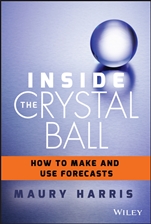
Inside the Crystal Ball: How to Make and Use Forecasts
ISBN 9781118865071
Autor: Maury Harris
Wydawca: Wiley
Dostępność: 3-6 tygodni
Cena: 192,15 zł
Przed złożeniem zamówienia prosimy o kontakt mailowy celem potwierdzenia ceny.
ISBN13: |
9781118865071 |
ISBN10: |
1118865073 |
Autor: |
Maury Harris |
Oprawa: |
Hardback |
Rok Wydania: |
2015-02-20 |
Ilość stron: |
400 |
Wymiary: |
236x155 |
Tematy: |
KC |
Praise for INSIDE THE CRYSTAL BALL
"An exceptionally clear and comprehensive guide to forecasting. Maury Harris conveys his wealth of experience, knowledge, and judgment in a practical and usable manner for the forecasting practitioner. The book describes the tools, the pitfalls, what to believe, and what to discount. It is an essential read for anyone looking into the future."
David Crowe, Chief Economist, Economics and Housing Policy, National Association of Home Builders
"Consensus forecasts are often wrong, a point well known to most pundits. Maury Harris′ thoughtful analysis often has shown what the majority is missing. This rare and valuable skill stems from a deep understanding of the pitfalls associated with making forecasts. He explains why accuracy is an art, not a science. A wonderful read."
Henry J. Herrmann, CEO and COB, Waddell & Reed Financial, Inc.
"Maury provides two sides to a very important coin. First, forecasters benefit from a simple, user–friendly read on developing forecasts but also being realistic about the pitfalls and degree of accuracy on the forecast. Second, Maury′s work also provides the user of forecasts an interesting and much–needed perspective on the value of forecasts and what forecasts can and cannot deliver. I would recommend Maury′s book."
John E. Silvia, Chief Economist, Wells Fargo; incoming President, the National Association of Business Economists
Acknowledgments
Introduction: What You Need to Know About Forecasting
Chapter 1: What Makes a Successful Forecaster?
Grading Forecasters: How Many Pass?
Why It′s So Difficult to Be Prescient
Bad Forecasters: One–Hit Wonders, Perennial Outliers and Copy Cats
Success Factors: Why Some Forecasters Excel
Does Experience Make Much of a Difference in Forecasting?
Chapter 2: The Art and Science of Making and Using Forecasts
Judgment Counts More Than Math
Judging and Scoring Forecasts by Statistics
Chapter 3: What Can We Learn from History?
It s Never Normal
Some Key Characteristics of Business Cycles
National versus State Business Cycles: Does a Rising Tide Lift All Boats?
U.S. Monetary Policy and the Great Depression
The Great Inflation is Hard to Forget
The Great Moderation: Why it′s still relevant
Why Was There Reduced Growth Volatility During the Great Moderation?
Forecaster history: Observations from the sidelines before I became a starter.
A History of Professional Forecasters
Forecasting Recessions
Chapter 4: When Forecasters Get It Wrong
The granddaddy of forecasting debacles: The Great Depression
The Great Recession: Grandson of the granddaddy
The Great Recession: Lessons Learned
The productivity miracle and the New Economy
Productivity: Lessons Learned
Y2K: The disaster that wasn′t
The tech crash was not OK
Forecasters at cyclical turning points: How to evaluate them
Forecasting Recessions
Forecasting Recessions: Lessons Learned
Chapter 5: Can We Believe What Washington DC Tells Us?
Does the U.S. Government Cook the Books on Economic Data Reports?
To What Extent Are Government Forecasts Politically Motivated?
Can You Trust the Government′s Analyses of Its Policies Benefits?
The Beltway s Multiplier Mania
Multiplier Effects: How Real Are They?
Why Government Statistics Keep Changing Their Mind
Living with Revisions
Chapter 6: Four Gurus of Economics: Whom to Follow?
Four Competing Schools of Economic Thought
Minskyites: Should We Keep Listening to Them?
Monetarists: Do They Deserve More Respect?
Supply–Siders: Still A Role To Play?
Keynesians: Are They Just Too Old–Fashioned?
Chapter 7: The New Normal : Time to Curb Your Enthusiasm?
Must Forecasters Restrain Multi–Year U.S. Growth Assumptions?
Supply–Side Forecasting: Labor, Capital and Productivity
Are Demographics Destiny?
Pivotal Productivity Projections
Chapter 8: Animal Spirits: The Intangibles Behind Business Spending
Animal Spirits on Main Street and Wall Street
Can we base forecasts on confidence indexes?
Business Confidence and Inventory Building
How Do Animal Spirits Relate to Job Creation?
Confidence and Capital Spending: Do They Move in Tandem?
Animal Spirits and Capital Spending
Chapter 9: Forecasting Fickle Consumers
Making and Spending Money
How do Americans make their money?
Will we ever start to save more money?
Why Don t Americans Save More?
More wealth = less saving
Do more confident consumers save less and spend more?
Does Income Distribution Make A Difference For Saving & Consumer Spending?
Pent Up Demand & Household Formation
Chapter 10: What Will It Cost To Live in the Future?
Whose Prices Are You Forecasting?
Humans Cannot Live on Just Core Goods and Services
Key Considerations in Forecasting Inflation
Should We Forecast Inflation by Money Supply or Phillips Curve?
Hitting Professor Phillips s Curve
A statistical lesson from reviewing Phillips curve research
Chapter 11: Interest Rates: Forecasters Toughest Challenge
Figuring the Fed
Federal Open Mouth Committee
What is the Fed s reaction function ?
Is the Fed often behind the curve ?
Can the Fed talk down interest rates?
Bond Yields: How Reliable Are Rules of Thumb ?
Professor Bernanke s Expectations–Oriented Explanation of Long–Term Interest Rate Determinants
Supply and Demand Models of Interest Rate Determination
When will OPEC, Japan and China stop buying our bonds?
What will be the legacy of QE for interest rates?
What is the effect of Fed MBS Purchases on Mortgage Rates?
A multiple regression approach to what matters for note and bond yields
Will projected future budget deficits raise interest rates?
Chapter 12: Forecasting In Troubled Times
Natural Disasters: The economic cons and pros
How to respond to the next terrorist attack
Why Oil Price Shocks Don′t Shock So Much
Market Crashes: Why Investors Don′t Jump from Buildings Anymore
Contagion Effects: When China Catches Cold, Will the U.S. Sneeze?
Chapter 13: How to Survive and Thrive in Forecasting
Surviving: What to do when wrong
"Hold" or "Fold"?
Thriving: Ten keys to a successful career
About the Author
Index
MAURY HARRIS is a Managing Director and Chief Economist for the Americas for the UBS investment bank. Dr. Harris has led forecasting teams ranked as the most accurate in the country in four separate years over the past decade. In addition, he has been named numerous times to the Institutional Investor (II) All–America Research Team over the past two decades. Dr. Harris is a past President of the Forecaster′s Club of New York. Prior to the UBS AG acquisition of PaineWebber Incorporated, he was the Chief Economist for PaineWebber. Before that, Dr. Harris worked for the Federal Reserve Bank of New York and The Bank for International Settlements. Dr. Harris holds a PhD in economics from Columbia University, an MA in economics from Columbia University, and a BA in economics from the University of Texas, where he graduated Phi Beta Kappa. He is married with two children.
Koszyk
Książek w koszyku: 0 szt.
Wartość zakupów: 0,00 zł
Informacje


Kontakt
Gambit
Centrum Oprogramowania
i Szkoleń Sp. z o.o.
Al. Pokoju 29b/22-24
31-564 Kraków
Siedziba Księgarni
ul. Kordylewskiego 1
31-542 Kraków
+48 12 410 5991
+48 12 410 5987
+48 12 410 5989
Subskrypcje
Administratorem danych osobowych jest firma Gambit COiS Sp. z o.o. Na podany adres będzie wysyłany wyłącznie biuletyn informacyjny.
Autoryzacja płatności

Informacje na temat autoryzacji płatności poprzez PayU.

© Copyright 2012: GAMBIT COiS Sp. z o.o. Wszelkie prawa zastrzeżone.
Projekt i wykonanie: Alchemia Studio Reklamy