


Wydawcy
Katalog tematyczny
- Archeologia (109)
- Ekonomia, finanse, business (13704)
- Filozofia (1445)
- Historia (3040)
- Języki i językoznawstwo (2356)
- Lifestyle, hobby i rozrywka (475)
- Medycyna (9704)
- Nauki humanistyczne (4)
- Nauki o Ziemi i środowisku (2638)
- Nauki ścisłe (20412)
- Astronomia (294)
- Biologia (5119)
- Chemia (6540)
- Chemia analityczna (361)
- Chemia fizyczna (346)
- Chemia nieorganiczna (137)
- Chemia organiczna (535)
- Krystalografia (27)
- Minerologia (46)
- Fizyka (3309)
- Matematyka (4574)
- Nauki ścisłe, ogólnie (503)
- Nauki społeczne (8486)
- Nauki techniczne (13450)
- Prawo (1696)
- Publikacje informacyjne i interdyscyplinarne (1288)
- Religia i wierzenia (917)
- Technika komputerowa (4067)
- Zdrowie, relacje międzyludzkie i rozwój osobisty (657)





Informacje szczegółowe o książce
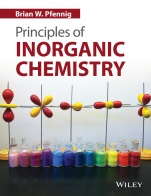
Principles of Inorganic Chemistry
ISBN 9781118859100
Autor: Brian W. Pfennig
Wydawca: Wiley
Dostępność: 3-6 tygodni
Cena: 687,75 zł
Przed złożeniem zamówienia prosimy o kontakt mailowy celem potwierdzenia ceny.
ISBN13: |
9781118859100 |
ISBN10: |
1118859103 |
Autor: |
Brian W. Pfennig |
Oprawa: |
Hardback |
Rok Wydania: |
2015-05-15 |
Ilość stron: |
760 |
Wymiary: |
292x212 |
Tematy: |
PN |
An informally written, engaging textbook, first of its kind, to offer a highly physical approach to inorganic chemistry
Unlike other chemistry textbooks, whose memorization–heavy volumes often dispirit student interest, this text is designed for upper–level undergraduates (who have already taken physical chemistry) and introductory–level graduate students taking an inorganic or advanced inorganic chemistry course. Written by veteran professor and scientist, Brian W. Pfennig, Principles of Inorganic Chemistry is composed of eclectic sources from Dr. Pfennig s many years of teaching and built on a principles–based, group and molecular orbital theory approach. Covering a variety of topics from the Composition of Matter, to Models of Chemical Bonding, to Reactions of Organometallic Compounds this textbook features:
For instructors who are looking for a more physical inorganic chemistry course, this textbook offers pedagogical benefits of integration and reinforcement of group theory in the treatment of other topics. Together with its unique underlying framework, the book s approach allows students to be engaged and to derive the greatest learning experience possible from topics such as frontier MO acid–base theory, band theory of solids, inorganic photochemistry, the Jahn–Teller effect, and Wade′s rules for cluster compounds, to name but a few examples.
PREFACE
ACKNOWLEDGEMENTS
1 THE COMPOSITION OF MATTER
1.1 Early descriptions of matter
1.2 Visualizing atoms
1.3 The periodic table
1.4 The standard model
References
Exercises
2 THE STRUCTURE OF THE NUCLEUS
2.1 The nucleus
2.2 Nuclear binding energies
2.3 Nuclear reactions: fusion and fission
2.4 Radioactivity and the band of stability
2.5 The shell model of the nucleus
2.6 The origin of the elements
References
Exercises
3 A BRIEF REVIEW OF QUANTUM THEORY
3.1 The wavelike properties of light
3.2 Problems with the classical model of the atom
3.3 The Bohr model of the atom
3.4 Implications of wave–particle duality
3.5 Postulates of quantum mechanics
3.6 The Schrödinger equation
3.7 The particle in a box problem
3.8 The harmonic oscillator problem
References
Exercises
4 ATOMIC STRUCTURE
4.1 The hydrogen atom
4.2 Polyelectronic atoms
4.3 Electron spin and the Pauli principle
4.4 Electron configurations and the periodic table
4.5 Atomic term symbols
4.6 Shielding and effective nuclear charge
References
Exercises
5 PERIODIC PROPERTIES OF THE ELEMENTS
5.1 The modern periodic table
5.2 Radius
5.3 Ionization energy
5.4 Electron affinity
5.5 The uniqueness principle
5.6 Diagonal properties
5.7 The metal–nonmetal line
5.8 Standard reduction potentials
5.9 The inert–pair effect
5.10 Relativistic effects
5.11 Electronegativity
References
Exercises
6 AN INTRODUCTION TO CHEMICAL BONDING
6.1 The bonding in molecular hydrogen
6.2 Lewis structures
6.3 Covalent bond energies and bond lengths
6.4 Resonance
6.5 Polar covalent bonding
References
Exercises
7 MOLECULAR GEOMETRIES
7.1 The VSEPR model
7.2 The ligand close–packing model
7.3 A comparison of the VSEPR and LCP models
References
Exercises
8 MOLECULAR SYMMETRY
8.1 Symmetry elements and symmetry operations
8.2 Symmetry groups
8.3 Molecular point groups
8.4 Representations
8.5 Character tables
8.6 Direct products
8.7 Reducible representations
References
Exercises
9 VIBRATIONAL SPECTROSCOPY
9.1 Overview of vibrational spectroscopy
9.2 Selection rules for IR and Raman–active modes
9.3 Determining the symmetries of the normal modes of vibration
9.4 Generating symmetry coordinates using the projection operator method
9.5 Resonance Raman spectroscopy
References
Exercises
10 COVALENT BONDING
10.1 Valence bond theory
10.2 Molecular orbital theory: diatomics
10.3 Molecular orbital theory: polyatomics
10.4 Molecular orbital theory: pi orbitals
10.5 Molecular orbital theory: more complex examples
10.6 Borane and carborane cluster compounds
References
Exercises
11 METALLIC BONDING
11.1 Crystalline lattices
11.2 X–ray diffraction
11.3 Closest–packed structures
11.4 The free electron model of metallic bonding
11.5 Band theory of solids
11.6 Conductivity in solids
11.7 Connections between solids and discrete molecules
References
Exercises
12 IONIC BONDING
12.1 Common types of ionic solids
12.2 Lattice enthalpies and the Born–Haber cycle
12.3 Ionic radii and Pauling s rules
12.4 The silicates
12.5 Zeolites
12.6 Defects in crystals
References
Exercises
13 STRUCTURE AND BONDING
13.1 A re–examination of crystalline solids
13.2 Intermediate types of bonding in solids
13.3 Quantum theory of atoms in molecules (QTAIM)
References
Exercises
14 STRUCTURE AND REACTIVITY
14.1 An overview of chemical reactivity
14.2 Acid–bases reactions
14.3 Frontier molecular orbital theory
14.4 Oxidation–reduction reactions
14.5 A generalized model of chemical reactivity
References
Exercises
15 AN INTRODUCTION TO COORDINATION COMPOUNDS
15.1 A historical overview of coordination chemistry
15.2 Types of ligands and nomenclature
15.3 Stability constants
15.4 Coordination numbers and geometries
15.5 Isomerism
15.6 Magnetic properties of coordination compounds
References
Exercises
16 STRUCTURE, BONDING, AND SPECTROSCOPY OF COORDINATION COMPOUNDS
16.1 Valence bond theory
16.2 Crystal field theory
16.3 Ligand field theory
16.4 Angular overlap model
16.5 Molecular term symbols
16.6 Tanabe–Sugano diagrams
16.7 Electronic spectroscopy of coordination compounds
16.8 The Jahn–Teller effect
References
Exercises
17 REACTIONS OF COORDINATION COMPOUNDS
17.1 Kinetics overview
17.2 Octahedral substitution reactions
17.3 Square planar substitution reactions
17.4 Electron transfer reactions
17.5 Inorganic photochemistry
References
Exercises
18 STRUCTURE AND BONDING IN ORGANOMETALLIC COMPOUNDS
18.1 Introduction to organometallic chemistry
18.2 Electron counting and the 18–electron rule
18.3 Carbonyl ligands
18.4 Nitrosyl ligands
18.5 Hydride and dihydrogen ligands
18.6 Phosphine ligands
18.7 Ethylene and related ligands
18.8 Cyclopentadiene and related ligands
18.9 Carbenes, carbynes, and carbidos
References
Exercises
19 REACTIONS OF ORGANOMETALLIC COMPOUNDS
19.1 Some general principles
19.2 Organometallic reactions involving changes at the metal
19.3 Organometallic reactions involving changes at the ligand
19.4 Metathesis reactions
19.5 Commercial catalytic processes
19.6 Organometallic photochemistry
19.7 The isolobal analogy and metal–metal bonding in organometallic clusters
References
Exercises
APPENDICES
Appendix A: Derivation of the classical wave equation
Appendix B: Character tables
Appendix C: Direct product tables
Appendix D: Correlation tables
Appendix E: The 230 space groups
Brian W. Pfennig, PhD, received his undergraduate B.S. degree in chemistry at Albright College in 1988. He earned his Ph.D. in 1992 in the field of physical inorganic chemistry at Princeton University with Dr. Andrew B. Bocarsly, studying the photochemistry of organometallic sandwich compounds and electron transfer in multinuclear mixed–valence coordination compounds. Dr. Pfennig has held a number of different teaching appointments at small liberal arts colleges, including Franklin & Marshall College, Haverford College, Vassar College, and Ursinus College. During his 20–year teaching career, he has taught general chemistry, an accelerated one–semester general chemistry course, both introductory and advanced inorganic chemistry, bio–inorganic chemistry, and inorganic and organometallic photochemistry, as well as serving as the general chemistry laboratory coordinator at Ursinus College for the past 10 years. He is also actively engaged in research with undergraduates in the areas of inorganic photochemistry, electrochemistry, and electron transfer processes occurring in multinuclear mixed–valence coordination compounds. He has also published several papers in the area of chemical education.
Koszyk
Książek w koszyku: 0 szt.
Wartość zakupów: 0,00 zł
Informacje


Kontakt
Gambit
Centrum Oprogramowania
i Szkoleń Sp. z o.o.
Al. Pokoju 29b/22-24
31-564 Kraków
Siedziba Księgarni
ul. Kordylewskiego 1
31-542 Kraków
+48 12 410 5991
+48 12 410 5987
+48 12 410 5989
Subskrypcje
Administratorem danych osobowych jest firma Gambit COiS Sp. z o.o. Na podany adres będzie wysyłany wyłącznie biuletyn informacyjny.
Autoryzacja płatności

Informacje na temat autoryzacji płatności poprzez PayU.

© Copyright 2012: GAMBIT COiS Sp. z o.o. Wszelkie prawa zastrzeżone.
Projekt i wykonanie: Alchemia Studio Reklamy