


Wydawcy
Katalog tematyczny
- Archeologia (109)
- Ekonomia, finanse, business (13704)
- Filozofia (1445)
- Historia (3040)
- Języki i językoznawstwo (2356)
- Lifestyle, hobby i rozrywka (475)
- Medycyna (9704)
- Nauki humanistyczne (4)
- Nauki o Ziemi i środowisku (2638)
- Nauki ścisłe (20412)
- Astronomia (294)
- Biologia (5119)
- Chemia (6540)
- Chemia analityczna (361)
- Chemia fizyczna (346)
- Chemia nieorganiczna (137)
- Chemia organiczna (535)
- Krystalografia (27)
- Minerologia (46)
- Fizyka (3309)
- Matematyka (4574)
- Nauki ścisłe, ogólnie (503)
- Nauki społeczne (8486)
- Nauki techniczne (13450)
- Prawo (1696)
- Publikacje informacyjne i interdyscyplinarne (1288)
- Religia i wierzenia (917)
- Technika komputerowa (4067)
- Zdrowie, relacje międzyludzkie i rozwój osobisty (657)





Informacje szczegółowe o książce
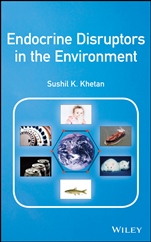
Endocrine Disruptors in the Environment
ISBN 9781118852934
Autor: Sushil K. Khetan
Wydawca: Wiley
Dostępność: 3-6 tygodni
Cena: 491,40 zł
Przed złożeniem zamówienia prosimy o kontakt mailowy celem potwierdzenia ceny.
ISBN13: |
9781118852934 |
ISBN10: |
1118852931 |
Autor: |
Sushil K. Khetan |
Oprawa: |
Hardback |
Rok Wydania: |
2014-07-22 |
Ilość stron: |
408 |
Wymiary: |
237x161 |
Tematy: |
PN |
A concise and engaging overview of endocrine disruption phenomena that brings complex concepts within the reach of non–specialists For most of the last decade, the science of endocrine disruption has evolved with more definitive evidence of its damaging potential to health and environment. This book lists the major environmental chemicals of concern and their mechanism of endocrine disruption including remedial measures for them. Divided into three parts, Endocrine Disruptors in the Environment begins with an overview of the endocrine system and endocrine disruptors, discussing their salient features and presenting a historical perspective of endocrine disruption phenomena. It then goes on to cover hormone–signaling mechanisms, followed by various broad classes of putative endocrine disruptors, before introducing readers to environmental epigenetic modifications. Part two of the book focuses on removal processes of various EDCs by biotic and abiotic transformation/degradation. The last section consists of four chapters embracing themes on finding solutions to environmental EDCsincluding their detection, regulation, replacement, and remediation. Endocrine Disruptors in the Environment is the first book to detail the endocrine effects of several known environmental contaminants and their mechanism of endocrine disruption. Additionally, it: Covers both the chemistry and biology of endocrine disruption and compiles almost all the known endocrine disrupting environmental chemicals and their mechanisms of toxicity Addresses policy and regulatory issues relevant to EDCs including scientific uncertainty and precautionary policy Brings forth the use of Green Chemistry principles in avoiding endocrine disruption in the designing and screening for safer chemicals and remediation of the EDCs in aquatic environment Includes a useful glossary of technical terms, a list of acronyms, topical references, and a subject index Endocrine Disruptors in the Environment is an ideal book for environmental chemists and endocrine toxicologists, developmental biologists, endocrinologists, epidemiologists, environmental health scientists and advocates, and regulatory officials tasked with risk assessment in environment and health areas.
Foreword xiv Preface xviii Acronyms xxi Glossary xxvi 1 Environmental Endocrine Disruptors 1 1.1 Introduction, 1 1.1.1 The Endocrine System, 1 1.1.2 Endocrine Disrupting Chemicals (EDCs), 3 1.1.3 Sources of EDCs in the Environment, 4 1.1.4 Deleterious Effects of EDCs on Wildlife and on Humans, 6 1.1.5 Endocrine Disruption Endpoints, 6 1.2 Salient Aspects about Endocrine Disruption, 7 1.2.1 Low–Dose Effects and Nonmonotonic Dose Responses, 7 1.2.2 Exposures during Periods of Heightened Susceptibility in Critical Life Stages, 9 1.2.3 Delayed Dysfunction, 11 1.2.4 Importance of Mixtures, 11 1.2.5 Transgenerational, Epigenetic Effects, 12 1.3 Historical Perspective of Endocrine Disruption, 12 1.4 Scope and Layout of this Book, 19 1.5 Conclusion, 20 References, 21 PART I MECHANISMS OF HORMONAL ACTION AND PUTATIVE ENDOCRINE DISRUPTORS 27 2 Mechanisms of Endocrine System Function 29 2.1 Introduction, 29 2.2 Hormonal Axes, 29 2.2.1 Hypothalamus–Pituitary–Gonad (HPG) Axis, 31 2.2.2 The Hypothalamic–Pituitary–Thyroid (HPT) Axis, 33 2.2.3 The Hypothalamic–Pituitary–Adrenal (HPA) Axis, 34 2.3 Hormonal Cell Signaling, 35 2.3.1 Receptors and Hormone Action, 35 2.3.2 Genomic Signaling Pathway, 36 2.3.3 Rapid–Response Pathway (Nongenomic Signaling), 38 2.3.4 Receptor Agonists, Partial Agonists, and Antagonists, 40 2.4 Sex Steroids, 41 2.4.1 Physiologic Estrogens, 41 2.4.2 Androgens, 43 2.5 Thyroid Hormones, 45 2.6 Conclusions and Future Prospects, 46 References, 47 3 Environmental Chemicals Targeting Estrogen Signaling Pathways 51 3.1 Introduction, 51 3.1.1 Gonadal Estrogen Function Disruptors, 52 3.2 Steroidal Estrogens, 54 3.2.1 Physiologic Estrogens, 55 3.2.2 17α–Ethinylestradiol (EE2), 55 3.2.3 Phytoestrogens, 57 3.2.4 Mycoestrogen – Zearalenone (ZEN), 59 3.3 Nonsteroidal Estrogenic Chemicals, 60 3.3.1 Diethylstilbestrol (DES), 60 3.3.2 Organochlorine Insecticides, 62 3.3.3 Polychlorinated Biphenyls (PCBs), 65 3.3.4 Alkyphenols, 65 3.3.5 Parabens (Hydroxy Benzoates), 73 3.3.6 Sun Screens (Chemical UV Filters), 74 3.4 Metalloestrogens, 75 3.4.1 Cadmium (Cd), 76 3.4.2 Lead (Pb), 76 3.4.3 Mercury (Hg), 77 3.4.4 Arsenic (As), 77 3.5 Conclusion and Future Prospects, 78 References, 78 4 Anti–Androgenic Chemicals 91 4.1 Introduction, 91 4.2 Testosterone Synthesis Inhibitors, 92 4.2.1 Phthalates, 92 4.3 Androgen Receptor (AR) Antagonists, 96 4.3.1 Organochlorine (OC) Pesticides, 96 4.3.2 Organophosphorus (OP) Insecticides, 98 4.3.3 Bisphenol A (BPA), 99 4.3.4 Polybrominated Diphenyl Ethers (PBDEs), 99 4.3.5 Vinclozolin (VZ), 100 4.3.6 Procymidone, 101 4.4 AR Antagonists and Fetal Testosterone Synthesis Inhibitors, 102 4.4.1 Prochloraz, 102 4.4.2 Linuron, 103 4.5 Comparative Anti–Androgenic Effects of Pesticides to Androgen Agonist DHT, 103 4.6 Conclusions and Future Prospects, 103 References, 104 5 Thyroid–Disrupting Chemicals 111 5.1 Introduction, 111 5.2 Thyroid Synthesis Inhibition by Interference in Iodide Uptake, 113 5.2.1 Perchlorate, 113 5.3 TH Transport Disruptors and Estrogen Sulfotransferases Inhibitors, 114 5.3.1 Polychlorinated Biphenyls (PCBs), 114 5.3.2 Triclosan, 116 5.4 Thyroid Hormone Level Disruptors, 117 5.4.1 Polybrominated Diphenyl Ethers (PBDEs), 117 5.5 Selective Thyroid Hormone Antagonists, 119 5.5.1 Bisphenols, 119 5.5.2 Perfluoroalkyl Acids (PFAAs), 120 5.5.3 Phthalates, 120 5.6 Conclusions and Future Prospects, 121 References, 121 6 Activators of PPAR, RXR, AhR, and Steroidogenic Factor 1 126 6.1 Introduction, 126 6.2 Peroxisome Proliferator–Activated Receptor (PPAR) Agonists, 127 6.2.1 Organotin Antifoulant Biocides, 128 6.2.2 Perfluoroalkyl Compounds (PFCs), 130 6.2.3 Phthalates, 132 6.3 Aryl Hydrocarbon Receptor (AhR) Agonists, 133 6.3.1 Polychlorinated–Dibenzodioxins (PCDDs) and –Dibenzofurans (PCDFs), 133 6.3.2 Coplanar Polychlorinated Biphenyls, 135 6.3.3 Substituted Urea and Anilide Herbicides, 135 6.4 Steroidogenesis Modulator (Aromatase Expression Inducer), 136 6.4.1 Atrazine, 136 6.5 Conclusions and Future Prospects, 138 References, 139 7 Effects of EDC Mixtures 146 7.1 Introduction, 146 7.2 Combined Effect of Exposure to Multiple Chemicals, 146 7.3 Mixture Effects of Estrogenic Chemicals, 148 7.4 Mixture Effects of Estrogens and Anti–Estrogens, 151 7.5 Mixture Effects of Anti–Androgens, 152 7.5.1 Anti–Androgens with Common Mechanism of Action, 152 7.5.2 Anti–Androgens with Different Modes of Action, 154 7.5.3 Chronic Exposure of Low Dose Mixture of Anti–Androgens Versus Acute Exposure to High Dose Individual Compounds, 156 7.6 Mixture Effects of Thyroid Disrupting Chemicals, 157 7.7 Mixture Effects of Chemicals Acting via AhR, 158 7.8 Conclusions and Future Prospects, 158 References, 161 8 Environmentally Induced Epigenetic Modifications and Transgenerational Effects 166 8.1 Introduction, 166 8.2 Regulatory Epigenetic Modifications, 168 8.2.1 Methylation of Cytosine Residues in the DNA and Impact on Gene Expression (Transcriptional Silencing), 168 8.2.2 Remodeling of Chromatin Structure through Post–Translational Modifications of Histone Tails (Determinants of Accessibility), 170 8.2.3 Regulation of Gene Expression by Noncoding RNAs, 173 8.2.4 DNA Demethylation, 174 8.2.5 Assays for Epigenetic Modification, 175 8.3 Epigenetic Dysregulation Effects of Endocrine Disruption, 176 8.3.1 Bisphenol A (BPA): A Case Study, 177 8.3.2 DEHP, 179 8.4 Environmental Epigenetic Effects of Heavy Metals Exposure, 179 8.4.1 Cadmium, 180 8.4.2 Arsenic, 180 8.4.3 Nickel, 180 8.4.4 Lead, 181 8.5 Transgenerational Inheritance of Environmentally Induced Epigenetic Alterations, 181 8.5.1 DES, 182 8.5.2 Vinclozolin, 183 8.5.3 Methoxychlor, 185 8.5.4 BPA, 185 8.5.5 2,3,7,8–Tetrachlorodibenzo–p–dioxin (TCDD), 185 8.6 Transgenerational Actions of EDCs Mixture on Reproductive Disease, 186 8.7 Conclusions and Future Prospects, 187 References, 188 PART II REMOVAL MECHANISMS OF EDCs THROUGH BIOTIC AND ABIOTIC PROCESSES 195 9 Biodegradations and Biotransformations of Selected Examples of EDCs 197 9.1 Introduction, 197 9.2 Natural and Synthetic Steroidal Estrogens, 199 9.2.1 17β–Estradiol and Estrone, 199 9.2.2 17α–Ethynylestradiol, 202 9.3 Alkylphenols, 205 9.3.1 4–n–Nonylphenol (4–NP1), 205 9.3.2 4–tert–Nonylphenol Isomer 4–(1–Ethyl–1,4–Eimethylpentyl) Phenol (NP112), 208 9.3.3 4–tert–Nonylphenol Isomer 4–[1–Ethyl–1,3–Dimethylpentyl] Phenol (4–NP111), 210 9.3.4 4–n– and 4–tert–Octylphenols, 212 9.3.5 Bisphenol A, 214 9.4 Phthalates, 220 9.4.1 Di–n–butyl Phthalate (DBP), 221 9.4.2 n–Butyl Benzyl Phthalate (BBP), 222 9.4.3 Di–(2–ethylhexyl) Phthalate (DEHP), 223 9.4.4 Di–n–octyl Phthalate (DOP), 226 9.5 Insecticides, 226 9.5.1 Methoxychlor, 226 9.6 Fungicides, 228 9.6.1 Vinclozolin, 228 9.6.2 Procymidone, 231 9.6.3 Prochloraz, 232 9.7 Herbicides, 232 9.7.1 Linuron, 232 9.7.2 Atrazine, 233 9.8 Polychlorinated Biphenyls (PCBs), 236 9.9 Polybrominated Diphenyl Ethers (PBDEs), 238 9.9.1 2,2′,4,4′–Tetrabromodiphenyl Ether (BDE–47), 238 9.9.2 2,2′,4,4′,5–Penta–bromodiphenyl Ether (BDE–99), 243 9.9.3 3,3′,4,4′,5,5′,6,6′–Decabromodiphenyl Ether (BDE–209), 243 9.10 Triclosan, 245 9.11 Conclusions and Future Prospects, 245 References, 246 10 Abiotic Degradations/Transformations of EDCs Through Oxidation Processes 254 10.1 Introduction, 254 10.2 Natural and Synthetic Estrogens, 256 10.2.1 17β–Estradiol (E2) and Estrone (E1), 256 10.2.2 17α–Ethinylestradiol (EE2), 260 10.3 Bisphenol A, 260 10.3.1 Chlorination with HOCl, 263 10.3.2 Catalytic Oxidation with H2O2, 263 10.3.3 Oxidation with KMnO4, 266 10.3.4 Oxidation with MnO2, 267 10.3.5 Treatment with Zero–Valent Aluminum, 267 10.3.6 Ozonation, 267 10.3.7 Fenton Reaction, 270 10.3.8 Photolytic and Photocatalytic Degradation, 272 10.4 4–Octylphenol and 4–Nonylphenol, 272 10.4.1 Chlorination, 272 10.4.2 Ozonation, 274 10.4.3 Photocatalytic Degradation, 274 10.5 Parabens, 274 10.5.1 Ozonation, 276 10.5.2 Photocatalytic Degradation, 276 10.6 Phthalates – Photocatalytic Degradation, 276 10.6.1 Dibutyl Phthalate (DBP), 277 10.6.2 n–Butyl Benzylphthalate, 277 10.6.3 Di(2–Ethylhexyl)phthalate (DEHP), 279 10.7 Linuron, 279 10.7.1 Treatment with O3, UV, and UV/O3, 279 10.8 Atrazine, 281 10.8.1 Fenton Reaction, 281 10.8.2 Reaction with Ozone, Ozone/H2O2, and Ozone/OH Radicals, 282 10.8.3 Treatment with δ–MnO2, 282 10.8.4 Reductive Dechlorination, 282 10.8.5 Photocatalytic Degradation, 282 10.9 Polybrominated Diphenyl Ether (PBDE) Flame Retardants, 282 10.9.1 Photochemical Degradation, 282 10.9.2 TiO2–Mediated Photocatalytic Debromination, 284 10.9.3 Zero–Valent Iron Reductive Debromination, 285 10.10 Triclosan, 285 10.10.1 Clorination with HOCl, 285 10.10.2 Oxidation with KMnO4/MnO2, 286 10.10.3 Ozonation, 286 10.10.4 Photochemical Transformation, 286 10.11 PFOA and PFOS, 289 10.11.1 Modified Fenton Reaction, 289 10.11.2 Sonochemical Degradation, 289 10.11.3 Photocatalytic Reaction, 289 10.12 Conclusions, 289 References, 290 PART III SCREENING AND TESTING FOR POTENTIAL EDCs, IMPLICATIONS FOR WATER QUALITY SUSTAINABILITY, POLICY AND REGULATORY ISSUES, AND GREEN CHEMISTRY PRINCIPLES IN THE DESIGN OF SAFE CHEMICALS AND REMEDIATION OF EDCs 297 11 Screening and Testing Programs for EDCs 299 11.1 Introduction, 299 11.2 Endocrine Disruptor Screening Program (EDSP), 300 11.2.1 EDSP Tier 1, 301 11.2.2 EDSP Tier 2, 302 11.3 Assays for the Detection of Chemicals that Alter the Estrogen Signaling Pathway, 304 11.3.1 The ER Binding Assay (USEPA OPPTS 890.1250), 304 11.3.2 ERα Transcriptional Activation Assay (USEPA OPPTS 890.1300; OECD 455), 304 11.3.3 Aromatase Assay (USEPA OPPTS 890.1200), 306 11.3.4 In vivo Uterotrophic Bioassay in Rodents (USEPA OPPTS 890.1600; OECD 440), 307 11.3.5 Pubertal Female Rat Assay (USEPA OPPTS 890.1450), 308 11.3.6 Twenty–One–Day Fish Reproduction Assay (USEPA OPPTS 890.1350; OECD 229), 308 11.4 Assays for the Detection of Chemicals that Alter the Androgenic Signaling Pathway, 308 11.4.1 AR Binding Assay (Rat Prostate Cytosol) (USEPA OPPTS 890.1150), 309 11.4.2 H295R Steroidogenesis Assay (USEPA OPPTS 890.1550), 309 11.4.3 Hershberger Bioassay in Rats for Androgenicity (USEPA OCSPP 890.1400; OECD 441), 309 11.4.4 Pubertal Male Rat Assay (USEPA OPPTS 890.1500), 310 11.4.5 Strengths and Limitations of Assays for Interference with Androgen Action, 310 11.5 Assays for the Detection of Chemicals that Alter the HPT Axis, 311 11.5.1 Amphibian Metamorphosis Assay (OPPTS 890.1100), 311 11.5.2 Strengths and Limitations of Thyroid Disrupting Chemical Assays, 311 11.6 The USEPA’s EDSP21 Work Plan, 312 11.6.1 The USEPA ToxCast Program, 313 11.6.2 Tox21 HTS Programs, 314 11.7 Conclusions and Future Prospects, 316 References, 317 12 Trace Contaminants: Implications forWater Quality Sustainability 320 12.1 Introduction, 320 12.2 Trace Contaminants Sources in Water, 321 12.3 Wastewater Reclamation Processes, 323 12.3.1 Primary Treatment: Sedimentation/Coagulation, 323 12.3.2 Secondary Treatment: Removal by Physical Methods or Biological Process, 324 12.3.3 Tertiary Treatment: Redox Processes, 325 12.4 Indirect Water Reuse Systems, 326 12.4.1 Removal of Trace Contaminants for Potable Water Reuse Applications, 326 12.5 Leaching of Contaminants in Water – the Case of Bottled Water, 327 12.6 Water Quality Sustainability and Health Effects, 328 12.7 Toxicological Implications, 329 12.8 Regulatory Structures to Maintain Water Quality, 330 12.9 Conclusions and Future Prospects, 331 References, 333 13 Policy and Regulatory Considerations for EDCs 339 13.1 Introduction, 339 13.2 Regulating Paradigm Shift in Conventional Toxicology, 340 13.2.1 Downward Movement of Safe Thresholds, 341 13.2.2 Nonmonotonic Low–Dose Effects (Nonthreshold substances), 341 13.2.3 Sensitivity of Development Periods, 342 13.2.4 Cumulative Exposures to Multiple EDCs (Exposures can be Additive), 342 13.2.5 Long Latency Between Exposure and Effect (Delayed Effects), 343 13.3 Policy Options for EDC Regulation, 344 13.3.1 Scientific Uncertainty and Precautionary Policy, 344 13.3.2 Shifting the Burden of Proving Safe Products, 345 13.3.3 Need to Broaden the Risk Assessment, 346 13.3.4 Cutting–Edge Bioassays Showing Developmental Endpoints, 346 13.4 Controversy on Regulatory Framework for EDCs, 348 13.4.1 Diversity of Viewpoints of the Risk Assessors and the Endocrine Scientists, 348 13.4.2 A Debate on EU Regulatory Framework for EDCs, 350 13.5 Conclusions and Future Prospects, 351 References, 353 14 Green Chemistry Principles in the Designing and Screening for Safe Chemicals and Remediation of EDCs 357 14.1 Introduction, 357 14.2 Benign by Design Chemicals, 358 14.3 Chemical Endocrine Disruption Screening Protocol, 361 14.3.1 Tiered Protocol for Endocrine Disruption, 361 14.4 Green Oxidative Remediation of EDCs, 363 14.4.1 Catalytic Oxidation Processes, 364 14.5 Conclusions and Future Prospects, 366 References, 368 Index 371
SUSHIL K. KHETAN, PhD, a research chemist at the Institute for Green Science in Carnegie Mellon University, has been working at the confluence of environmental and green chemistry. Earlier he worked in the agrochemicals industry and published two books on environmentally–friendly pest control technologies. He has consulted globally for several international organizations.
Koszyk
Książek w koszyku: 0 szt.
Wartość zakupów: 0,00 zł
Informacje


Kontakt
Gambit
Centrum Oprogramowania
i Szkoleń Sp. z o.o.
Al. Pokoju 29b/22-24
31-564 Kraków
Siedziba Księgarni
ul. Kordylewskiego 1
31-542 Kraków
+48 12 410 5991
+48 12 410 5987
+48 12 410 5989
Subskrypcje
Administratorem danych osobowych jest firma Gambit COiS Sp. z o.o. Na podany adres będzie wysyłany wyłącznie biuletyn informacyjny.
Autoryzacja płatności

Informacje na temat autoryzacji płatności poprzez PayU.

© Copyright 2012: GAMBIT COiS Sp. z o.o. Wszelkie prawa zastrzeżone.
Projekt i wykonanie: Alchemia Studio Reklamy