


Wydawcy
Katalog tematyczny
- Archeologia (109)
- Ekonomia, finanse, business (13704)
- Filozofia (1445)
- Historia (3040)
- Języki i językoznawstwo (2356)
- Lifestyle, hobby i rozrywka (475)
- Medycyna (9704)
- Chirurgia (272)
- Inne gałęzie medycyny (1871)
- Medycyna kliniczna (4187)
- Medycyna niekonwencjonalna (14)
- Medycyna przedkliniczna (269)
- Medycyna, ogólnie (1740)
- Historia medycyny (3)
- Lekarze, sprawy zawodowe (8)
- Medycyna, aspekty prawne (10)
- Służba zdrowia (36)
- Wyposażenie medyczne (157)
- Zdrowie publiczne (460)
- Medyczne służby pomocnicze (745)
- Studia medyczne (16)
- Weterynaria (548)
- Nauki humanistyczne (4)
- Nauki o Ziemi i środowisku (2638)
- Nauki ścisłe (20412)
- Nauki społeczne (8486)
- Nauki techniczne (13450)
- Prawo (1696)
- Publikacje informacyjne i interdyscyplinarne (1288)
- Religia i wierzenia (917)
- Technika komputerowa (4067)
- Zdrowie, relacje międzyludzkie i rozwój osobisty (657)





Informacje szczegółowe o książce
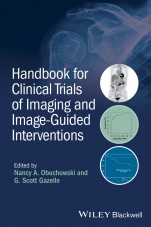
Handbook for Clinical Trials of Imaging and Image–Guided Interventions
ISBN 9781118849750
Autor: Nancy A. Obuchowski, G. Scott Gazelle
Wydawca: Wiley
Dostępność: 3-6 tygodni
Cena: 476,70 zł
Przed złożeniem zamówienia prosimy o kontakt mailowy celem potwierdzenia ceny.
ISBN13: |
9781118849750 |
ISBN10: |
1118849752 |
Autor: |
Nancy A. Obuchowski, G. Scott Gazelle |
Oprawa: |
Paperback |
Rok Wydania: |
2016-02-05 |
Ilość stron: |
224 |
Wymiary: |
226x152 |
Tematy: |
MBNS |
Handbook for Clinical Trials of Imaging and Image–Guided Interventions is the first single–source, multi–disciplinary reference, based on the didactic sessions presented at the annual Clinical Trials Methodology Workshop for radiologists, radiation oncologists and imaging scientists (sponsored by the Radiological Society of North America (RSNA)). It focuses on educating radiologists, radiation oncologists and those involved in imaging research with how to design and conduct clinical trials to evaluate imaging technology and imaging biomarkers.
The internationally renowned contributors take a broad approach, starting with principles of technology assessment, and then move into specific topics covering the clinical trials of therapy and clinical research in imaging guided interventions including radiotherapy. They discuss the use of imaging as a predictor of therapeutic response, screening trial design, and the practicalities of how to run an efficient clinical trial and good working practices. Later chapters provide a comprehensive array of quantitative methods including: an introduction to statistical considerations in study design, biostatistical analysis methods and their role in clinical imaging research, methods for quantitative imaging biomarker studies, and an introduction to cost effectiveness analysis.
Handbook for Clinical Trials of Imaging and Image–Guided Interventions will educate and prepare radiologists at all levels and in all capacities in planning and conducting clinical imaging trials.
Contributors
Chapter 1: Imaging Technology Assessment
1.1 Six Levels of Evidence: A Model of Technology Assessments in Imaging
1.1.1 Level 1: Technical Efficacy
1.1.2 Level 2: Diagnostic Accuracy
1.1.3 Levels 3 & 4: Impact on Diagnostic Thinking and Therapeutic Planning
1.1.4 Level 5: Patient Outcomes
1.1.5 Level 6: Societal Efficacy
1.2 Case Examples: Introducing Technology Assessment Methods into Study Design
1.3 Conclusion
Chapter 2: Clinical Trials of Therapy
2.1 Phase I, II, and III: Their Goals and Rationale
2.2 Therapeutic Roles: Prevention, Cure, and Palliation
2.3 Roles of Different Modalities
2.3.1 Surgery
2.3.2 Radiation therapy
2.3.3 Chemotherapy combinations
2.4 Study Planning
2.4.1 Sources for protocol ideas
2.4.2 Choice of primary and secondary objectives
2.4.3 Ways to speed protocol writing
2.4.4 Inclusion and exclusion criteria
2.4.4.1 Co–morbid conditions
2.4.4.2 Laboratory values
2.4.4.3 Trial time requirements, risk and accrual
2.4.5 Subject registration and accrual goals
2.4.6 Evaluation schedule
2.4.7 Treatment schedule
2.4.8 Assessment of toxicity and reporting adverse advents
2.4.9 Scheme for dose modification
2.4.10 Data collection and documentation
2.5 The Protocol Review Process
2.6 Funding and Budgeting
2.7 Enhancing Protocol Accrual
Chapter 3: Clinical Trials of Image Guided Interventions Including Radiotherapy Studies
3.1 Introduction
3.2 Establishing the Context for IGI Clinical Trials
3.2.1 Clinical utilities
3.2.2 Translational continuum
3.2.3 Why do IGI clinical trials differ from other therapy or imaging trials
3.3 A Paradigm for Considering IGI Clinical Trial Design3.4 Radiotherapy Trials
3.4 Radiotherapy Trials
3.4.1 Pre–clinical radiotherapy studies
3.4.2 Phase I radiotherapy studies
3.4.3 Phase II/III radiotherapy studies
3.5 Caveats in the Design and Conduct of IGI Trials
3.5.1 Defining the clinical trial cohort
3.5.2 Standardization of the study procedures and quality assurance
3.5.3 IGI trial quality assurance
3.5.4 IGI clinical trial endpoints: measures of success and failure
3.6 Potential Impediments to the Design and Conduct of IGI Clinical Trials
3.6.1 Evaluation of the placebo effect
3.6.2 Masking or blinding of investigators
3.6.3 Impediments related to Standard of Care control interventions
3.6.4 Rapid evolution of the IGI device and related devices multiple competitive IGI devices
3.6.5 The feasibility of randomized clinical trials of IGIs
3.6.6 Impediments to and pitfall in the conduct of the trial
3.7 Special Considerations and the Future
3.7.1 Conclusion
Chapter 4: Imaging as Predictor of Therapeutic Response
4.1 Introduction
4.1.1 What is a biomarker?
4.1.2 Why do we need imaging biomarkers to direct therapy?
4.1.3 Types of therapeutic biomarkers
4.2 Imaging Versus Tissue–based Biomarkers
4.3 Examples of Imaging Biomarker Applications
4.3.1 Prognostic markers
4.3.2 Predictive markers
4.3.3 Early response markers
4.3.4 Therapeutic benefit markers and surrogate measurements for long–term outcomes
4.4 Approach to biomarker study design
4.4.1 Standards for biomarker clinical trial design and results reporting
4.4.2 Integral versus integrated biomarkers
4.4.3 Altering therapy with early response markers
4.5 Practical Considerations
4.6 Conclusions
Chapter 5: Screening
5.1 Principles of Screening
5.1.1 Natural History of disease
5.1.2 Screening test characteristics
5.2 Screening Cascade
5.2.1 Negative test results
5.2.2 Positive test results
5.2.3 Incidental findings
5.3 Developing a Screening Trial Protocol
5.3.1 Identify the target population
5.3.2 Determine the screening regimens to be compared
5.3.3 Select clinical efficacy goals
5.3.4 Balance the benefits and potential harms of screening
5.4 Selecting a Study Design
5.4.1 Randomized controlled trials
5.4.2 Observational studies
5.4.3 Role of computer simulation modeling
5.4.4 Illustrative examples of imaging–based screening trials
Chapter 6: Practicalities of Running a Trial
6.1 Types of Clinical Trials
6.2 Practical Issues in Designing a Clinical Trial
6.2.1 Do the right trial
6.2.2 Define trial complexity
6.3 Case of CCTA
6.3.1 Costs/Budgets
6.3.2 Team
6.3.3 Feasibility
6.3.4 Good practices
6.3.5 Multi–center trials
6.4 Operational Aspects of Conducting a Clinical Trial
6.4.1 Good Clinical Practice (GCP)
6.4.2 The Principal Investigator
6.4.3 Data Security
6.4.4 Study Management
6.4.5 Processing workflow
6.5 Audits
6.6 Summary
Chapter 7: Statistical Issues in Study Design
7.1 Diversity in imaging study designs
7.2 Building blocks of an imaging research study
7.2.1 Turning research questions objectives and statistical hypotheses
7.2.2 Sampling from patient and reader populations
7.2.3 What is a reference standard?
7.3 Strategies for Efficient Studies
7.3.1 Retrospective or prospective?
7.3.2 Paired designs
7.3.3 Augmented and enriched designs
7.3.4 Randomization
7.3.5 Interim Analyses
7.4 Common Biases in Imaging Studies
7.4.1 Spectrum bias
7.4.2 Verification bias
7.5 Sample size considerations
7.5.1 Under–powered studies: clinical vs. statistical significance
7.5.2 Factors affecting sample size
7.5.3 Sample size calculations
7.5.4 Example sample size considerations for MRMC study
Chapter 8: Introduction to Biostatistical Methods
8.1 Role of Biostatistics in Clinical Imaging Research
8.2 Descriptive and Exploratory Data Analysis
8.2.1 Summary Statistics
8.2.1.1 Measures of central tendency
8.2.1.2 Measures of dispersion
8.2.1.3 Confidence Intervals
8.2.2 Graphs
8.3 Confirmatory Data Analysis (i.e., Hypothesis Testing)
8.3.1 Formulating the null and alternative hypotheses
8.3.2 Significance level, test statistics, and p–values
8.3.3 Types of hypothesis tests
8.3.3.1 Test for difference
8.3.3.2 Test for superiority
8.3.3.3 Test for equivalence
8.3.3.4 Test for non–inferiority
8.4 More on p–values
8.4.1 Problems with p–values
8.4.2 Relationship between p–values and confidence intervals
8.5 Advanced Topics: Statistical Modeling
8.5.1 Linear regression
8.5.2 Logistic regression
Chapter 9: Methods of Studies of Diagnostic Tests
9.1 Introduction
9.2 Sources of Variation
9.3 Assessing the Agreement Among Multiple Tests
9.3.1 Categorical Data and Kappa Statistics
9.3.2 Example: Kappa Statistics
9.3.3 Continuous Data and the Intraclass Correlation Coefficient (ICC)
9.3.4 Example: Bland–Altman plots
9.3.5 Example: Intraclass Correlation Coefficient (ICC)
9.4 Assessing the Accuracy of Diagnostic Tests n9.4.1 Notation
9.4.2 Test Performance: Sensitivity and Specificity
9.4.3 Performance: Positive Predictive Value and Negative Predictive Value
9.4.4 ROC curves and the Area Under the Curve (AUC)
9.4.5 Example: Illustration of ROC curves
9.5 Multi–Reader Multi–Modality Studies
9.5.1 Example: Reader Study of CAD for breast MR interpretation
9.5.2 A note on combining ROC curves or their AUCs
9.5.3 Elements of Generalizability
9.6 Logistics regression as tool for obtaining AUCs
Chapter 10: Methods for Quantitative Imaging Biomarker Studies
10.1 Quantitative Imaging Biomarkers (QIBs)
10.2 Evaluating the Technical Performance of QIBs
10.2.1 Bias
10.2.2 Repeatability
10.2.3 Reproducibility
10.3. Evaluating Analytical Properties of QIBs
10.3.1 Detection Capability: Limits of blank, detection, and quantification
10.3.2 Linearity and commutability
10.3.3 Measuring (analytical) precision
10.3.4 Measuring change
10.3.5 Special situations: no meaningful zero and/or no ground truth
10.4. Evaluating Clinical Properties of QIBs
10.4.1 Diagnosis: sensitivity, specificity, and receiver operating characteristic curves
10.4.2 Prediction: positive and negative predictive value
10.4.3 Association with patient outcomes
Chapter 11: Introduction to Cost–Effectiveness Analysis in Clinical Trials
11.1 Introduction
11.2 Types of economic analyses
11.2.1 Cost–effectiveness analysis
11.2.2 Cost–benefit analysis
11.2.3 Cost–minimization analysis
11.2.4 Cost–effectiveness analyses as part of comparative effectiveness research
11.2.5 Summary
11.3 Defining health–related quality of life
11.3.1 Why measure HRQOL
11.3.2 Language of HRQOL
11.4 Hierarchy of HRQOL Measures
11.4.1 Disease–specific instruments
11.4.2 Generic health status profiles
11.4.3 What constitutes a good measure?
11.4.3.1 Evaluative instruments
11.4.3.2 Discriminant instruments
11.4.4 Generic measures
11.4.4.1 Comparison of generic measures
11.4.4.2 Considerations in generic selection
11.4.5 Disease–specific measures
11.4.5.1 Considerations in disease–specific measures selection: A case–based example
11.4.6 Other considerations in measure selection
11.4.7 Summary
Index
Nancy A. Obuchowski, PhD Vice Chair for Quantitative Health Sciences, Cleveland Clinic Foundation, and Professor of Medicine at the Cleveland Clinic Lerner College of Medicine of Case Western Reserve University, USA
G. Scott Gazelle, MD, MPH, PhD, FACR Director Emeritus of the Massachusetts General Hospital Institute for Technology Assessment, Professor of Radiology at Harvard Medical School, and Professor in the Department of Health Policy and Management at the Harvard School of Public Health, USA
Koszyk
Książek w koszyku: 0 szt.
Wartość zakupów: 0,00 zł
Informacje


Kontakt
Gambit
Centrum Oprogramowania
i Szkoleń Sp. z o.o.
Al. Pokoju 29b/22-24
31-564 Kraków
Siedziba Księgarni
ul. Kordylewskiego 1
31-542 Kraków
+48 12 410 5991
+48 12 410 5987
+48 12 410 5989
Subskrypcje
Administratorem danych osobowych jest firma Gambit COiS Sp. z o.o. Na podany adres będzie wysyłany wyłącznie biuletyn informacyjny.
Autoryzacja płatności

Informacje na temat autoryzacji płatności poprzez PayU.

© Copyright 2012: GAMBIT COiS Sp. z o.o. Wszelkie prawa zastrzeżone.
Projekt i wykonanie: Alchemia Studio Reklamy