


Wydawcy
Katalog tematyczny
- Archeologia (109)
- Ekonomia, finanse, business (13704)
- Filozofia (1445)
- Historia (3040)
- Języki i językoznawstwo (2356)
- Lifestyle, hobby i rozrywka (475)
- Medycyna (9704)
- Nauki humanistyczne (4)
- Nauki o Ziemi i środowisku (2638)
- Nauki ścisłe (20412)
- Nauki społeczne (8486)
- Nauki techniczne (13450)
- Prawo (1696)
- Publikacje informacyjne i interdyscyplinarne (1288)
- Religia i wierzenia (917)
- Technika komputerowa (4067)
- Zdrowie, relacje międzyludzkie i rozwój osobisty (657)





Informacje szczegółowe o książce
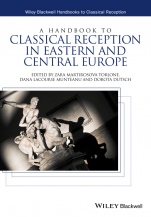
A Handbook to Classical Reception in Eastern and Central Europe
ISBN 9781118832714
Autor: Zara Martirosova Torlone, Dana LaCourse Munteanu, Dorota Dutsch
Wydawca: Wiley
Dostępność: 3-6 tygodni
Cena: 876,75 zł
Przed złożeniem zamówienia prosimy o kontakt mailowy celem potwierdzenia ceny.
ISBN13: |
9781118832714 |
ISBN10: |
111883271X |
Autor: |
Zara Martirosova Torlone, Dana LaCourse Munteanu, Dorota Dutsch |
Oprawa: |
Hardback |
Rok Wydania: |
2017-03-28 |
Ilość stron: |
632 |
Wymiary: |
249x181 |
Tematy: |
HB |
Central and Eastern Europe s rich and longstanding history of classical receptions is largely unknown beyond its borders. A Handbook to Classical Reception in Eastern and Central Europe is the first comprehensive English language study of the reception of classical antiquity in Eastern and Central Europe. This groundbreaking work offers detailed case studies of twelve countries that are fully contextualized historically, locally, and regionally.
This handbook is divided into chapters by country. Case studies delve into the pre–national and national receptions of classical literature and material culture Croatia, Slovenia, Czech Republic, Poland, Hungary, Romania, Bosnia–Herzegovina, Serbia and Montenegro, Bulgaria, Russia, Armenia and Georgia. This volume features contributions from scholars based both within and beyond the region, providing an invaluable range of perspectives which help to extend reception studies into histories, literatures, and cultures previously inaccessible to English speakers.
This handbook unveils ways in which specific national cultures have engaged with classical Greece and Rome and helps readers understand, in turn, how classical antiquity contributed to the idea of nation building in the region.List of contributors
I. Croatia
Neven Jovanovi
1. Classical Reception in Croatia: an Introduction
2. Pula And Split – The Early Modern Tale(S) Of Two Ancient Cities
Jasenka Gudelj
3. Croatian Neo–Latin literature and its uses
Neven Jovanovi
4. Humanists and the Classics in Venetian Dalmatia before the Age of Print
Luka poljari
5. The Swan Song of the Latin Homer
Petra o tari
II. Slovenia
Marko Marin i
6. Classical Reception in Slovenia: an Introduction
Marko Marin i
7. Collecting Roman inscriptions beyond the Alps: Augustinus Tyfernus
Marjeta a el Kos
8. Sta Maria sopra Siwa: Inventing a Slavic Venus
Marko Marin i
9. Images From Slovenian Dramatic And Theatrical Interpretations Of Ancient Drama
Andreja N. Inkret
III. Czech Republic
Jan Ba ant
10. Classical Reception in Croatia: an Introduction
Jan Ba ant
11. Classical Antiquity in Czech Literature between the National Revival and the Avant–Garde
Daniela adková
12. The Classical Tradition and Nationalism: Art and Architecture of Prague, 1860 1900
Jan Ba ant
13. The Case of Oresteia: Classical Drama on Czech Stage 1889–2012
Alena Sarkissian
IV. Poland
Dorota Dutsch
14. Classical Reception in Poland: an Introduction
Dorota Dutsch
15. From Fictitious Letters to Celestial Revolutions: Copernicus and the Classics
Dorota Dutsch and François Zdanowicz
16. Respublica and the Language of Freedom: The Polish Experiment
Anna Grze kowiak–Krwawicz
17. Two Essays On Classical Reception in Poland
Jerzy Axer
18. Greece as Poland in Juliusz S owacki s oeuvre
Maria Kalinowska
V. Hungary
Farkas Gábor Kiss
19. Classical Reception in Hungary: an Introduction
Farkas Gábor Kiss
20. Classical Reception in Sixteenth–Century Hungarian Drama
Ágnes Juhász–Ormsby
21. Truditur dies die: Reading Horace as a political attitude in nineteenth and twentieth century Hungary
Ábel Tamás
22. The Shepherdess and the Myrmillo
Nóra Veszprémi
VI. Romania
Dana Munteanu
23. Classical Reception in Romania: an Introduction
Radu Ardevan, Florin Berindeanu and Ioan Piso
24. Loving Vergil, Hating Rome: Co buc as Translator and Poet
Carmen Fenechiu and Dana Munteanu
25. Noica s Becoming within Being and Meno s Paradox
Octavian Gabor
26. Reception of the Tropaeum Traiani: Former Paths and Future Directions
Allison L.C. Emmerson
VII. Serbia–Montenegro
Nada Ze evic
27. Classical Reception in Bosnia–Herzegovina and Serbia: an Introduction
Nada Ze evic and Nenad Ristovi
28. Classical Antiquity in the Franciscan Historiography of Bosnia (18th c)
Nada Ze evi
29. Innovative Impact of the Classical Traditionon the Early Modern Serbian Literature
Nenad Ristovi
30. Classical Heritage in the Serbian Lyric Poetry of the 20th Century
Ana Petkovi
31. The Ancient Sources of Njego s Poetics
Darko Todorovi
VIII. Bulgaria
Yoana Sirakova
32. Classical Receptions in Bulgaria: An Introduction
Yoana Sirakova
33. Bulgarian Lands in Antiquity: A Melting Pot of Thracian, Greek, and Roman Culture
Mirena Slavova
34. In the Labyrinth of Allusions: Ancient Figures in Bulgarian Prose Fiction
Violeta Gerjikova
35. Bulgarian Orpheus between the National and the Foreign, between Antiquity and Postmodernism
Yoana Sirakova
36. Staging of Ancient Tragedies in Bulgaria and Their Influence on the Process of Translation and Creative Reception
Dorothea Tabakova
IX. Russia
Judith Kalb
37. Classical Reception in Russia: an Introduction
Judith E. Kalb
38. Men in Cases: The Perception of Classical Schools in Prerevolutionary Russia
Grigory Starikovsky
39. Homer in Russia
Judith E. Kalb
40. Vergil in Russia: Milestones of Identity
Zara Martirosova Torlone
41. Russian Encounters with Classical Antiquities: Archaeology, Museums, and National Identity in the Czarist Empire
Caspar Meyer
X. Armenia and Georgia
Zara M. Torlone
42. Classical Reception in Georgia: an Introduction
Ketevan Gurchiani
43. The Greek Tragedy on the Georgian Stage: 20th Century
Ketevan Gurchiani
44. Armenian Culture and Classical Antiquity
Armen Kazaryan and Gohar Mouradyan
45. Medieval Greek–Armenian Literary Relations
Gohar Muradyan
46. Classical Trend of Armenian Architectural School of Ani (10th–11th centuries): the Greco–Roman Model and the Conversion of Medieval Art
Armen Kazaryan
Zara Martirosova Torlone is Professor in the Department of Classics at Miami University, USA. She is the author of Russia and the Classics (2009) and Vergil in Russia (2015), editor of Classical Reception in Eastern Europe (a special issue of Classical Receptions Journal), and co editor of Insiders and Outsiders in Russian Cinema (with Stephen Norris, 2008). She has written numerous articles concerning classical literature and its reception, especially in Russian culture.
Dana LaCourse Munteanu is Associate Professor in the Department of Greek and Latin at Ohio State University, Newark, USA. She is the author of Tragic Pathos: Pity and Fear in Greek Philosophy and Tragedy (2012) and the editor of Emotion, Genre and Gender in Classical Antiquity (2011). She has written several articles on Greek philosophy, tragedy and the reception.
Dorota Dutsch is Associate Professor of Classics at the University of California, Santa Barbara, USA. She is the author of Feminine Discourse in Roman Comedy: On Echoes and Voices (2008), and co editor of Women in the Drama of the Roman Republic (with David Konstan and Sharon James, 2015), Ancient Obscenities (with Ann Suter, 2015),and The Fall of the City in the Mediterranean (with Ann Suter and Mary Bachvarova, 2016).Koszyk
Książek w koszyku: 0 szt.
Wartość zakupów: 0,00 zł
Informacje


Kontakt
Gambit
Centrum Oprogramowania
i Szkoleń Sp. z o.o.
Al. Pokoju 29b/22-24
31-564 Kraków
Siedziba Księgarni
ul. Kordylewskiego 1
31-542 Kraków
+48 12 410 5991
+48 12 410 5987
+48 12 410 5989
Subskrypcje
Administratorem danych osobowych jest firma Gambit COiS Sp. z o.o. Na podany adres będzie wysyłany wyłącznie biuletyn informacyjny.
Autoryzacja płatności

Informacje na temat autoryzacji płatności poprzez PayU.

© Copyright 2012: GAMBIT COiS Sp. z o.o. Wszelkie prawa zastrzeżone.
Projekt i wykonanie: Alchemia Studio Reklamy