


Wydawcy
Katalog tematyczny
- Archeologia (109)
- Ekonomia, finanse, business (13704)
- Filozofia (1445)
- Historia (3040)
- Języki i językoznawstwo (2356)
- Lifestyle, hobby i rozrywka (475)
- Medycyna (9704)
- Nauki humanistyczne (4)
- Nauki o Ziemi i środowisku (2638)
- Nauki ścisłe (20412)
- Nauki społeczne (8486)
- Nauki techniczne (13450)
- Prawo (1696)
- Publikacje informacyjne i interdyscyplinarne (1288)
- Religia i wierzenia (917)
- Technika komputerowa (4067)
- Zdrowie, relacje międzyludzkie i rozwój osobisty (657)





Informacje szczegółowe o książce
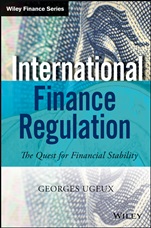
International Finance Regulation: The Quest for Financial Stability
ISBN 9781118829592
Autor: Georges Ugeux
Wydawca: Wiley
Dostępność: 3-6 tygodni
Cena: 359,10 zł
Przed złożeniem zamówienia prosimy o kontakt mailowy celem potwierdzenia ceny.
ISBN13: |
9781118829592 |
ISBN10: |
111882959X |
Autor: |
Georges Ugeux |
Oprawa: |
Hardback |
Rok Wydania: |
2014-08-08 |
Ilość stron: |
240 |
Wymiary: |
233x161 |
Tematy: |
KF |
Praise for International Finance Regulation Building on his extensive experience as a market regulator, law professor, and internationalist, Georges Ugeux has produced an eminently readable exposition of the disparate threads that caused the recent breakdown of global financial systems, and the serious deficiencies permeating existing regulatory mechanisms that shouldbut are unable toprevent future breakdowns. His analysis culminates in his carefully conceived outline of the necessary components of effective global financial regulatory reform. This is a must–read for regulators, market professionals, and anyone concerned about the future of financial regulation as well as those looking for creative approaches to restore global financial stability. Harvey L. Pitt, CEO, Kalorama Partners, LLC; Former SEC Chairman (20012003) The great interest of Georges Ugeuxs book is that it puts together issues which are too often dealt with separately. Therefore, this well–documented book provides a more comprehensive view of what is needed to get a more stable financial world. Philippe Maystadt, special advisor to Commissioner Barnier, former president of the European Investment Bank In a short book, Georges Ugeux has covered the waterfront, with fresh and incisive observations on a host of topics. You may not agree with every judgment that he reaches, but he will make you think and respond. As usual, he is stimulating, hard–nosed, and delightfully judgmental. John Coffee, Adolf A. Berle Professor of Law at Columbia University Law School; Director of the Columbia University Law Schools Center on Corporate Governance
Preface Is Finance In a Stage of Permanent Crisis? Global Markets Are Interconnected Regulating Finance in a World in Crisis A Web of Institutional Complexity Will Global Financial Regulation become Lex America? Applying Global Regulatory Convergence Regulator and Regulated: The Infernal Couple Finance Cannot Be Left Unregulated Five Years after Lehman, Regulation Could Not Change the Culture A Culture of Outlaws I Will Never Give Up Notes Chapter 1: The Multiple Objectives of Financial Regulation 1 Stop (Ab)using Taxpayer Money Protect Retail and Small Investors and Depositors Ensure Transparency of Markets and Institutions Implement a Truly Risk Adjusted Remuneration System Protect Deposits from Trading Notes Chapter 2: A Quarter Century of Banking Crises and the Evolution of Financial Institutions Banking Crises are No Exactly a Recent Phenomenon The Two Main Emerging Market Crises The Subprime Crisis The Lehman Crisis The European Sovereign Debt Crisis The European Banking Crisis The Libor Manipulation Will the Foreign Exchange Market Be Next? Notes Chapter 3: The Lessons of the Recent Financial Crises: The Explosion of Balance Sheets The Structural Overbanking of Europe The Lack of Transparency of the Derivative Markets The Emergence of the Credit Default Swaps (CDS) Market The Regulatory Landscape Is Not Global, But Largely National Notes Chapter 4: Global Financial Regulation: The Institutional Complexities The Group of Twenty (G20) The Financial Stability Board (FSB) The Bank for International Settlements (BIS) and the Basel Committee (BCBS) The International Monetary Fund (IMF) The International Organization of Securities Commissions (IOSCO) The International Accounting Standard Board (IASB) The International Association of Insurance Supervisors (IAIS) Notes Chapter 5: Capital Adequacy, Liquidity and Leverage Ratios: Sailing Towards the Basel III Rules Part I: Capital Adequacy Part II: Liquidity Part III: Leverage Notes Chapter 6: Assessing Likely Impacts of Regulation on the Real Economy Notes Chapter 7: Regulating the Derivatives Market The Origin of the Derivatives Market The Size of the Derivatives Markets U.S. Regulation: Dodd Frank Act European Market Infrastructure Regulation (EMIR) The Transatlantic Divergences Short Selling is a Form of Derivative The JP Morgan Chase London Trading Losses Notes Chapter 8: The Structure of Banking: How Many Degrees of Separation? Systemically Important Financial Institutions (SIFI) The Universal Banking Model Separation Models United Kingdom United States European Union Switzerland The Volcker Rule and Proprietary Trading 15 Too Big To Fail (TBTF): Is Size the Problem? Prohibit the Trading of Commodities by Banks Notes Chapter 9: Banking Resolution and Recovery Moral Hazard Can the Bail–In Concept Avoid Taxpayers’ Bailout? Lessons from the Financial Crisis Living Will or How Banks Want to Be Treated if They Are Close to Collapsing United States The Citi Recovery Plan The Role of the Federal Deposit Insurance Corporation in the United States Sheila Bair Was the Chair of FDIC during the Financial Crisis United Kingdom European Banking Resolution and Recovery Directive Regulatory Technical Standards Can Resolution Rules be Effective? An Impossible European Institutional Challenge Who Will Decide to Put Companies Under Resolution Surveillance? Notes Chapter 10: Banking and Shadow Banking Hedge Funds United States Europe Other Types of Shadow Banking Capital Markets and Securitization Notes Chapter 11: Rating Agencies and Auditors Part I: The Rating Agencies Part II: External Auditors Part III: The Limits of Accountability Notes Chapter 12: Central Banks As Lenders of Last Resort Have a Conflict of Interest with Their Regulatory Role Financial Stability The United States: Quantitative Easing European Central Bank: The Long Term Revolving Operations (LTRO) The United Kingdom Japan and Abenomics Are Central Banks Balance Sheets Eternally Expandable? Have they becomeHedge Funds? Is This Novation of Central Banks Legitimate or Legal? Notes Chapter 13: Financial Institutions Governance (or Lack Thereof) Risk Management The Dysfunctional Boards of Directors Should the Chairperson Also be the CEO? Remuneration and Risks Personal or Institutional Accountability Notes Chapter 14: Was it a Global Crisis? The Asian Perspective Japan China India Assessing the Asian Risk Notes Chapter 15: The Challenges of Global Regulation Regulation, Policies, and Politics Regulators and Sovereign Financing The ECB Supervision: The E.U. Governance Challenges The Risks of Regulatory Fragmentation Bank Resolution: The Legal Nightmare Basel III The Reemergence of Capital Markets Restructuring Finance Should Financial Communication Be Regulated? Should Financial Media Respect a Code of Conduct? Financial Education is Key Notes Chapter 16: Regulation and Ethics Management Integrity Accountability Transparency is Key A Principled Regulatory System is Needed Doing the Right Thing Notes Conclusion: What Can We Expect? A few books I read and found helpful… About the Author Index
GEORGES UGEUX, a lawyer and economist by training, is the Chairman and CEO of Galileo Global Advisors. Prior to founding Galileo, Ugeux joined the New York Stock Exchange as Group Executive Vice President, International and Research. He created and ran the New York Stock Exchanges international group in charge of developing the NYSEs reach to non–US companies, including relationships with regulators and governments. Ugeux teaches European Banking and Finance at the Columbia University School of Law and has been publishing, speaking, and blogging on these issues, namely for Le Monde (France) and the Huffington Post.
Koszyk
Książek w koszyku: 0 szt.
Wartość zakupów: 0,00 zł
Informacje


Kontakt
Gambit
Centrum Oprogramowania
i Szkoleń Sp. z o.o.
Al. Pokoju 29b/22-24
31-564 Kraków
Siedziba Księgarni
ul. Kordylewskiego 1
31-542 Kraków
+48 12 410 5991
+48 12 410 5987
+48 12 410 5989
Subskrypcje
Administratorem danych osobowych jest firma Gambit COiS Sp. z o.o. Na podany adres będzie wysyłany wyłącznie biuletyn informacyjny.
Autoryzacja płatności

Informacje na temat autoryzacji płatności poprzez PayU.

© Copyright 2012: GAMBIT COiS Sp. z o.o. Wszelkie prawa zastrzeżone.
Projekt i wykonanie: Alchemia Studio Reklamy