


Wydawcy
Katalog tematyczny
- Archeologia (109)
- Ekonomia, finanse, business (13704)
- Filozofia (1445)
- Historia (3040)
- Języki i językoznawstwo (2356)
- Lifestyle, hobby i rozrywka (475)
- Medycyna (9704)
- Nauki humanistyczne (4)
- Nauki o Ziemi i środowisku (2638)
- Nauki ścisłe (20412)
- Nauki społeczne (8486)
- Nauki techniczne (13450)
- Prawo (1696)
- Publikacje informacyjne i interdyscyplinarne (1288)
- Religia i wierzenia (917)
- Technika komputerowa (4067)
- Zdrowie, relacje międzyludzkie i rozwój osobisty (657)





Informacje szczegółowe o książce
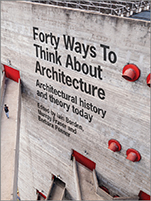
Forty Ways to Think About Architecture: Architectural History and Theory Today
ISBN 9781118822616
Autor: Iain Borden, Murray Fraser, Barbara Penner
Wydawca: Wiley
Dostępność: 3-6 tygodni
Cena: 178,50 zł
Przed złożeniem zamówienia prosimy o kontakt mailowy celem potwierdzenia ceny.
ISBN13: |
9781118822616 |
ISBN10: |
1118822617 |
Autor: |
Iain Borden, Murray Fraser, Barbara Penner |
Oprawa: |
Paperback |
Rok Wydania: |
2014-07-04 |
Ilość stron: |
280 |
Wymiary: |
199x150 |
Tematy: |
AM |
How do we think about architecture historically and theoretically? Forty Ways to Think about Architecture provides an introduction to some of the wide–ranging ways in which architectural history and theory are being approached today. The inspiration for this project is the work of Adrian Forty, Professor of Architectural History at the Bartlett School of Architecture, University College London (UCL), who has been internationally renowned as the UK’s leading academic in the discipline for 40 years. Forty’s many publications, notably Objects of Desire (1986), Words and Buildings (2000) and Concrete and Culture (2012), have been crucial to opening up new approaches to architectural history and theory and have helped to establish entirely new areas of study. His teaching at The Bartlett has enthused a new generation about the exciting possibilities of architectural history and theory as a field. This collection takes in a total of 40 essays covering key subjects, ranging from memory and heritage to everyday life, building materials and city spaces. As well as critical theory, philosophy, literature and experimental design, it refers to more immediate and topical issues in the built environment, such as globalisation, localism, regeneration and ecologies. Concise and engaging entries reflect on architecture from a range of perspectives. Contributors include eminent historians and theorists from elsewhere – such as Jean–Louis Cohen, Briony Fer, Hilde Heynen, Mary McLeod, Griselda Pollock, Penny Sparke and Anthony Vidler – as well as Forty’s colleagues from the Bartlett School of Architecture including Iain Borden, Murray Fraser, Peter Hall, Barbara Penner, Jane Rendell and Andrew Saint. Forty Ways to Think about Architecture also features contributions from distinguished architects, such as Tony Fretton, Jeremy Till and Sarah Wigglesworth, and well–known critics and architectural writers, such as Tom Dyckhoff, William Menking and Thomas Weaver. Many of the contributors are former students of Adrian Forty. Through these diverse essays, readers are encouraged to think about how architectural history and theory relates to their own research and design practices, thus using the work of Adrian Forty as a catalyst for fresh and innovative thinking about architecture as a subject.
Acknowledgements Introduction Adrian Forty, Future Imperfect: Inaugural Professorial Lecture, delivered at UCL in December 2000 1. Andrew Saint, How To Write About Buildings? 2. Anne Hultzsch, Pevsner vs Colomina: Word and Image on the Page 3. Anthony Vidler, Smooth and Rough: Tactile Brutalism 4. Barbara Penner, Homely Affinities Acknowledgements Introduction Adrian Forty, Future Imperfect: Inaugural Professorial Lecture, delivered at UCL in December 2000 1. Andrew Saint, How To Write About Buildings? 2. Anne Hultzsch, Pevsner vs Colomina: Word and Image on the Page 3. Anthony Vidler, Smooth and Rough: Tactile Brutalism 4. Barbara Penner, Homely Affinities 5. Ben Campkin, On Regeneration 6. Brian Stater, Fresh Reactions to St Paul’s Cathedral 7. Briony Fer, Photographs and Buildings (mainly) 8. David Dunster, Stirling’s Voice: A Detailed Suggestion 9. Davide Deriu, Carte Blanche? 10. Eleanor Young, Buildings: A Reader’s Guide 11. Griselda Pollock, The City and the Event: Disturbing, Forgetting and Escaping Memory 12. Hilde Heynen, The Most Modern Material Of Them All … 13. Iain Borden, ‘Things that People Cannot Anticipate’: Skateboarding at the Southbank Centre 14. Irena antovská Murray, ‘Truth, Love, Life’: Building with Language in Prague Castle under Masaryk 15. Jan Birksted, Le Corbusier: Lies, Damned Lies and Statistics 16. Jane Rendell, During Breakfast 17. Jean–Louis Cohen, [American] Objects of [Soviet] Desire 18. Jeremy Melvin, Words and Buildings 19. Jeremy Till, Slow Hard Look 20. Joe Kerr, Topography, Biography and Architecture 21. John Macarthur, Of Character and Concrete: The Historian’s Material 22. Jonathan Charley, Spectres of Marx in City X 23. Jonathan Hill, History by Design 24. Kester Rattenbury, Angel Place: A Way In to Dickens’s London 25. Laurent Stalder , On ‘Sachlichkeit’: Some Additional Remarks on an Anglo–German Encounter 26. Mark Swenarton, Double Vision 27. Mary McLeod, Modernism 28. Michael Edwards , Yes, And We Have No Dentists 29. Murray Fraser, Reyner Banham’s Hat 30. Peg Rawes, Situated Architectural Historical Ecologies 31. Penny Sparke, Objects 32. Sir Peter Hall, Richard Llewelyn Davies, 1912–1981: A Lost Vision for The Bartlett 33. Sarah Wigglesworth, Things Ungrand 34. Tania Sengupta, The Everyday Lives of ‘Minor’ Spaces in Officers’ Bungalows of Colonial Bengal 35. Thomas Weaver, Memoirs of Adrian 36. Tom Dyckhoff, All That Glitters 37. Tony Fretton, A Response to Words and Buildings 38. Victoria Perry, Material Culture: ‘Manchester of the East’, Le Corbusier, Eames and Indian Jeans 39. William Menking, Mr Mumford’s Neighbourhood 40. Yat Ming Loo, Banyan Tree and Migrant Cities: Some Provisional Thoughts for a Strategic Postcolonial Cosmopolitanism Author Biographies
Iain Borden is Professor of Architecture and Urban Culture at the Bartlett School of Architecture, UCL, where he is also Director of Architectural History & Theory and the Vice–Dean of Communications for the wider Bartlett Faculty of the Built Environment. Murray Fraser is Professor of Architecture and Global Culture at the Bartlett School of Architecture, UCL, where he acts as the Vice–Dean of Research for the Bartlett Faculty of the Built Environment. Barbara Penner is Senior Lecturer in Architectural History at the Bartlett School of Architecture, UCL, where she is Programme Director for both the PhD Architectural History & Theory and BSc Architectural and Interdisciplinary Studies.
Koszyk
Książek w koszyku: 0 szt.
Wartość zakupów: 0,00 zł
Informacje


Kontakt
Gambit
Centrum Oprogramowania
i Szkoleń Sp. z o.o.
Al. Pokoju 29b/22-24
31-564 Kraków
Siedziba Księgarni
ul. Kordylewskiego 1
31-542 Kraków
+48 12 410 5991
+48 12 410 5987
+48 12 410 5989
Subskrypcje
Administratorem danych osobowych jest firma Gambit COiS Sp. z o.o. Na podany adres będzie wysyłany wyłącznie biuletyn informacyjny.
Autoryzacja płatności

Informacje na temat autoryzacji płatności poprzez PayU.

© Copyright 2012: GAMBIT COiS Sp. z o.o. Wszelkie prawa zastrzeżone.
Projekt i wykonanie: Alchemia Studio Reklamy