


Wydawcy
Katalog tematyczny
- Archeologia (109)
- Ekonomia, finanse, business (13704)
- Filozofia (1445)
- Historia (3040)
- Języki i językoznawstwo (2356)
- Lifestyle, hobby i rozrywka (475)
- Medycyna (9704)
- Nauki humanistyczne (4)
- Nauki o Ziemi i środowisku (2638)
- Nauki ścisłe (20412)
- Astronomia (294)
- Biologia (5119)
- Chemia (6540)
- Chemia analityczna (361)
- Chemia fizyczna (346)
- Chemia nieorganiczna (137)
- Chemia organiczna (535)
- Krystalografia (27)
- Minerologia (46)
- Fizyka (3309)
- Matematyka (4574)
- Nauki ścisłe, ogólnie (503)
- Nauki społeczne (8486)
- Nauki techniczne (13450)
- Prawo (1696)
- Publikacje informacyjne i interdyscyplinarne (1288)
- Religia i wierzenia (917)
- Technika komputerowa (4067)
- Zdrowie, relacje międzyludzkie i rozwój osobisty (657)





Informacje szczegółowe o książce
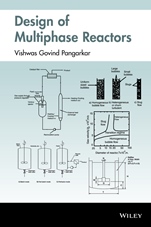
Design of Multiphase Reactors
ISBN 9781118807569
Autor: Vishwas G. Pangarkar
Wydawca: Wiley
Dostępność: 3-6 tygodni
Cena: 576,45 zł
Przed złożeniem zamówienia prosimy o kontakt mailowy celem potwierdzenia ceny.
ISBN13: |
9781118807569 |
ISBN10: |
1118807561 |
Autor: |
Vishwas G. Pangarkar |
Oprawa: |
Hardback |
Rok Wydania: |
2015-03-17 |
Ilość stron: |
536 |
Wymiary: |
241x158 |
Tematy: |
PN |
Details simple design methods for multiphase reactors in the chemical process industries Design of Multiphase Reactors is aimed at providing the process design engineer with simple yet theoretically sound procedures. The book deals with different types of multiphase reactors on an individual basis including two widely used and important reactors that have not received adequate attention particularly: the ventury loop reactor and stirred reactors for cell culture technology. For each reactor type the book discusses the basic theory, develops quantitative models for reactor design and operation and comments on the state of knowledge. After this treatment it proceeds to give illustrative reactor design procedures. The solved reactor design examples for industrially important applications are another attraction of this book besides the addition of the two important reactor types. Design of Multiphase Reactors features: Basic aspects of transport in multiphase reactors and the importance of relatively reliable and simple procedures for predicting mass transfer parameters Design and scale up aspects of several important types of multiphase reactors Illustrated examples through design methodologies presenting different reactors for reactions that are industrially important A simple spreadsheet packages rather than complex algorithms / programs for computational aid The approach used in this book is to develop reliable procedures for predicting mass transfer coefficients. The focus is on providing correlations that are independent of the geometric configuration and size of the reactor. Vishwas G. Pangarkar was Professor and head of the Chemical Engineering Department of the University Institute of Chemical Technology in Mumbai, India. He has been actively engaged as a consultant in the chemical industry since 1974 for both Indian and overseas companies. He is the (co)author of three books and over 130 professional papers. He is the only Indian winner of both Herdillia and NOCIL Award of The Indian Institute of Chemical Engineers , which are for excellence in such diverse fields as basic research and industrial innovations.
Chapter 1 Evolution of the chemical industry and importance of multiphase reactors 1.1 Evolution of chemical process industries 1.2 Sustainable and Green processing requirements in the modern chemical industry 1.3 Catalysis 1.4 Parameters concerning catalyst effectiveness in industrial operations 1.5 Importance of advanced instrumental techniques in understanding catalytic phenomena 1.6 Role of nanotechnology in catalysis 1.7 Click chemistry 1.8 Role of multiphase reactors 1.9 References Chapter 2 Multiphase reactors: The design and scale–up problem 2.1 Introduction 2.2 The scale up conundrum 2.3 Intrinsic kinetics: Invariance with respect to type/size of multiphase reactor 2.4 Transport processes: Dependence on type/size of multiphase reactor 2.5 Prediction of the rate controlling step in the industrial reactor 2.6 Laboratory methods for discerning intrinsic kinetics of multiphase reactions 2.7 Nomenclature 2.8 References Chapter 3 Multiphase reactors: Types and criteria for selection for a given application 3.1 Introduction to simplified design philosophy 3.2 Classification of multiphase reactors 3.3 Criteria for reactor selection 3.4 Some examples of large scale applications of multiphase reactors 3.5 Nomenclature 3.6 References Chapter 4 Turbulence: Fundamentals and relevance to multiphase reactors 4.1 Introduction 4.2 Fluid turbulence 4.3 Nomenclature 4.4 References Chapter 5 Principles of Similarity and their application for scale–up of multiphase reactors 5.1 Introduction to principles of similarity and a historic perspective 5.2 States of similarity of relevance to chemical process equipments 5.3 Nomenclature 5.4 References Chapter 6 Mass Transfer in Multiphase Reactors: Some theoretical considerations 6.1 Introduction 6.2 Purely empirical correlations using operating parameters and physical properties 6.3 Correlations based on mechanical similarity 6.4 Correlations based on hydrodynamic/turbulence regime similarity 6.5 Nomenclature 6.6 References Chapter 7A Stirred tank reactors for chemical reactions 7A.1 Introduction 7A.2 Power requirements of different impellers 7A.3 Hydrodynamic regimes in 2–phase (gas–liquid) stirred tank reactors 7A.4 Hydrodynamic regimes in three phase (gas–liquid–solid) stirred tank reactors 7A.5 Gas hold–up in stirred tank reactors 7A.6 Gas–liquid mass transfer coefficient in stirred tank reactor 7A.7 Solid–liquid mass transfer coefficient in stirred tank reactor 7A.8 Design of stirred tank reactors with internal cooling coils 7A.9 Stirred tank reactor with internal draft tube 7A.10 Worked Example: Design of stirred reactor for hydrogenation of aniline to cyclohexylamine. 7A.11 Nomenclature 7A.12 References Chapter 7 B Stirred tank reactors for cell culture technology 7B.1 Introduction 7B.2 The Biopharmaceutical process and cell culture engineering 7B.3 Types of bioreactors 7B.4 Modes of operation of bioreactors 7B.5 Cell retention techniques for use in continuous operation in suspended cell perfusion processes 7B.6 Types of cells and modes of growth 7B.7 Growth phases of cells 7B.8 The cell and its viability in bioreactors 7B.9 Hydrodynamics 7B.10 Gas dispersion 7B.11 Solid suspension 7B.12 Mass transfer 7B.13 Foaming in cell culture systems: Effects on hydrodynamics and mass transfer. 7B.14 Heat transfer in stirred bioreactors 7B.15 Worked cell culture reactor design example 7B.16 Special aspects of stirred bioreactor design 7B.17 Concluding remarks 7B.18 Nomenclature 7B.19 References Chapter 8 Ventury Loop Reactor 8.1 Introduction 8.2 Application areas for the ventury loop reactor 8.3 Advantages of the ventury loop reactor: A detailed comparison 8.4 The ejector based liquid jet ventury loop reactor 8.5 The ejector–diffuser system and its components 8.6 Hydrodynamics of liquid jet ejector 8.7 Design of ventury loop reactor 8.8 Solid suspension in ventury loop reactor 8.9 Solid liquid mass transfer 8.10 Holding vessel size 8.11 Recommended overall configuration 8.12 Scale up of ventury loop reactor 8.13 Worked examples for design of ventury loop reactor: Hydrogenation of aniline to cyclohexylamine 8.14 Nomenclature 8.15 References Chapter 9 Gas inducing reactors 9.1 Introduction and application areas of gas inducing reactors 9.2 Mechanism of gas induction 9.3 Classification of gas inducing impellers 9.4 Multiple impeller systems using 2–2 type impeller for gas induction 9.5 Worked example: Design of gas inducing system with multiple impellers for hydrogenation of aniline to cyclohexylamine. 9.6 Nomenclature 9.7 References Chapter 10 Two and Three phase Sparged Reactors 10.1 Introduction 10.2 Hydrodynamic regimes in two/three phase sparged reactors (TPSR) 10.3 Gas hold–up 10.4 Solid–liquid mass transfer coefficient, KSL 10.5 Gas–liquid mass transfer coefficient, kLa 10.6: Axial Dispersion 10.7 Comments on scale up of three phase sparged reactor/bubble columns 10.8 Reactor design example for Fischer–Tropsch synthesis reactor 10.9 Three phase sparged loop reactor with internal draft tube (BCDT) 10.10 Nomenclature 10.11 References
Vishwas Govind Pangarkar was Professor and head of the Chemical Engineering Department of the University Institute of Chemical Technology in Mumbai, India. He has been actively engaged as a consultant in the chemical industry since 1974 for both Indian and overseas companies. He is the (co)author of three books and over 130 professional papers. He is the only Indian winner of both Herdillia and NOCIL Awards of The Indian Institute of Chemical Engineers, which are for excellence in such diverse fields as basic research and industrial innovations.
Koszyk
Książek w koszyku: 0 szt.
Wartość zakupów: 0,00 zł
Informacje


Kontakt
Gambit
Centrum Oprogramowania
i Szkoleń Sp. z o.o.
Al. Pokoju 29b/22-24
31-564 Kraków
Siedziba Księgarni
ul. Kordylewskiego 1
31-542 Kraków
+48 12 410 5991
+48 12 410 5987
+48 12 410 5989
Subskrypcje
Administratorem danych osobowych jest firma Gambit COiS Sp. z o.o. Na podany adres będzie wysyłany wyłącznie biuletyn informacyjny.
Autoryzacja płatności

Informacje na temat autoryzacji płatności poprzez PayU.

© Copyright 2012: GAMBIT COiS Sp. z o.o. Wszelkie prawa zastrzeżone.
Projekt i wykonanie: Alchemia Studio Reklamy