


Wydawcy
Katalog tematyczny
- Archeologia (109)
- Ekonomia, finanse, business (13704)
- Filozofia (1445)
- Historia (3040)
- Języki i językoznawstwo (2356)
- Lifestyle, hobby i rozrywka (475)
- Medycyna (9704)
- Nauki humanistyczne (4)
- Nauki o Ziemi i środowisku (2638)
- Nauki ścisłe (20412)
- Nauki społeczne (8486)
- Nauki techniczne (13450)
- Budownictwo lądowe (1045)
- Chemia przemysłowa (2258)
- Elektronika i telekomunikacja (3287)
- Energetyka (1122)
- Inne nauki stosowane (363)
- Inżynieria biochemiczna (507)
- Inżynieria transportu (232)
- Mechanika i materiały (3316)
- Nauka o środowisku (321)
- Rolnictwo (507)
- Technika, ogólnie (475)
- Prawo (1696)
- Publikacje informacyjne i interdyscyplinarne (1288)
- Religia i wierzenia (917)
- Technika komputerowa (4067)
- Zdrowie, relacje międzyludzkie i rozwój osobisty (657)





Informacje szczegółowe o książce
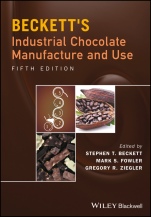
Becketts Industrial Chocolate Manufacture and Use
ISBN 9781118780145
Autor: Steve T. Beckett, Mark S. Fowler, Gregory R. Ziegler
Wydawca: Wiley
Dostępność: 3-6 tygodni
Cena: 1 056,30 zł
Przed złożeniem zamówienia prosimy o kontakt mailowy celem potwierdzenia ceny.
ISBN13: |
9781118780145 |
ISBN10: |
1118780140 |
Autor: |
Steve T. Beckett, Mark S. Fowler, Gregory R. Ziegler |
Oprawa: |
Hardback |
Rok Wydania: |
2017-05-05 |
Numer Wydania: |
5th Edition |
Ilość stron: |
800 |
Wymiary: |
244x170 |
Tematy: |
TG |
Since the publication of the first edition of Industrial Chocolate Manufacture and Use in 1988, it has become the leading technical book for the industry.
Fully revised, this fifth edition provides up to date information on all major aspects of chocolate manufacture and use, and features new chapters on artisan chocolate making, chocolate compounds and coatings, and sensory evaluation and analysis.
From the beginning it was recognised that the complexity of the chocolate industry means that no single person can be an expert in every aspect of it. For example, the academic view of a process such as crystallisation can be very different from that of a tempering machine operator. It is also known that the biggest selling chocolate, in say the USA, tastes very different from that in the UK. With both of these issues in mind, many topics are covered in multiple chapters by an international group of leading authors, providing different perspectives.
Beckett′s Industrial Chocolate Manufacture and Use is an essential purchase for all those involved in the manufacture, use and sale of chocolate containing products. It is an indispensible handbook for chocolate scientists, engineers and technologists working both in industry and academia.
Notes on Contributors
Preface
1 TRADITIONAL CHOCOLATE MAKING
S.T. Beckett
1.1 History
1.2 Outline of Process
1.3 Concept of the book
2 COCOA BEANS: FROM TREE TO FACTORY
M.S. Fowler & F Coutel
2.1 Introduction
2.2 Growing cocoa
2.3 Fermentation & drying
2.4 The cocoa supply chain
2.5 The cocoa value chain: long–term perspectives and challenges
2.6 Quality assessment of cocoa
2.7 Types and origins of cocoa beans used in chocolate
Conclusions
References
Abbreviations / Acronyms / Organisations
3 PRODUCTION OF COCOA MASS, COCOA BUTTER AND COCOA POWDER
H.J. Kamphuis, revised by M.S. Fowler
3.1 Introduction
3.2 Cleaning of cocoa beans
3.3 Removal of shell
3.4 Breaking and winnowing
3.5 Alkalization
3.6 Bean and nib roasting
3.7 Cocoa mass (cocoa liquor)
3.8 Cocoa butter
3.9 Cocoa press cake and cocoa powder
3.10 Summary
References & further reading
Manufacturers of cocoa processing equipment
4 SUGAR AND BULK SWEETENERS
Ch. Krüger
4.1 Introduction
4.2 The production of sugar
4.3 Sugar qualities
4.4 The storage of sugar
4.5 Sugar grinding and the prevention of dust explosions
4.6 Amorphous sugar
4.7 Other sugars and bulk sweeteners
4.8 Physiological characteristics of sugars, bulk sweeteners and special polysaccharides
4.9 The sweetening power of sugars and bulk sweeteners
4.10 Other sensory properties of sugars and bulk sweeteners
4.11 Solubilities and melting points of sugars and bulk sweeteners
4.12 Maximum conching temperatures of chocolate masses with different bulk sweeteners
4.13 Separate conching process for no sugar added chocolates
4.14 Pre– and probiotic chocolates
Conclusions
References
5 INGREDIENTS FROM MILK
U.P. Skytte and K.E. Kaylegian
5.1 Introduction
5.2 Milk components
5.3 Milk based ingredients for chocolate
5.4 Summary
References
6 CHOCOLATE CRUMB
M.A. Wells
6.1 Introduction and history
6.2 Benefits of milk crumb
6.3 Typical crumb recipes
6.4 Flavour development in chocolate crumb
6.5 Sugar crystallisation during crumb manufacture
6.6 The structure of chocolate crumb
6.7 Typical crumb processes and equipment
6.8 Effect of the crumb process upon the crumb properties
6.9 Changes to crumb during storage
Conclusions
References
7 PROPERTIES OF COCOA BUTTER AND VEGETABLE FATS
G. Talbot
7.1 Introduction
7.2 Cocoa butter
7.3 Cocoa butter equivalents (CBEs)
7.4 Lauric cocoa butter substitutes (CBSs)
7.5 Non–lauric cocoa butter replacers (CBRs)
7.6 Vegetable fats with specific properties
Summary
References
8 FLAVOUR DEVELOPMENT IN COCOA AND CHOCOLATE
G. Ziegleder
8.1 Introduction
8.2 Fermentation
8.3 Drying
8.4 Roasting
8.5 Conching
8.6 Dark chocolate and milk chocolate
8.7 Flavour release in chocolate
References
9 PARTICLE SIZE REDUCTION
G.R. Ziegler & R. Hogg
9.1 Introduction
9.2 Principles of fine grinding
9.3 Grinding equipment
9.4 Cocoa nib grinding
9.5 Chocolate refining
9.6 Particle size reduction and chocolate flow properties
9.7 Particle size and sensory properties
Conclusions
References
10 CONCHING
S.T. Beckett, K. Paggios and I. Roberts
10.1 Introduction: the reason for conching
10.2 The principles of conching
10.3 The three phases of conching
10.4 Conching machines
Summary
References
11. CHOCOLATE FLOW PROPERTIES
B Wolf
11.1. Introduction
11.2. Non–Newtonian flow
11.3. Presentation of viscosity measurements
11.4. Single point flow measurement
11.5. Rotational viscometers
11.6. Vibrational viscometers
11.7. Oscillatory rheometers
11.8. Sample preparation and measurement procedures
11.9. Factors affecting the flow properties of chocolate
11.10. Advanced methods to characterise chocolate flow behaviour
Acknowledgements
References
12 BULK CHOCOLATE HANDLING
J.H. Walker
12.1 Introduction
12.2 Viscosity and viscometry
12.3 Pump sizes
12.4 General criteria for choosing a pump
12.5 Types of pump
12.6 Pipeline pigging
12.7 Storage of liquid chocolate
12.8 Jacketed pipe work
12.9 Valves
12.10 Contamination removal
Acknowledgements
Conclusions
13 TEMPERING
E.Windhab
13.1 Introduction
13.2 Physics of cocoa butter crystallization
13.3 Chocolate tempering technology
13.4 Measurement of temper and its related characteristics
13.5 Tempering process
13.6 Types of tempering machine
13.7 Properties of cocoa butter crystal suspension (CBCS) tempered chocolate
13.8 Other methods of tempering
Conclusions
Acknowledgements
References
Further reading
Machinery manufacturers
14 MOULDING, ENROBING AND COOLING CHOCOLATE PRODUCTS
M.P. Gray, revised and updated by Á. Máñez–Cortell
14.1 Introduction
14.2 Moulding
14.3 Enrobing
Conclusions
Acknowledgements
References and further reading
15 NON–CONVENTIONAL MACHINES AND PROCESSES
D.J. Peters
15.1 Introduction
15.2 Ultrasound
15.3 High shear / low temperature crystallizer
15.4 High pressure temperer
15.5 Extrusion
15.6 Single shot depositors
15.7 Aeration of chocolate
15.8 Cold forming technologies
15.9 Paste conching
Conclusions
References
16 CHOCOLATE PANNING
M. Aebi revised by M.S. Fowler
16.1 Introduction
16.2 Panning methods
16.3 The process of chocolate panning
16.4 Packaging and storage
16.5 The panning department
16.6 Conclusions & future developments
References and further reading
Manufacturers of panning equipment
17 CHOCOLATE REWORK
E. Minson and R. Hofberger
17.1 Introduction
17.2 Rework
17.3 Constraints
17.4 Economics
Conclusions
References
18 ARTISAN CHOCOLATE MAKING
S. Jewett
18.1 Introduction
18.2 Chocolate trends in mature markets
18.3 Selecting the right product lines to make
18.4 Critical considerations
18.5 Taking products to market
18.6 Selecting the right chocolate
18.7 Hand tempering techniques
Conclusions
Additional reading
19 CHOCOLATE COMPOUNDS AND COATINGS
S. Dale
19.1 Introduction
19.2 What are chocolate compounds and coatings?
19.3 Manufacture of compounds and coatings
19.4 How compounds are used
19.5 Benefits of using chocolate compounds
19.6 Trans fatty acids in chocolate compounds
19.7 Environmental aspects
19.8 Summary of the properties of compound coatings
19.9 The future of compound coatings
References and further reading
20 RECIPES
E.G. Wohlmuth
20.1 Chocolate tastes in different countries
20.2 The basic ingredients
20.3 Conching to develop flavours
20.4 Chocolate recipes
Conclusions
21 SENSORY EVALUATION OF COCOA AND CHOCOLATE PRODUCTS
M.L Harwood and J.E. Hayes
21.1 Introduction
21.2 Types of sensory tests
21.3 Special considerations
21.4 General considerations / good sensory tasting practices
Conclusions
References
22 NUTRITIONAL AND HEALTH ASPECTS OF CHOCOLATE
J. Lambert
22.1 Introduction
22.2 Macronutrients
22.3 Vitamins and minerals
22.4 Flavanols and proanthocyanidins
22.5 Methylxanthines
22.6 Cardiovascular disease
22.7 Obesity and metabolic system
22.8 Inflammation
22.9 Neuroprotective and cognitive effects
Conclusions
References
23 QUALITY CONTROL AND SHELF LIFE
M.B. Stauffer
23.1 Introduction
23.2 Finding the perfect bean
23.3 Cocoa bean preparation on arrival
23.4 Cocoa bean cleaning
23.5 Roasting of cocoa beans
23.6 Cocoa nib grinding
23.7 Cocoa butter pressing
23.8 Cocoa powder
23.9 Chocolate manufacturing
23.10 Specifications
23.11 Tempering
23.12 Shelf life of finished confections
24 INSTRUMENTATION
U. Loeser
24.1 Introduction
24.2 Production measurement technology in / on–line, off–line
24.3 Laboratory analysis
24.4 Summary of important analytical procedures in a typical quality assurance laboratory
Conclusions
Acknowledgements
References
25 FOOD SAFETY IN CHOCOLATE MANUFACTURE AND PROCESSING
F. Burndred and L. Peace
25.1 Introduction
25.2 The importance of food safety management in chocolate processing
25.3 HACCP and pre–requisite programmes
25.4 Physical hazards
25.5 Chemical hazards
25.6 Microbiological hazards
25.7 Allergen hazards
Conclusions
References
26 PACKAGING
C.E. Jones
26.1 Introduction
26.2 Confectionery types
26.3 Flow–wrap machinery and sealing
26.4 Materials
26.5 Sustainability
26.6 Portion Control
26.7 Quality control and environmental criteria
References and further reading
27 THE GLOBAL CHOCOLATE CONFECTIONERY MARKET
J.M.A. Thomas
27.1 Background
27.2 The Global Chocolate Market
27.3 Industry supply
27.4 Global production and consumption of chocolate
27.5 Reasons for eating confectionery
27.6 The marketing of confectionery
27.7 The regulatory position (Chapter 28)
Conclusions
References
28 LEGAL ASPECTS OF CHOCOLATE MANUFACTURE
R. Wood
28.1. Introduction
28.2. International standards the Codex Alimentarius
28.3. European standards
28.4. United States of America
28.5. Canada
28.6. BRIC markets
28.7. Use of additives
28.8. Labelling
Conclusions
References
29 INTELLECTUAL PROPERTY; PROTECTING PRODUCTS AND PROCESSES
P.J. Couzens
29.1 Introduction
29.2 Patents
29.3 Trade marks
29.4 Designs
29.5 Copyright
29.6 Contracts and agreements
29.7 Trade secrets
29.8 Defensive publications
29.9 Strategy
29.9 Enforcement
29.10 How to find help
30 FUTURE TRENDS
S.T. Beckett
30.1 Past predictions
30.2 Present position
30.3 Possible future trends
References
GLOSSARY
USEFUL PHYSICAL CONSTANTS
INDEX
About the Editors
Stephen T. Beckett, Formerly Nestlé Product Technology Centre, York, UK
Mark S. Fowler, Formerly Nestlé Product Technology Centre, York, UK
Gregory R. Ziegler, Department of Food Science, Penn State University, USA
Koszyk
Książek w koszyku: 0 szt.
Wartość zakupów: 0,00 zł
Informacje


Kontakt
Gambit
Centrum Oprogramowania
i Szkoleń Sp. z o.o.
Al. Pokoju 29b/22-24
31-564 Kraków
Siedziba Księgarni
ul. Kordylewskiego 1
31-542 Kraków
+48 12 410 5991
+48 12 410 5987
+48 12 410 5989
Subskrypcje
Administratorem danych osobowych jest firma Gambit COiS Sp. z o.o. Na podany adres będzie wysyłany wyłącznie biuletyn informacyjny.
Autoryzacja płatności

Informacje na temat autoryzacji płatności poprzez PayU.

© Copyright 2012: GAMBIT COiS Sp. z o.o. Wszelkie prawa zastrzeżone.
Projekt i wykonanie: Alchemia Studio Reklamy