


Wydawcy
Katalog tematyczny
- Archeologia (109)
- Ekonomia, finanse, business (13704)
- Filozofia (1445)
- Historia (3040)
- Języki i językoznawstwo (2356)
- Lifestyle, hobby i rozrywka (475)
- Medycyna (9704)
- Nauki humanistyczne (4)
- Nauki o Ziemi i środowisku (2638)
- Nauki ścisłe (20412)
- Nauki społeczne (8486)
- Nauki techniczne (13450)
- Prawo (1696)
- Publikacje informacyjne i interdyscyplinarne (1288)
- Religia i wierzenia (917)
- Technika komputerowa (4067)
- Zdrowie, relacje międzyludzkie i rozwój osobisty (657)





Informacje szczegółowe o książce
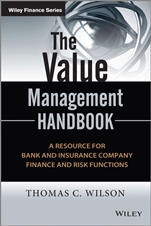
Value and Capital Management: A Handbook for the Finance and Risk Functions of Financial Institutions
ISBN 9781118774632
Autor: Thomas C. Wilson
Wydawca: Wiley
Dostępność: 3-6 tygodni
Cena: 476,70 zł
Przed złożeniem zamówienia prosimy o kontakt mailowy celem potwierdzenia ceny.
ISBN13: |
9781118774632 |
ISBN10: |
1118774639 |
Autor: |
Thomas C. Wilson |
Oprawa: |
Hardback |
Rok Wydania: |
2015-07-31 |
Ilość stron: |
720 |
Wymiary: |
244x167 |
Tematy: |
KF |
"Drawing on his rich experience as CRO in insurance, reinsurance and banking, Thomas Wilson provides a fascinating perspective on how CFOs and CROs create value for the firm, the customers and the shareholders by better managing capital and risk. The handbook offers a lot to many from mathematical and technical foundations to strategic advice, from real–world examples to historical background, from challenges to solutions. It not only gives insights for risk and finance professionals, directors and regulators, but will also and this is important inspire students to pursue a career in financial services."
Walter Kielholz, chairman of the supervisory board, Swiss Reinsurance
"Managing for value is not easy in the best of times. It is even more challenging given the fast–paced and fundamental changes affecting banking and insurance today, including new regulations, unprecedented low interest rates, weak global economic development and the emergence of non–traditional competitors. Tom′s handbook represents a valuable and practical anchor for managing value and capital in banking and insurance, which currently faces a torrent of change."
Paul Achleitner, chairman of the supervisory board, Deutsche Bank
"Financial firms build inventory on their balance sheets instead of selling from inventory, causing long balance sheets and inventory risk; in addition, financial products represent an inherent promise, sometimes far in the future, which may not always be possible to fulfill. Post crisis, financial institutions have learned the hard way the importance of aligning returns, capital requirements and risk acceptance. In this industry, valuation is complicated and must be looked at critically. Aligning returns, capital and risk is essential; three important challenges addressed by this handbook."
Koos Timmermans, vice chairman, ING Bank
"Capital is the gasoline that keeps risk and balance sheet intensive businesses on the road. Actively managing capital by allocating it to the best possible use and ensuring that the businesses are running at top capital ′fuel efficiency′ can mean the difference between winning the race for shareholders or being relegated to the ′also–ran′ category of firms. This handbook is an essential reference to managing value and capital in banking and insurance."
Dieter Wemmer, chief financial officer, Allianz SE
"Tom Wilson brings a unique combination of academic study and in–depth practical business experience to his authorship of value and capital management of financial institutions. He has been both an advisor to top management as well as a top manager in his own right. His handbook should be on the desk of every leader in the field. It is comprehensive, thorough and up to date. You will not find a more useful exposition of the tools of risk management as presented in a valuation framework."
Thomas Copeland, cofounder, Copeland Valuation Consultants
"Practice as well as academia should be grateful to Tom Wilson for sharing with us his immense experience on and insight in value and capital management for insurance and banking. I personally could not have thought of a more appropriate person to guide us through the complexity of the modern risk and value landscape of financial institutions. The author not only early on contributed to the methodological development of some of the tools currently in use throughout industry and regulation, but experienced firsthand the reality of bringing these new tools to bear within a broad variety of companies. The result is a handbook to be read and studied by all stakeholders involved. From an academic point of view I very much want to stress the bridge–building function from theory to practice and back and very much hope that my academic colleagues will use this book as guidance for some of their more applied research."
Paul Embrechts, Professor of Mathematics, RiskLab, ETH Zurich, Switzerland
List of Abbreviations xiii
Preface xvii
Acknowledgments xix
About the Author xxiii
PART ONE Introduction 1
CHAPTER 1 Why is Value Management Important? 3
Better Information 3
Better Insights 6
Better Decisions 8
Why Shareholder Value? 12
CHAPTER 2 How do CFOs and CROs Add Value? 15
The Evolution of the Corporate Center as Shareholder Surrogate 15
The Implications for the CFO 20
The Implications for the CRO 24
PART TWO Better Information Measuring Value 29
CHAPTER 3 RAPMs The Industry Standard 31
What Makes Financial Services Unique? 31
What do RAPMs do and How? 34
The RAPM (R)evolution 37
Three RAPMs for Three Distinct Purposes . . . 41
. . . Linking Directly to Shareholder Value 46
Insurance Example 49
Banking Example 50
CHAPTER 4 Two Challenges in Using RAPMs 51
Do RAPMs Influence Strategy? 51
Do RAPMs Give the Right Signals? 55
CHAPTER 5 Valuing Financial Services The Theory 71
What Determines Share Value? Market Multiples, RoE and Growth . . . 71
. . . But What Determines Market Multiples? 73
Why a Market–Consistent Approach? 77
Value: Where it Comes from and How to Create More of it 80
CHAPTER 6 Valuing Financial Services The Evidence 85
Evidence from the Insurance Industry 85
Evidence from Banking 96
Is it Just me or are Others Thinking the Same Thing? 98
CHAPTER 7 Market–Consistent Valuation for Insurers 101
Introduction to Fair Valuation for Insurers 101
Calculating Traditional Embedded Value 104
European Embedded Value 106
Market Consistent Embedded Value (MCEV) 109
How is MCEV Calculated in Practice? 115
From MCEV to MVBS 120
Final Comments: Whither MCEV? 122
PART THREE Better Insights Managing Value 125
CHAPTER 8 Property and Casualty Insurance 127
History and Economic Rationale 127
From Principles to Rules of the Game 133
From Rules to the Valuation of PC Businesses 135
PC KPIs: Understanding and Managing Value 140
CHAPTER 9 Life and Health Insurance 151
History and Economic Rationale 151
From Principles to Rules of the Game 163
LH Valuation 167
Understanding Value Creation: Capital Intensity and Financial Risk Taking 171
CHAPTER 10 Banking 189
History 189
Products 195
Economic Rationale 197
From Principles to Rules of the Game 199
From Rules to Value 201
CHAPTER 11 Achieving Profitable Growth 211
Rules of the Game and KPIs 211
Management Actions Three Horizons of Growth 217
Horizon 1 Increasing Sales Productivity 218
Horizon 1 Going Multi–channel 221
Horizon 1 Getting More out of Existing Customers; cross sell, big data and customer loyalty 224
Horizon 1 Managing the Customer Portfolio Skew 228
Horizon 2 Anticipating Mega–trends 230
Horizon 2 Exploiting Adjacencies 232
Horizon 2 Transformational and Bolt–on Acquisitions 234
Horizon 3 Creative Disruptions 238
CHAPTER 12 Achieving Operating Efficiency 241
The Importance of Operating Efficiency 242
Rules of the Game 248
Pay Less: Optimize Procurement 249
Pay Less: From Business Process Redesign to Outsourcing 250
Use Less, But More Effectively: Digitize and Automate 253
Use Less, But More Effectively: Re–engineer the Product Portfolio 254
Use Less, But More Effectively: Managing Acquisition Expenses 257
PART FOUR Better Decisions Capital, Balance Sheet and Risk Management 261
CHAPTER 13 Corporate Strategy and Capital Allocation 263
Corporate Strategy, Capital Allocation and Performance Management 263
Capital Allocation: The Capital Budget, from Sources to Uses of Capital 265
Capital Allocation: Optimizing the Corporate Portfolio 273
Capital Allocation: Aligning Financial Resources within Constraints 278
CHAPTER 14 Strategic Planning and Performance Management 285
What is Strategic Planning? 285
Why does Strategic Planning Fail and What can be done About it? 295
Corporate Strategy 302
CHAPTER 15 Balance Sheet Management 311
Balance Sheet Management Activities 311
The Asset/Liability Committee (ALCO) Mandate and Agenda 314
The Asset/Liability Management (ALM) Unit 323
The Insurer ALM–Investment Value Chain 330
The Treasury Function 339
CHAPTER 16 The Economics of Asset/Liability Management 345
The Role of ALM Earnings 345
The Risks: Some Spectacular ALM Failures 349
The Returns: Are Shareholders Willing to Pay a Premium or a Discount? 361
CHAPTER 17 The Practical Aspects of Asset/Liability Management 371
ALM Performance and Risk Measures 372
Calculating Funds Transfer Prices (FTPs) 385
Measuring Alpha 406
CHAPTER 18 Cash and Liquidity Management 413
Managing Funding Liquidity Risk 413
What Happens if it Goes Wrong? 416
Measuring Funding Liquidity Risk 420
CHAPTER 19 Managing the Capital and Funding Structure 431
Capital Funding Management 431
Determining the Optimal Capital Structure 436
The Empirical Reality: What Determines Capital Structure? 446
CHAPTER 20 Risk Management 451
Enterprise Risk Management 451
Taking the Right Decisions 460
The Role of Culture 463
CHAPTER 21 Risk Governance and Organization 477
Risk Governance Principles 477
Role of the Board and Management 478
Three–Line–of–Defense Model 480
The Risk Function 484
CHAPTER 22 Risk Identification and Evaluation 491
From Risk Identification to Evaluation 491
Data–Driven Approaches 497
Evaluation–Based Approaches 499
Building a Resilient Organization 507
CHAPTER 23 Risk Underwriting Strategy and Governance 513
Underwriting Context 513
Underwriting Strategy 518
Underwriting Governance 522
CHAPTER 24 Risk Underwriting Technical Tools 527
Retail Segment: Scoring Models 527
Commercial Lines: Leveraging Expert Judgment 535
Underwriting Structured Solutions 541
Underwriting Controls, Validation and Learning 542
CHAPTER 25 Risk Underwriting From Technical Pricing to Value Maximization 549
Technical Production Cost: RAPM Pricing 549
From Technical Pricing to Optimal Price 558
CHAPTER 26 Managing Operational and Reputational Risks 571
Defining Operational Risk 571
Managing Operational Risk 581
CHAPTER 27 Risk and Limit Controlling 589
Risk Reporting 589
An Effective Risk Limit Framework 601
Final Thoughts on Risk and Limit Reporting 606
Appendices
Appendix A: Market Multiple Approaches 609
Appendix B: Derivation of Steady–State Valuation Multiples 613
Appendix C: Valuing Banks and Insurers: The Link Between Value and New Business and Investment RAPM 621
Appendix D: Beyond Debt and Equity 629
GLOSSARY 641
REFERENCES 653
Index 675
THOMAS C. WILSON is the chief risk officer for Allianz Group, where he is responsible for global risk controlling and risk management policies and guidelines. He has spent nearly 30 years working in finance and risk for such companies as UBS, McKinsey & Company, Swiss Reinsurance, Oliver Wyman & Company, and ING.
Koszyk
Książek w koszyku: 0 szt.
Wartość zakupów: 0,00 zł
Informacje


Kontakt
Gambit
Centrum Oprogramowania
i Szkoleń Sp. z o.o.
Al. Pokoju 29b/22-24
31-564 Kraków
Siedziba Księgarni
ul. Kordylewskiego 1
31-542 Kraków
+48 12 410 5991
+48 12 410 5987
+48 12 410 5989
Subskrypcje
Administratorem danych osobowych jest firma Gambit COiS Sp. z o.o. Na podany adres będzie wysyłany wyłącznie biuletyn informacyjny.
Autoryzacja płatności

Informacje na temat autoryzacji płatności poprzez PayU.

© Copyright 2012: GAMBIT COiS Sp. z o.o. Wszelkie prawa zastrzeżone.
Projekt i wykonanie: Alchemia Studio Reklamy