


Wydawcy
Katalog tematyczny
- Archeologia (109)
- Ekonomia, finanse, business (13704)
- Filozofia (1445)
- Historia (3040)
- Języki i językoznawstwo (2356)
- Lifestyle, hobby i rozrywka (475)
- Medycyna (9704)
- Nauki humanistyczne (4)
- Nauki o Ziemi i środowisku (2638)
- Nauki ścisłe (20412)
- Astronomia (294)
- Biologia (5119)
- Chemia (6540)
- Chemia analityczna (361)
- Chemia fizyczna (346)
- Chemia nieorganiczna (137)
- Chemia organiczna (535)
- Krystalografia (27)
- Minerologia (46)
- Fizyka (3309)
- Matematyka (4574)
- Nauki ścisłe, ogólnie (503)
- Nauki społeczne (8486)
- Nauki techniczne (13450)
- Prawo (1696)
- Publikacje informacyjne i interdyscyplinarne (1288)
- Religia i wierzenia (917)
- Technika komputerowa (4067)
- Zdrowie, relacje międzyludzkie i rozwój osobisty (657)





Informacje szczegółowe o książce
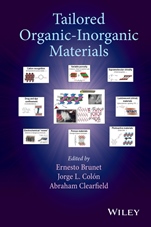
Tailored Organic–Inorganic Materials
ISBN 9781118773468
Autor: Ernesto Brunet, Jorge L. Colón, Abraham Clearfield
Wydawca: Wiley
Dostępność: 3-6 tygodni
Cena: 687,75 zł
Przed złożeniem zamówienia prosimy o kontakt mailowy celem potwierdzenia ceny.
ISBN13: |
9781118773468 |
ISBN10: |
1118773462 |
Autor: |
Ernesto Brunet, Jorge L. Colón, Abraham Clearfield |
Oprawa: |
Hardback |
Rok Wydania: |
2015-06-02 |
Ilość stron: |
480 |
Wymiary: |
241x165 |
Tematy: |
PN |
Covers the state of the art in building laminar materials of different kinds for diverse applications In recent years, powerful separation techniques, ultrasensitive spectrometry and high–performance computing, to name a few, have made possible the designing of materials with properties that promises a solution to central problems like global warming and inevitable shortages of classical energy sources. The famous query by Richard Feynman, "What would the properties of materials be if we could really arrange the atoms (molecules) the way we want them?" heralds the voice and goal of Tailored Organic–Inorganic Materials . Moreover, Feynman wondered: "What could we do with layered structures with just the right layers?" Drawn from a symposium on Layered Materials presented at the International Union of Pure and Applied Chemistry (IUPAC) conference held in Puerto Rico, Tailored Organic–Inorganic Materials : Presents a case for an often overlooked hybrid material: organic–clay materials Explores the limitless ability to design new materials by layering clay materials within organic compounds Offers assembly, properties, characterization, and current and potential applications to inspire the development of novel materials Coincides with the government′s Materials Genome Initiative, to inspire the development of green, sustainable, robust materials that lead to efficient use of limited resources Contains a thorough introductory and chemical foundation before delving into techniques, characterization, and properties of these materials Discusses applications in biocatalysis, drug delivery, and energy storage and recovery Appropriate for materials scientists and engineers, organic and inorganic chemists at the graduate and research level, the chapters in this book provide details on the effect of functionalization and form of the phosphonic acids in the final outcome of the hybrid. It will provide chemists the firm tools and knowledge to create new interesting substances by the recreation of the laminar materials in Nature, i.e. the clay family of minerals. Ernesto Brunet, PhD, is Professor in the Department of Organic Chemistry at the Autonomous University of Madrid. Formerly a Fulbright and NATO Fellow with Prof. Ernest L. Eliel at the University of North Carolina, Chapel Hill, he has worked on numerous structural and stereochemical problems that led to his interest in the building of organic–inorganic materials where the organic moieties display unusual properties within the supramolecular architecture. Jorge L. Colón , PhD, is Professor in the Chemistry Department at the University of Puerto Rico. His research focuses on the use of layered inorganic materials in applications ranging from artificial photosynthesis, amperometric biosensors, vapochromic materials, and drug delivery systems. Abraham Clearfield , PhD, is Distinguished Professor at Texas A&M University. He received his BA and MA from Temple University in Philadelphia and his Ph.D. at Rutgers University in 1954. He has worked extensively on layered compounds, intercalation chemistry, inorganic ion exchangers including zeolites and metal phosphonate chemistry. He has published 560 papers in peer reviewed journals, edited four books and holds about 15 patents.
CHAPTER 1 Zirconium Phosphate Nanoparticles and their Extraordinary Properties Abraham Clearfield and Agustin Diaz Introduction Synthesis and Crystal Structure of α–zirconium phosphate (α–ZrP) Zirconium Phosphate Based Dialysis Process ZrP Titration Curves Applications of Ion Exchange Processes Nuclear Ion Separations Major Uses of α–zirconium Phosphate Polymer Nano–composites More Details on α–ZrP – Surface Functionalization Janus Particles Catalysis Catalysts Based on Sulfonated Zirconium Phenylphosphonates Proton Conductivity and Fuel Cells Gel Synthesis and Fuel Cell Membranes Electron Transfer Reactions Drug Delivery CHAPTER 2 Tales from the unexpected: Chemistry at the surface and interlayer space of layered organic–inorganic hybrid materials based on g –zirconium phosphate Ernesto Brunet, María de Victoria–Rodríguez, Laura Jiménez García–Patrón, Hussein Hindawi, Elena Rodríguez–Payán, Juan Carlos Rodríguez–Ubis, and Olga Juanes Introduction The inorganic scaffold (microwave–assisted synthesis) Reactions Labyrinth materials: Applications Conclusion and prospects Final comments and acknowledgements CHAPTER 3 Phosphonates in Matrices Konstantinos E. Papathanasiou and Konstantinos D. Demadis Introduction: Phosphonic acids as versatile molecules Acid–Base chemistry of phosphonic acids Interactions between metal ions and phosphonate ligands Phosphonates in “all–organic” polymeric salts Phosphonates in coordination polymers Phosphonate–grafted polymers Polymers as hosts for phosphonates and metal phosphonates Applications Conclusions Bibliography CHAPTER 4 Hybrid Materials Based on Multifunctional Phosphonic Acids Aurelio Cabeza, Pascual Olivera–Pastor, and Rosario M. P. Colodrero Introduction Structural trends and properties of functionalized metal phosphonates Some relevant applications of multifunctional metal phosphonates Concluding remarks Acknowledgments References CHAPTER 5 Hybrid Multifunctional Materials Based On Phsophonates, Phosphinates And Auxiliary Ligands Ferdinando Costantino, Andrea Ienco, and Marco Taddei Introduction Phosphonates and Phosphinates as Ligands for Cps: Differences in their Coordination Capabilities Cps Based on Phosphonates and N–Donor Auxiliary Ligands Cps Based on Phosphonates and O–Donor Auxiliary Ligands Cps Based on Phosphinates and Auxiliary Ligands Conclusions and Outlook CHAPTER 6 Hybrid & biohybrid materials based on layered clays Eduardo Ruiz–Hitzky, Pilar Aranda, and Margarita Darder Introduction: clay concepts and intercalation behavior of layered silicates Intercalation processes in 1:1 phyllosilicates Intercalation in 2:1 charged phyllosilicates Intercalation of polymers in layered clays Uses of clay–organic intercalation compounds: perspectives toward new applications as advanced materials CHAPTER 7 Fine–tuning the functionality of inorganic surfaces using phosphonate chemistry Bruno Bujoli and Clémence Queffelec Phosphonate–based modified surfaces: a brief overview Biological applications of phosphonate–derivatized inorganic surfaces Conclusion CHAPTER 8 P hotofunctional Polymer/Layered Silicate Hybrids by Intercalation and Polymerization Chemistry G iuseppe Leone and Giovanni Ricci Introduction Lighting is Changing Generalities Functional Intercalated Compounds Conclusions and Perspectives References CHAPTER 9 Rigid phosphonic acids as building blocks for crystalline hybrid materials Jean–Michel Rueff, Gary B. Hix, and Paul–Alain Jaffrès Introduction Overview of the synthesis of rigid functional aromatic and heteroaromatic phosphonic acids Synthetic methods to produce phosphonic–based hybrids Hybrid materials from rigid di– and polyphosphonic acids Hybrid materials from rigid hetero–polyfunctional precursors Hybrid materials from phosphonic acids linked to a heterocyclic compound Physical properties and applications Conclusion and perspectives
Ernesto Brunet, PhD, is Professor in the Department of Organic Chemistry at the Autonomous University of Madrid. Formerly a Fulbright and NATO Fellow with Prof. Ernest L. Eliel at the University of North Carolina, Chapel Hill, he has worked on numerous structural and stereochemical problems that led to his interest in the building of organic–inorganic materials where the organic moieties display unusual properties within the supramolecular architecture. Jorge L. Colón , PhD, is Professor in the Chemistry Department at the University of Puerto Rico. His research focuses on the use of layered inorganic materials in applications ranging from artificial photosynthesis, amperometric biosensors, vapochromic materials, and drug delivery systems. Abraham Clearfield , PhD, is Distinguished Professor at Texas A&M University. He received his BA and MA from Temple University in Philadelphia and his Ph.D. at Rutgers University in 1954. He has worked extensively on layered compounds, intercalation chemistry, inorganic ion exchangers including zeolites and metal phosphonate chemistry. He has published 560 papers in peer reviewed journals, edited four books and holds about 15 patents.
Koszyk
Książek w koszyku: 0 szt.
Wartość zakupów: 0,00 zł
Informacje


Kontakt
Gambit
Centrum Oprogramowania
i Szkoleń Sp. z o.o.
Al. Pokoju 29b/22-24
31-564 Kraków
Siedziba Księgarni
ul. Kordylewskiego 1
31-542 Kraków
+48 12 410 5991
+48 12 410 5987
+48 12 410 5989
Subskrypcje
Administratorem danych osobowych jest firma Gambit COiS Sp. z o.o. Na podany adres będzie wysyłany wyłącznie biuletyn informacyjny.
Autoryzacja płatności

Informacje na temat autoryzacji płatności poprzez PayU.

© Copyright 2012: GAMBIT COiS Sp. z o.o. Wszelkie prawa zastrzeżone.
Projekt i wykonanie: Alchemia Studio Reklamy