


Wydawcy
Katalog tematyczny
- Archeologia (109)
- Ekonomia, finanse, business (13704)
- Filozofia (1445)
- Historia (3040)
- Języki i językoznawstwo (2356)
- Lifestyle, hobby i rozrywka (475)
- Medycyna (9704)
- Nauki humanistyczne (4)
- Nauki o Ziemi i środowisku (2638)
- Nauki ścisłe (20412)
- Astronomia (294)
- Biologia (5119)
- Chemia (6540)
- Chemia analityczna (361)
- Chemia fizyczna (346)
- Chemia nieorganiczna (137)
- Chemia organiczna (535)
- Krystalografia (27)
- Minerologia (46)
- Fizyka (3309)
- Matematyka (4574)
- Nauki ścisłe, ogólnie (503)
- Nauki społeczne (8486)
- Nauki techniczne (13450)
- Prawo (1696)
- Publikacje informacyjne i interdyscyplinarne (1288)
- Religia i wierzenia (917)
- Technika komputerowa (4067)
- Zdrowie, relacje międzyludzkie i rozwój osobisty (657)





Informacje szczegółowe o książce
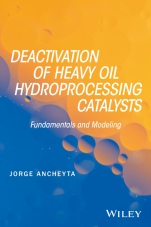
Deactivation of Heavy Oil Hydroprocessing Catalysts: Fundamentals and Modeling
ISBN 9781118769843
Autor: Jorge Ancheyta
Wydawca: Wiley
Dostępność: 3-6 tygodni
Cena: 687,75 zł
Przed złożeniem zamówienia prosimy o kontakt mailowy celem potwierdzenia ceny.
ISBN13: |
9781118769843 |
ISBN10: |
1118769848 |
Autor: |
Jorge Ancheyta |
Oprawa: |
Hardback |
Rok Wydania: |
2016-10-07 |
Ilość stron: |
336 |
Wymiary: |
234x156 |
Tematy: |
PN |
Written by a scientist with more than 25 years of experience in the field, this serves as a complete guide to catalyst activity loss during the hydroprocessing of heavy oils. Deactivation of Heavy Oil Hydroprocessing Catalysts offers a rigorous exploration of a wide range of topics in the field, including the physical and chemical properties of heavy oils and hydroprocessing catalysts; the mechanisms of catalyst deactivation; catalyst characterization by a variety of techniques and reaction conditions; and laboratory and commercial information for model validations. The content demonstrates how to develop correlations and models for a variety of reaction scales with step–by–step descriptions and detailed experimental data. It also contains important implications for increasing operational efficiencies within the petroleum industry.
With in–depth explanations of models and mechanisms not found in other literature, Deactivation of Heavy Oil Hydroprocessing Catalysts is an essential reference that industry researchers and engineering students will turn to again and again.
Serves as a complete guide to catalyst activity loss during the hydroprocessing of heavy oils, written by a scientist with more than 25 years of experience in the field Explores the physical and chemical properties of heavy oils and hydroprocessing catalysts; the mechanisms of catalyst deactivation; catalyst characterization by a variety of techniques and reaction conditions; laboratory and commercial information for model validations; and more Demonstrates how to develop correlations and models for a variety of reaction scales with step–by–step descriptions and detailed experimental data Contains important implications for increasing operational efficiencies within the petroleum industry Offers an essential reference for professionals and researchers working in the refining industry, as well as students taking courses on chemical reaction engineeringPreface
Nomenclature
Chapter 1: PROPERTIES OF HEAVY OILS
1.1. Introduction
1.2. Refining of petroleum
1.3. Properties of heavy petroleum
1.4. Assay of petroleum
Chapter 2: PROPERTIES OF CATALYSTS FOR HEAVY OIL HYDROPROCESSING
2.1. Introduction
2.2. Hydroprocessing catalyst
2.3. Characterization of catalysts
2.4. General aspects for developing catalyst for hydro processing of heavy crude
2.5. Catalyst for Maya crude oil hydroprocessing
2.6. Concluding remarks
References
Chapter 3: DEACTIVATION OF HYDROPROCESSING CATALYSTS
3.1. Introduction
3.2. Hydroprocessing of heavy oils
3.3. Mechanisms of catalyst deactivation
3.4. Asphaltenes and their effect on catalyst deactivation
References
Chapter 4: CHARACTERIZATION OF SPENT HYDROPROCESSING CATALYST
4.1. Introduction
4.2. Characterization techniques
4.3. Early deactivation of different supported como catalysts
4.4. Carbon and metal deposition during the hydro processing of Maya crude oil
4.5. Characterization study of NiMo/SiO2–Al2O3 spent hydro processing catalysts for heavy oils
4.6. Characterization of spent catalysts along a bench–scale reactor
4.7. Hydrodesulfurization activity of used hydrotreating catalysts
References
Chapter 5: MODELING CATALYST DEACTIVATION
5.1. Introduction
5.2. Effect of reactor configuration on the cycle length of heavy oil fixed–bed hydro processing
5.3. Effect of different heavy feedstocks on the deactivation of a commercial catalyst
5.4. Modeling the deactivation by metal deposition of heavy oil hydrotreating catalyst
5.5. Kinetic model for hydrocracking of heavy oil in a CSTR involving short term catalyst deactivation
5.6. Modeling the kinetics of parallel thermal and catalytic hydrotreating of heavy oil
5.7. Modeling catalyst deactivation during hydrocracking of atmospheric residue by using the continuous kinetic lumping model
5.8. Application of a three–stage approach for modeling the complete period of catalyst deactivation during hydrotreating of heavy oil
References
Index
Jorge Ancheyta is Manager of Products for the Transformation of Crude Oil at the Mexican Institute of Petroleum (IMP), where he has worked since 1989. His work centers on the development and application of petroleum refining catalysts, kinetic and reactor models, and process technologies mainly in catalytic cracking, catalytic reforming, middle distillate hydrotreating and heavy oils upgrading. He has been awarded the National Researcher Highest Distinction by the Mexican government and is a member of the Mexican Academy of Science. He is the author of five other books, incuding Modeling and Simulation of Catalytic Reactors for Petroleum Refining (Wiley, 2011). He has also been guest editor of various international journals.
Koszyk
Książek w koszyku: 0 szt.
Wartość zakupów: 0,00 zł
Informacje


Kontakt
Gambit
Centrum Oprogramowania
i Szkoleń Sp. z o.o.
Al. Pokoju 29b/22-24
31-564 Kraków
Siedziba Księgarni
ul. Kordylewskiego 1
31-542 Kraków
+48 12 410 5991
+48 12 410 5987
+48 12 410 5989
Subskrypcje
Administratorem danych osobowych jest firma Gambit COiS Sp. z o.o. Na podany adres będzie wysyłany wyłącznie biuletyn informacyjny.
Autoryzacja płatności

Informacje na temat autoryzacji płatności poprzez PayU.

© Copyright 2012: GAMBIT COiS Sp. z o.o. Wszelkie prawa zastrzeżone.
Projekt i wykonanie: Alchemia Studio Reklamy