


Wydawcy
Katalog tematyczny
- Archeologia (109)
- Ekonomia, finanse, business (13704)
- Filozofia (1445)
- Historia (3040)
- Języki i językoznawstwo (2356)
- Lifestyle, hobby i rozrywka (475)
- Medycyna (9704)
- Nauki humanistyczne (4)
- Nauki o Ziemi i środowisku (2638)
- Nauki ścisłe (20412)
- Nauki społeczne (8486)
- Nauki techniczne (13450)
- Prawo (1696)
- Publikacje informacyjne i interdyscyplinarne (1288)
- Religia i wierzenia (917)
- Technika komputerowa (4067)
- Zdrowie, relacje międzyludzkie i rozwój osobisty (657)





Informacje szczegółowe o książce
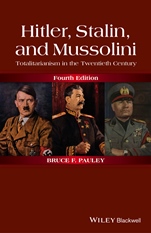
Hitler, Stalin, and Mussolini: Totalitarianism in the Twentieth Century
ISBN 9781118765920
Autor: Bruce F. Pauley
Wydawca: Wiley
Dostępność: 3-6 tygodni
Cena: 183,75 zł
Przed złożeniem zamówienia prosimy o kontakt mailowy celem potwierdzenia ceny.
ISBN13: |
9781118765920 |
ISBN10: |
1118765923 |
Autor: |
Bruce F. Pauley |
Oprawa: |
Paperback |
Rok Wydania: |
2014-09-02 |
Numer Wydania: |
4th Edition |
Ilość stron: |
392 |
Wymiary: |
213x144 |
Tematy: |
CV |
The new, fourth edition of Bruce Pauley’s Hitler, Stalin, and Mussolini: Totalitarianism in the Twentieth Century features an updated and expanded bibliographical essay and the latest scholarship on the wartime goals of Hitler and Stalin. Also included is new information on the disintegration of the Soviet empire. Like its predecessors, this book presents an innovative comparison of the origins, development, and demise of the three forms of totalitarianism that emerged in Europe early in the twentieth century. After addressing the failure of the preceding regimes, it traces the development of the totalitarian movements of Nazi Germany, the Soviet Union, and Fascist Italy—showing how each national leader was able to capture and consolidate authority before the inevitable plummet from power. While offering vivid portraits of the dictators’ youths, early careers, relationships with women, management styles, and cults of personality (both personally crafted and as created by their propaganda machines), Pauley moves beyond conventional narratives of totalitarianism to offer a unique, interpretive comparison of the economics, culture, education, and health–care systems of the three dictatorships. Other themes explored include the regimes′ position on fine arts and popular entertainment, treatment of women and young people, and terroristic oppression of religious institutions and minorities. Hitler, Stalin, and Mussolini offers illuminating new insights on many facets of the rise and fall of these three infamous dictatorships of twentieth–century Europe.
List of Illustrations Preface 1. THE IDEOLOGICAL FOUNDATIONS Definitions of Totalitarianism Marxism–Leninism–Stalinism Fascism and Nazism 2. THE SEIZURE OF POWER Russia on the Eve of the Revolution The Establishment of the Soviet Dictatorship The Failure of Liberal Italy The Birth and Triumph of Fascism Germany and the Impact of World War I The Weimar Republic and the Rise of the Nazi Movement The Great Depression and the Nazi Takeover 3. PERSONALITIES AND POLICIES OF THE DICTATORS Stalin’s Youth and Early Career Stalin the Demigod Mussolini: The Young Socialist The Duce: Strengths and Weaknesses The Young Hitler Hitler: The Chaotic Dictator Hitler’s Private Life and Relations with Women 4. TOTALITARIAN ECONOMIES The End of the New Economic Policy Stalin’s War against the Peasants The First Five–Year Plan and Industrialization The Fascist Economy The Economy of National Socialist Germany 5. PROPAGANDA, CULTURE, AND EDUCATION The Limitations of Propaganda Soviet Propaganda Fascist Propaganda Nazi Propaganda Totalitarian Culture Soviet Education Education in the Fascist States Youth Groups 6. FAMILY VALUES AND HEALTH The Conservative Trend in Values Soviet Women: The Mixed Blessings of Emancipation Fascist Italy: The Failure of Antifeminism Women in Nazi Germany: Kinder, Kirche und Küche? Health and Eugenics in Nazi Germany Religion: The Basic Incompatibility 7. TOTALITARIAN TERROR The Great Purges in the Soviet Union Terror and Persecution in the Fascist States The Persecution of Jews 8. THE ERA OF TRADITIONAL DIPLOMACY AND WAR, 1933–1941 Hitler’s Foreign Policy Strategy Hitler as “Peace Lover,” 1933–1935 From Ethiopia to Spain: Fascist Italy at War Austria and Czechoslovakia: Hitler’s First Conquests The Approach of War The Blitzkrieg Campaigns The Italian Intervention 9. TOTAL WAR, 1941–1945 Hitler Turns East Stalin’s Preparations for War The Russian Campaign in 1941 Hitler and the Untermenschen Hitler and Stalin as War Lords The Fall of Fascism The German Home Front The War in the West The End of the Third Reich 10. THE COLLAPSE OF SOVIET TOTALITARIANISM Stalin’s Last Years, 1945–1953 The Khrushchev Era Reaction and Reform: From Brezhnev to Gorbachev Problems of the Soviet Economy and Society Soviet Women in the Last Years of the Regime Soviet Society in the 1980s: The Balance Sheet The Revolt of the Satellites and the Disintegration of the Soviet Union The End of Soviet Totalitarianism 11. LESSONS AND PROSPECTS The Triumph of Dogmatism The Structural Flaws of Totalitarianism The Totalitarian Legacy Bibliographical Essay Index
Bruce F. Pauley , Professor of History Emeritus at the University of Central Florida, is the author of six books on Nazism, anti–Semitism, totalitarianism, and the two world wars, as well as his autobiography, Pioneering History on Two Continents (2014).
Koszyk
Książek w koszyku: 0 szt.
Wartość zakupów: 0,00 zł
Informacje


Kontakt
Gambit
Centrum Oprogramowania
i Szkoleń Sp. z o.o.
Al. Pokoju 29b/22-24
31-564 Kraków
Siedziba Księgarni
ul. Kordylewskiego 1
31-542 Kraków
+48 12 410 5991
+48 12 410 5987
+48 12 410 5989
Subskrypcje
Administratorem danych osobowych jest firma Gambit COiS Sp. z o.o. Na podany adres będzie wysyłany wyłącznie biuletyn informacyjny.
Autoryzacja płatności

Informacje na temat autoryzacji płatności poprzez PayU.

© Copyright 2012: GAMBIT COiS Sp. z o.o. Wszelkie prawa zastrzeżone.
Projekt i wykonanie: Alchemia Studio Reklamy