


Wydawcy
Katalog tematyczny
- Archeologia (109)
- Ekonomia, finanse, business (13704)
- Filozofia (1445)
- Historia (3040)
- Języki i językoznawstwo (2356)
- Lifestyle, hobby i rozrywka (475)
- Medycyna (9704)
- Nauki humanistyczne (4)
- Nauki o Ziemi i środowisku (2638)
- Nauki ścisłe (20412)
- Nauki społeczne (8486)
- Nauki techniczne (13450)
- Prawo (1696)
- Publikacje informacyjne i interdyscyplinarne (1288)
- Religia i wierzenia (917)
- Technika komputerowa (4067)
- Zdrowie, relacje międzyludzkie i rozwój osobisty (657)





Informacje szczegółowe o książce
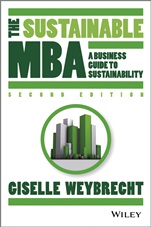
The Sustainable MBA: A Business Guide to Sustainability
ISBN 9781118760635
Autor: Giselle Weybrecht
Wydawca: Wiley
Dostępność: 3-6 tygodni
Cena: 181,65 zł
Przed złożeniem zamówienia prosimy o kontakt mailowy celem potwierdzenia ceny.
ISBN13: |
9781118760635 |
ISBN10: |
1118760638 |
Autor: |
Giselle Weybrecht |
Oprawa: |
Hardback |
Rok Wydania: |
2013-11-22 |
Numer Wydania: |
2nd Edition |
Ilość stron: |
478 |
Wymiary: |
229x160 |
Tematy: |
KM |
Whether you are an employee, a manager, an entrepreneur or a CEO, The Sustainable MBA Second Edition provides the knowledge and tools to help you ‘green’ your job and organization, to turn sustainability talk into action for the benefit of your bottom line and society as a whole. Based on more than 150 interviews with experts in business, international organizations, NGOs and universities from around the world, this book brings together all the pieces of the business and sustainability puzzle including: What sustainability is, why you should be interested, how to get started, and what a sustainable organization looks like. A wide range of tools, guidelines, techniques and concepts that you can use to implement sustainability practices. Information on how to be a sustainability champion or intrapraneur in your organization including how to sell these ideas to your team and how to incorporate them into any job. A survey of the exciting trends in sustainable business happening around the world. A wealth of links to interesting resources for more information. The Sustainable MBA Second Edition is organized like a business school course, allowing you easy access to the relevant information you need about sustainability as it relates to Accounting, Economics, Entrepreneurship, Ethics, Finance, Marketing, Organizational Behaviour and HR, Operations and Strategy. The Sustainable MBA Second Edition has been updated to reflect global developments in this evolving field to remain the definitive guide to sustainable business. Additional resources to accompany the book are available at www.thesustainablemba.com .
Preface xi Acknowledgments xv Part 1: Setting The Scene 1 Chapter 1: About this book 3 Who is The Sustainable MBA for and why should I read it? 5 What you will find in The Sustainable MBA ? 7 How The Sustainable MBA is organized 8 Ideas on how to use this book 9 Planet Earth fact sheet 10 Chapter 2: What is sustainability?13 The basics 13 Other definitions 15 Sustainable development: a global effort 18 Working together – stakeholders in sustainability Chapter 3: What does this mean for business? 21 The sustainability sales pitch 27 Chapter 4: The sustainability journey 31 What does a leading company look like? 34 Chapter 5: Getting started 39 Getting past internal excuses 47 Part 2: The Core Topics 49 Chapter 6: Accounting 53 Why is it important? 54 The Key Concepts 55 Full or true cost accounting 56 Materiality 58 Key performance indicators 61 Measuring social impact 63 Sustainability in financial statements 65 Integrated Reporting Assurance 68 Challenges 70 Trends and new ideas 72 Bringing it all together 72 Increased disclosure 72 Recognizing unrecognized assets 73 Different forms of reporting Sustainability reporting 75 Chapter 7: Economics 81 Why is it important? 82 The Key concepts 83 Sustainable consumption 84 The commons 85 Externalities 87 Market based instruments 90 Re–evaluating metrics 93 Emerging markets 95 Challenges 98 Trends and new ideas 99 Alternative trading system 100 A new economic model 100 Estimating the costs of inaction 101 From free to fee 102 Valuing future generations 103 Regulatory Instruments Environmental valuation 105 Business and the world’s poor 109 Chapter 8: Entrepreneurship 115 Why is it important? 116 The Key concepts 117 Exploring new business models Social/environmental entrepreneurs 119 Intrapraneurship 121 Generating ideas 123 Funding 126 Challenges 128 Trends and new ideas 129 Merging and Selling Microbusinesses 129 Social stock exchange 129 Big business working with SMEs 130 Marketing on a shoestring 131 Some advice for entrepreneurs 134 Cooperatives Chapter 9: Ethics and corporate governance 137 Why is it important? 138 The Key concepts 139 Business and human rights 139 Labour and working conditions 142 Ethics and the individual manager 144 Corporate governance 146 Corruption 148 Bribery 150 The power of media Challenges 152 Trends and new ideas 153 Transparency and honesty 153 Fairtrade Crowdsourcing the truth The company of the future 154 Whistleblowing 155 The role of the CEO 158 Chapter 10: Finance 161 Why is it important? 162 The Key concepts 163 Sustainable investment 163 Integrating ESG Fiduciary responsibilities 166 Shareholder Engagement Ratings and Indexes Project finance 173 Challenges 175 Trends and new ideas 176 Cross–disciplinary collaboration New landscape for corporate ownership 176 Insurance and sustainability 177 The role of the CFO Focus on long–term value 178 A new kind of bank 178 Microfinance 182 Chapter 11: Marketing 187 Why is it important? 188 The Key concepts 189 People 189 Products 193 Price 195 Place: retailers and sustainability 198 Packaging 201 Eco–labels 204 Social marketing 207 Cause–related marketing 210 Challenges 212 Trends and new ideas 213 Green = inexpensive 213 From eco–iconic to eco–embedded 214 Understanding how people think 215 Communicating with the customer . . . virtually 215 Popups Buycotts The barcode reinvented 216 Advertising dos and don’ts 218 Chapter 12: Operations 223 Why is it important? 224 The Key concepts 225 Eco–design 226 ‘Green’ chemistry 228 Doing more with less 230 Sustainable technology 232 Suppliers 234 Transportation 237 Waste management 240 Challenges 244 Trends and new ideas 245 Inspiration from nature 245 Products that do more 246 Traceability 247 Manufacturing differently Instant Feedback focused on better use 247 Exploring new materials 248 Co–creation and crowdsourcing Life cycle analysis 249 Information Technology and Systems Chapter 13: Organizational behavior 255 Why is it important? 256 The Key concepts 257 Creating a ‘sustainability’ culture 257 Communicating sustainability internally 259 Recruiting—who is interviewing whom? 261 Employee engagement in sustainability 263 Aligning incentives 265 Talent development and training 267 Challenges 269 Trends and new ideas 271 Diversity 271 Skills for Sustainability Creating great workplaces 272 Changing the way we talk 273 Rise of the CSO Managing change 276 Chapter 14: Strategy 279 Why is it important? 280 The Key concepts 281 Understanding the wider business environment 282 Understanding where you stand 283 Understanding risk 285 Exploring different strategies 288 Setting objectives and goals 291 Working with others 292 Influencing change 295 Challenges 298 Trends and new ideas 299 Reinventing the business model 299 Zero and 100 % 299 Instant information 300 Getting your customers involved Dashboards Strategic philanthropy 301 Competition turns into collaboration Transformation of partners 301 Why do Initiatives fail? 303 Stakeholder engagement 304 Part 3: Tools 313 Chapter 15: Tools for monitoring, managing and improving performance 315 Assessments 315 Example: Conducting an environmental or social risk assessment 318 Audits 319 Example: waste audit 321 Environmental and social management systems 321 Choosing standards and codes 324 Chapter 16: Tools for greening offices and buildings 327 Steps for setting up office greening programmes 328 Buildings 329 Energy 331 Water 332 Waste and recycling 333 Paper 335 Electronics 336 All those other little things 337 Commuting to work 338 Organizing green events and meetings 341 Putting together a green team 343 Performance contracting 345 Part 4: Wrapping it All Up 347 Chapter 17: What can I do? 349 As an employee—leading by example 349 As a consumer—putting your money where your mouth is 351 As a citizen—be active in your community 353 Chapter 18: What will the future bring? 355 What the future will bring Twenty–one wise words of advice 357 Additional resources: who, what, where and how 361 Who: different groups 361 What: sustainability issues 366 Where: around the world 371 How: keeping up to date 376 Endnotes 381 Index 387
Giselle Weybrecht is determined to make sustainability everybody’s business. Her work is focused on how to inspire and engage the next generation of business leaders to not only understand sustainability, but to put it into practice in ways that make sense for the environment, society and business. She has 15 years of experience working in sustainability in particular with the United Nations but also with governments, universities, NGOs, businesses and entrepreneurs. Giselle has a MBA from London Business School and is a frequent lecturer at universities around the world.
Koszyk
Książek w koszyku: 0 szt.
Wartość zakupów: 0,00 zł
Informacje


Kontakt
Gambit
Centrum Oprogramowania
i Szkoleń Sp. z o.o.
Al. Pokoju 29b/22-24
31-564 Kraków
Siedziba Księgarni
ul. Kordylewskiego 1
31-542 Kraków
+48 12 410 5991
+48 12 410 5987
+48 12 410 5989
Subskrypcje
Administratorem danych osobowych jest firma Gambit COiS Sp. z o.o. Na podany adres będzie wysyłany wyłącznie biuletyn informacyjny.
Autoryzacja płatności

Informacje na temat autoryzacji płatności poprzez PayU.

© Copyright 2012: GAMBIT COiS Sp. z o.o. Wszelkie prawa zastrzeżone.
Projekt i wykonanie: Alchemia Studio Reklamy