


Wydawcy
Katalog tematyczny
- Archeologia (109)
- Ekonomia, finanse, business (13704)
- Filozofia (1445)
- Historia (3040)
- Języki i językoznawstwo (2356)
- Lifestyle, hobby i rozrywka (475)
- Medycyna (9704)
- Nauki humanistyczne (4)
- Nauki o Ziemi i środowisku (2638)
- Geografia (299)
- Nauki o Ziemi (1661)
- Geologia (414)
- Hydrologia (237)
- Meteorologia i klimatologia (114)
- Paleontologia (33)
- Wulkanologia i sejsmologia (44)
- Planowanie przestrzenne (53)
- Środowisko (607)
- Nauki ścisłe (20412)
- Nauki społeczne (8486)
- Nauki techniczne (13450)
- Prawo (1696)
- Publikacje informacyjne i interdyscyplinarne (1288)
- Religia i wierzenia (917)
- Technika komputerowa (4067)
- Zdrowie, relacje międzyludzkie i rozwój osobisty (657)





Informacje szczegółowe o książce
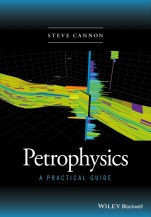
Petrophysics: A Practical Guide
ISBN 9781118746745
Autor: Steve Cannon
Wydawca: Wiley
Dostępność: 3-6 tygodni
Cena: 577,50 zł
Przed złożeniem zamówienia prosimy o kontakt mailowy celem potwierdzenia ceny.
ISBN13: |
9781118746745 |
ISBN10: |
1118746740 |
Autor: |
Steve Cannon |
Oprawa: |
Hardback |
Rok Wydania: |
2015-11-06 |
Ilość stron: |
224 |
Wymiary: |
249x174 |
Tematy: |
RB |
Petrophysics is the science of evaluating the rock and fluid properties of oil, gas and water reservoirs through the acquisition of physical samples, electrical, chemical, nuclear and magnetic data acquired by surface logging, downhole coring, and drilling and wireline sondes. The evaluation, analysis and interpretation of this data is as much an art as a science as it requires an understanding of geology, chemistry, physics, electronics, mechanics and drilling technology. The techniques have been developed over the last 100 years primarily by the oil and gas industry, but the principles are equally relevant in coal mining, hydrogeology and environmental science.
This book is firmly aimed at students of geology and petroleum engineering looking for a practical understanding of the background and workflows required to complete a petrophysical study of a well, a reservoir or a field. Petrophysics is log analysis constrained by geology, and if we ignore the rocks we risk making poor investment decisions.
Preface xi
Introduction 1
1.1 The basics 4
1.1.1 Units and abbreviations 6
1.1.2 Cores and logs 6
1.1.3 Lithology identification 8
1.1.4 Rock properties 10
1.1.5 Physics of a reservoir 10
1.1.6 Porosity 10
1.1.7 Water saturation 11
1.1.8 Permeability 13
1.1.9 Capillary pressure 14
1.1.10 Wettability 14
1.2 The results 15
1.2.1 Hydrocarbon pay 15
1.2.2 Simple volumetrics 15
1.2.3 3D static models 17
1.2.4 Value of information 17
1.3 Summary 18
Data Acquisition 19
2.1 Drilling data 19
2.2 Coring and core analysis 21
2.3 Wireline logging 24
2.4 Well test data 28
2.5 Borehole environment 29
2.6 Summary 33
Rock and Fluid Properties 35
3.1 Controls on rock properties 35
3.2 Lithology 39
3.2.1 Spontaneous potential 39
3.2.2 Gamma ray 42
3.3 Porosity 46
3.3.1 Core porosity 46
3.3.2 Log porosity 48
3.4 Water saturation 55
3.4.1 Core ]derived water saturation 57
3.4.2 Wettability 59
3.4.3 Electrical measurements 60
3.4.4 Log ]derived water saturation 61
3.5 Permeability 64
3.5.1 Core permeability 66
3.5.2 Log permeability 67
3.5.3 Porosity permeability relationship 68
3.5.4 Overburden correction and Klinkenberg effect 70
3.6 Summary 71
Quality Control of Raw Data 73
4.1 Validation of log data 73
4.1.1 Labelling 74
4.1.2 Parametric ranges 76
4.1.3 Repeatability 76
4.1.4 Tension 76
4.1.5 Borehole conditions 76
4.1.6 Noise spikes and cycle skipping 77
4.1.7 Editing log data 77
4.1.8 Creation of pseudologs 77
4.2 Depth merging 78
4.3 Tool corrections 78
4.3.1 Environmental corrections 79
4.3.2 Invasion corrections 79
4.4 Core analysis data 80
4.5 Merging core and log data 80
4.6 Converting measured depth to true vertical depth 82
4.7 Summary 82
Characteristic Log Responses 83
5.1 Characteristic shale response 83
5.2 Matrix characteristics 89
5.3 Fluid characteristics 90
5.4 Hydrocarbon corrections 90
5.5 Shale corrections 91
5.6 Summary 91
Evaluation of Lithology, Porosity and Water Saturation 93
6.1 Evaluation of lithology 93
6.1.1 Histograms 95
6.1.2 Scatter plots 95
6.1.3 Lithology interpretation 100
6.2 Evaluation of porosity 101
6.2.1 Sonic porosity 101
6.2.2 Density porosity 103
6.2.3 Neutron porosity 103
6.2.4 Selection of reservoir porosity 104
6.2.5 Total and effective systems 105
6.3 Evaluation of water resistivity 106
6.3.1 SP method 106
6.3.2 Resistivity cross ]plot method 107
6.3.3 Pickett plot 109
6.3.4 Apparent Rw method (Rwa) 110
6.4 Estimation of water saturation 110
6.4.1 Clean sands 111
6.4.2 Shaly sands 112
6.5 Summary 114
Petrophysical Workflows 115
7.1 Data management 115
7.2 Quick ]look interpretation 116
7.3 Full petrophysical interpretation 118
7.3.1 Permeability estimation 122
7.3.2 Evaluation of cut ]off parameters 123
7.3.3 Determination of zone averages 124
7.3.4 Reporting 126
Beyond Log Analysis 127
8.1 Pressure measurements, gradients and contacts 127
8.2 Saturation ]height functions 131
8.2.1 Single ]predictor algorithms 133
8.2.2 Multi ]predictor algorithms 134
8.2.3 Normalized functions 134
8.3 Electrofacies and facies analysis 135
8.4 Rock typing 138
8.5 Integration with seismic 141
8.5.1 Depth conversion 142
8.5.2 Fluid substitution 143
8.6 Production logging 145
8.6.1 Pulsed neutron logging 145
8.7 Geo ]steering 146
8.8 Petrophysics of unconventional reservoirs 147
8.8.1 Total organic content 148
8.8.2 Porosity estimation 150
8.8.3 Gas in place 150
Carbonate Reservoir Evaluation 151
9.1 Rock fabric classification 151
9.2 Petrophysical interpretation 153
9.2.2 Water saturation 154
Petrophysics for Reservoir Modelling 157
10.1 Multi ]scale modelling 158
10.2 Petrophysical issues 158
10.3 Blocking logs 160
10.4 Geological issues 162
10.5 Engineering issues 164
10.6 Volumetrics 165
10.7 Uncertainty 165
Appendix 1 Petrophysical Report 169
Appendix 2 Data Collection and Management 179
Appendix 3 Oilfield Glossary 189
References 197
Index 000
Steve Cannon is a geologist by profession, a petrophysicist by inclination and a reservoir modeller by design. Graduating in 1977, Steve has worked as a geologist and petrophysicist in all sectors of the oil and gas industry, including government, major and independent oil companies, the service sector and consultancy. Having had the opportunity to work offshore and in a core analysis laboratory, as well as a reservoir geologist has helped to shape his appreciation of petrophysics constrained by geology. Steve is a Past–President of the London Petrophysical Society.
Koszyk
Książek w koszyku: 0 szt.
Wartość zakupów: 0,00 zł
Informacje


Kontakt
Gambit
Centrum Oprogramowania
i Szkoleń Sp. z o.o.
Al. Pokoju 29b/22-24
31-564 Kraków
Siedziba Księgarni
ul. Kordylewskiego 1
31-542 Kraków
+48 12 410 5991
+48 12 410 5987
+48 12 410 5989
Subskrypcje
Administratorem danych osobowych jest firma Gambit COiS Sp. z o.o. Na podany adres będzie wysyłany wyłącznie biuletyn informacyjny.
Autoryzacja płatności

Informacje na temat autoryzacji płatności poprzez PayU.

© Copyright 2012: GAMBIT COiS Sp. z o.o. Wszelkie prawa zastrzeżone.
Projekt i wykonanie: Alchemia Studio Reklamy