


Wydawcy
Katalog tematyczny
- Archeologia (109)
- Ekonomia, finanse, business (13704)
- Filozofia (1445)
- Historia (3040)
- Języki i językoznawstwo (2356)
- Lifestyle, hobby i rozrywka (475)
- Medycyna (9704)
- Nauki humanistyczne (4)
- Nauki o Ziemi i środowisku (2638)
- Geografia (299)
- Nauki o Ziemi (1661)
- Geologia (414)
- Hydrologia (237)
- Meteorologia i klimatologia (114)
- Paleontologia (33)
- Wulkanologia i sejsmologia (44)
- Planowanie przestrzenne (53)
- Środowisko (607)
- Nauki ścisłe (20412)
- Nauki społeczne (8486)
- Nauki techniczne (13450)
- Prawo (1696)
- Publikacje informacyjne i interdyscyplinarne (1288)
- Religia i wierzenia (917)
- Technika komputerowa (4067)
- Zdrowie, relacje międzyludzkie i rozwój osobisty (657)





Informacje szczegółowe o książce
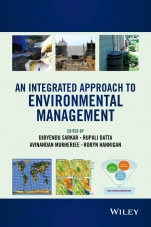
An Integrated Approach to Environmental Management
ISBN 9781118744352
Autor: Dibyendu Sarkar, Rupali Datta, Avinandan Mukherjee, Robyn Hannigan
Wydawca: Wiley
Dostępność: 3-6 tygodni
Cena: 801,15 zł
Przed złożeniem zamówienia prosimy o kontakt mailowy celem potwierdzenia ceny.
ISBN13: |
9781118744352 |
ISBN10: |
1118744357 |
Autor: |
Dibyendu Sarkar, Rupali Datta, Avinandan Mukherjee, Robyn Hannigan |
Oprawa: |
Hardback |
Rok Wydania: |
2015-12-18 |
Ilość stron: |
624 |
Wymiary: |
292x229 |
Tematy: |
RB |
Covers the most recent topics in the field of environmental management and provides a broad focus on the theoretical and methodological underpinnings of environmental management
The last few decades have seen a tremendous increase in the anthropogenic pressures on the environment. The result has been widespread environmental degradation, along with increasing negative social and economic impacts, especially on the vulnerable sections of the population, not only in the United States, but all around the globe. Although environmental management concepts have been around since the 1970s, it is mostly in recent years that they have become ubiquitous. Thus far, the efforts to combat environmental problems have been predominantly piecemeal and top–down; consequently both the reception of environmental policies and their effectiveness have been less than satisfactory in most cases.
An Integrated Approach to Environmental Management is intended to be the first and only scholarly book positioned as a leading text book, as well as a specialist reference resource of academic information and analysis on environmental management from multiple perspectives, highlighting cutting edge research, new concepts and theories, and fresh practical ideas and initiatives that can be readily applied in societies and organizations.
With contributions by leading experts in their fields An Integrated Approach to Environmental Management features topics on:
Principles of Geology, Biology, Soil Science, Chemistry, and Engineering as applied in environmental management research and practices
Green Energy, Climate Change, and Green Architecture
Elements of sustainable business, such as Green Marketing, Corporate Social Responsibility, Socially Responsible Investing, Environmental Economics
Environmental Ethics, and Environmental Law and Policy
Common methods and tools used in environmental management research and practice, including Statistics, Geographic Information Systems, Remote Sensing, Life Cycle Analysis, and Environmental Auditing
Today, increasing concerns about the environment are leading legislators, regulators, communities, corporations, and consumers to make new choices in terms of scientific research priorities, engineering investments, infrastructure and regulations, purchasing patterns, product usage and disposal behavior, to name a few of many. An Integrated Approach to Environmental Management – by simultaneously adopting multiple perspectives and by striving to unify them, through a rigorous examination of the underlying interconnections – provides a much–needed integrative thrust that clarifies and crystallizes the subject of environmental management, and provides a convenient one–stop compendium consisting of theories, analytical techniques and applications drawn from natural sciences and engineering, social sciences and policy, and business and economics.
Preface
Editor Biography
List of Contributors
Section I. Environmental Management: the Natural Science and Engineering Perspective
Chapter 1. Geology in Environmental Management
M. Kruge
Chapters 2. Biology in Environmental Management
A. Mayer
Chapter 3. Soil Science in Environmental Management
N. Kabengi and M. Chrysochoou
Chapter 4. Green Chemistry and Environmental Management
S.R. Asoleka, R. Gopichandran, A. M. Hiremath and D. Kumar
Chapter 5. Green Energy and Climate Change
R. Gopichandran, S. R. Asolekar, Omkar Jani, D. Kumar and A. M. Hiremath
Chapter 6. Engineering in Environmental Management
Y. Deng
Chapter 7: Green Architecture in Environmental Management
A. Ferdinand and J. Kliwinski
Section II. Environmental Management: the Business and Social Science Perspective
Chapter 8. Business Strategies for Environmental Sustainability
A. Mukherjee, N. Onel, and R. Nunez
Chapters 9. Green Marketing Strategies
M. Polonsky, M. Taghian, and C. D′Souza
Chapter 10. Understanding the Evidence on Portfolio Exposure to Environmental, Social and Governance (ESG) Investments
S. A. Meziani
Chapter 11. The Role of Public Relations and Organizational Communication in Environmental Management
R.W. Jensen
Chapter 12. The Economics of Environmental Management
David Timmons
Chapter 13. Law and Policy in Environmental Management
D. Rahm
Chapter 14. Environmental Ethics
T. Visak
Chapter 15. Participatory Approaches in Environmental Management
S. Danielson
Section III. Environmental Management: Methods and Tools Perspective
Chapter 16. Statistics in Environmental Management Research
J. Brown
Chapter 17. Remote Sensing in Environmental Management
M. Chopping
Chapter 18. Geographic Information Systems in Environmental Management
D. Yu and S.W. Buchanan
Chapter 19. Life Cycle Analysis as a Management Tool in Environmental Systems
D. Georgakellos
Chapter 20. Environmental Audit in Environmental Management
I.T. Nicolson
Chapter 21. Risk Assessment as a Tool in Environmental Management
K. Asante–Duah
Appendix I: Supplemental Readings
Appendix II: Model Syllabus
Appendix III: Model Environmental Management Curricula (PhD, MS, BS)
Dibyendu Sarkar is a Professor of Environmental Geochemistry and the Director of the Environmental Management PhD program at Montclair State University, New Jersey. He has published over 300 journal articles, book chapters, conference proceedings and technical abstracts including two books. Dr. Sarkar is a Fellow of the Geological Society of America, and the Editor–in–Chief of Current Pollution Reports.
Rupali Datta is an Associate Professor of Environmental Biology in the Department of Biological Science at Michigan Technological University. She has authored more than 100 research papers and book chapters, and more than 150 abstracts.
Avinandan Mukherjee is Professor of Marketing and Dean at the School of Business in Clayton State University, Georgia. He is the Editor–in–Chief of the International Journal of Pharmaceutical and Healthcare Marketing. He has authored over 100 articles in refereed journals, conference proceedings, and edited books.
Robyn Hannigan is Professor and Dean at the School for the Environment in the University of Massachusetts at Boston. Dr. Hannigan has published over 100 peer–reviewed articles across fields of geochemistry and environmental science. She is a Fellow of the American Association for the Advancement of Science and Geological Society of America and an Aldo Leopold Leadership Fellow.
Koszyk
Książek w koszyku: 0 szt.
Wartość zakupów: 0,00 zł
Informacje


Kontakt
Gambit
Centrum Oprogramowania
i Szkoleń Sp. z o.o.
Al. Pokoju 29b/22-24
31-564 Kraków
Siedziba Księgarni
ul. Kordylewskiego 1
31-542 Kraków
+48 12 410 5991
+48 12 410 5987
+48 12 410 5989
Subskrypcje
Administratorem danych osobowych jest firma Gambit COiS Sp. z o.o. Na podany adres będzie wysyłany wyłącznie biuletyn informacyjny.
Autoryzacja płatności

Informacje na temat autoryzacji płatności poprzez PayU.

© Copyright 2012: GAMBIT COiS Sp. z o.o. Wszelkie prawa zastrzeżone.
Projekt i wykonanie: Alchemia Studio Reklamy