


Wydawcy
Katalog tematyczny
- Archeologia (109)
- Ekonomia, finanse, business (13704)
- Filozofia (1445)
- Historia (3040)
- Języki i językoznawstwo (2356)
- Lifestyle, hobby i rozrywka (475)
- Medycyna (9704)
- Nauki humanistyczne (4)
- Nauki o Ziemi i środowisku (2638)
- Nauki ścisłe (20412)
- Nauki społeczne (8486)
- Nauki techniczne (13450)
- Budownictwo lądowe (1045)
- Chemia przemysłowa (2258)
- Elektronika i telekomunikacja (3287)
- Energetyka (1122)
- Inne nauki stosowane (363)
- Inżynieria biochemiczna (507)
- Inżynieria transportu (232)
- Mechanika i materiały (3316)
- Nauka o środowisku (321)
- Rolnictwo (507)
- Technika, ogólnie (475)
- Prawo (1696)
- Publikacje informacyjne i interdyscyplinarne (1288)
- Religia i wierzenia (917)
- Technika komputerowa (4067)
- Zdrowie, relacje międzyludzkie i rozwój osobisty (657)





Informacje szczegółowe o książce
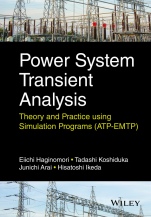
Power System Transient Analysis: Theory and Practice using Simulation Programs (ATP–EMTP)
ISBN 9781118737538
Autor: Eiichi Haginomori, Tadashi Koshiduka, Junichi Arai, Hisatochi Ikeda
Wydawca: Wiley
Dostępność: 3-6 tygodni
Cena: 465,15 zł
Przed złożeniem zamówienia prosimy o kontakt mailowy celem potwierdzenia ceny.
ISBN13: |
9781118737538 |
ISBN10: |
1118737539 |
Autor: |
Eiichi Haginomori, Tadashi Koshiduka, Junichi Arai, Hisatochi Ikeda |
Oprawa: |
Hardback |
Rok Wydania: |
2016-05-06 |
Ilość stron: |
400 |
Wymiary: |
249x179 |
Tematy: |
TJ |
Understanding transient phenomena in electric power systems and the harmful impact of resulting disturbances is an important aspect of power system operation and resilience. Bridging the gap from theory to practice, this guide introduces the fundamentals of transient phenomena affecting electric power systems using the numerical analysis tools, Alternative Transients Program– Electromagnetic Transients Program (ATP–EMTP) and ATP–DRAW. This technology is widely–applied to recognize and solve transient problems in power networks and components giving readers a highly practical and relevant perspective and the skills to analyse new transient phenomena encountered in the field.
Key features:
Introduces novice engineers to transient phenomena using commonplace tools and models as well as background theory to link theory to practice. Develops analysis skills using the ATP–EMTP program, which is widely used in the electric power industry. Comprehensive coverage of recent developments such as HVDC power electronics with several case studies and their practical results. Provides extensive practical examples with over 150 data files for analysing transient phenomena and real life practical examples via a companion website.Written by experts with deep experience in research, teaching and industry, this text defines transient phenomena in an electric power system and introduces a professional transient analysis tool with real examples to novice engineers in the electric power system industry. It also offers instruction for graduates studying all aspects of power systems.
Preface ix
Part I Standard Course–Fundamentals and Typical Phenomena 1
1 Fundamentals of EMTP 3
1.1 Function and Composition of EMTP 3
1.1.1 Lumped Parameter RLC 3
1.1.2 Transmission Line 4
1.1.3 Transformer 6
1.1.4 Nonlinear Element 6
1.1.5 Arrester 6
1.1.6 Switch 7
1.1.7 Voltage and Current Sources 7
1.1.8 Generator and Rotating Machine 7
1.1.9 Control 7
1.1.10 Support Routines 7
1.2 Features of the Calculation Method 8
1.2.1 Formulation of the Main Circuit 8
1.2.2 Calculation in TACS 12
1.2.3 Features of EMTP 13
References 16
2 Modeling of System Components 17
2.1 Overhead Transmission Lines and Underground Cables 17
2.1.1 Overhead Transmission Line Line Constants 17
2.1.2 Underground Cables Cable Parameters 37
2.2 Transformer 46
2.2.1 Single Phase Two–Winding Transformer 46
2.2.2 Single Phase Three Winding Transformer 50
2.2.3 Three Phase One Core Transformer Three Legs or Five Legs 53
2.2.4 Frequency and Transformer Modeling 55
3 Transient Currents in Power Systems 57
3.1 Short Circuit Currents 57
3.2 Transformer Inrush Magnetizing Current 60
3.3 Transient Inrush Currents in Capacitive Circuits 62
Appendix 3.A: Example of ATPDraw Sheets Data3 02.acp 64
Reference 64
4 Transient at Current Breaking 65
4.1 Short Circuit Current Breakings 66
4.2 Capacitive Current Switching 71
4.2.1 Switching of Capacitive Current of a No Load Overhead Transmission Line 72
4.2.2 Switching of Capacitive Current of a Cable 75
4.2.3 Switching of Capacitive Current of a Shunt Capacitor Bank 76
4.3 Inductive Current Switching 78
4.3.1 Current Chopping Phenomenon 78
4.3.2 Reignition 79
4.3.3 High Frequency Extinction and Multiple Reignition 80
4.4 TRV with Parallel Capacitance in SLF Breaking 80
Appendix 4.A: Current Injection to Various Circuit Elements 84
Appendix 4.B: TRV Calculation, Including ITRV Current Injection is Applied for TRV Calculation 91
Appendix 4.C: 550 kV Line Normal Breaking 97
Appendix 4.D: 300 kV, 150 MVA Shunt Reactor Current Breaking Current
Chopping Reignition HF Current Interruption 100
References 103
5 Black Box Arc Modeling 105
5.1 Mayr Arc Model 106
5.1.1 Analysis of Phenomenon of Short Line Fault Breaking 106
5.1.2 Analysis of Phenomenon of Shunt Reactor Switching 110
5.2 Cassie Arc Model 112
5.2.1 Analysis of Phenomenon of Current Zero Skipping 113
Appendix 5.A: Mayr Arc Model Calculating SLF Breaking, 300 kV, 50 kA, L90 Condition 118
Appendix 5.B: Zero Skipping Current Breaking Near Generator Fault Current Lasting 124
Appendix 5.C: Zero Skipping Current Breaking Near Generator Dynamic Arc Introduced, Still Nonbreaking 131
6 Typical Power Electronics Circuits in Power Systems 135
6.1 General 135
6.2 HVDC Converter/Inverter Circuits 135
6.3 Static Var Compensator/Thyristor Controlled Inductor 140
6.4 PWM Self Communicated Type Inverter Applying the Triangular Carrier Wave Shape Principle Applied to SVG (Static Var Generator) 142
Appendix 6.A: Example of ATPDraw Picture 147
Reference 148
Part II Advanced Course–Special Phenomena and Various Applications 149
7 Special Switching 151
7.1 Transformer Limited Short Circuit Current Breaking 151
7.2 Transformer Winding Response to Very Fast Transient Voltage 152
7.3 Transformer Magnetizing Current under Geomagnetic Storm Conditions 156
7.4 Four Armed Shunt Reactor for Suppressing Secondary Arc in Single Pole Rapid Reclosing 159
7.5 Switching Four Armed Shunt Reactor Compensated Transmission Line 162
References 163
8 Synchronous Machine Dynamics 165
8.1 Synchronous Machine Modeling and Machine Parameters 165
8.2 Some Basic Examples 167
8.2.1 No Load Transmission Line Charging 167
8.2.2 Power Flow Calculation 169
8.2.3 Sudden Short Circuiting 172
8.3 Transient Stability Analysis Applying the Synchronous Machine Model 176
8.3.1 Classic Analysis (Equal Area Method) and Time Domain Analysis (EMTP) 176
8.3.2 Detailed Transients by Time Domain Analysis: ATP EMTP 180
8.3.3 Field Excitation Control 183
8.3.4 Back Swing Phenomenon 186
Appendix 8.A: Short Circuit Phenomena Observation in d q Domain Coordinate 190
Appendix 8.B: Starting as an Induction Motor 193
Appendix 8.C: Modeling by the No. 19 Universal Machine 195
Appendix 8.D: Example of ATPDraw Picture File: Draw8 111.acp (Figure D8.1). 197
References 198
9 Induction Machine, Doubly Fed Machine, Permanent Magnet Machine 199
9.1 Induction Machine (Cage Rotor Type) 199
9.1.1 Machine Data for EMTP Calculation 200
9.1.2 Zero Starting 201
9.1.3 Mechanical Torque Load Application 204
9.1.4 Multimachines 206
9.1.5 Motor Terminal Voltage Change 208
9.1.6 Driving by Variable Voltage and Frequency Source (VVVF) 209
9.2 Doubly Fed Machine 212
9.2.1 Operation Principle 212
9.2.2 Steady State Calculation 213
9.2.3 Flywheel Generator Operation 213
9.3 Permanent Magnet Machine 215
9.3.1 Zero Starting (Starting by Direct AC Voltage Source Connection) 217
9.3.2 Calculation of Transient Phenomena 217
Appendix 9.A: Doubly Fed Machine Vector Diagrams 218
Appendix 9.B: Example of ATPDraw Picture 219
10 Machine Drive Applications 221
10.1 Small Scale System Composed of a Synchronous Generator and Induction Motor 221
10.1.1 Initialization 221
10.1.2 Induction Motor Starting 223
10.1.3 Application of AVR 225
10.1.4 Inverter Controlled VVVF Starting 226
10.2 Cycloconverter 233
10.3 Cycloconverter Driven Synchronous Machine 237
10.3.1 Application of Sudden Mechanical Load 237
10.3.2 Quick Starting of a Cycloconverter Driven Synchronous Motor 242
10.3.3 Comparison with the Inverter Driven System 245
10.4 Flywheel Generator: Doubly Fed Machine Application for Transient Stability Enhancement 248
10.4.1 Initialization 249
10.4.2 Flywheel Activity in Transient Stability Enhancement 254
10.4.3 Active/Reactive Power Effect 254
10.4.4 Discussion 258
Appendix 10.A: Example of ATPDraw Picture 260
Reference 266
Index 267
Eiichi Haginomori, University of Tokyo, Japan
Eiichi Haginomori is currently at the University of Tokyo. Previous to this he was in the Department of Electrical Engineering at Kyushu Institute of Technology (1998–2003) and in Chemical Engineering at Chuo University. At both universities he researched into EMTP application to Electrical Engineering. He was Chief Specialist in the Switchgear Engineering Department of Toshiba s Head Office for ten years, and belongs to IEC standard committee groups such as WG1 and WG10, in IEC SC17A (High–voltage Switchgear and controlgear).
Tadashi Koshiduka, Toshiba Co., Japan
Tadashi Koshizuka is currently a Senior Scientist at the High Power Technology Group in the Power & Industrial Systems Research & Development Center at Toshiba, Japan. Prior to this he worked as an engineer with the group (1998–2000), then a specialist (2000–2010). He is a technical paper reviewer in the Power and Energy Society of IEE Japan and current member and secretary of IEEDJ (The Institute of Engineers on Electrical Discharges in Japan). Mr Koshizuka holds three Japanese Patents, has contributed to 17 papers and co–authored one book.
Professor Arai is Chair of the Department of Electrical Engineering and Dean of the Faculty of Engineering at Kogakuin University. Previous to this he was Senior Fellow of the Transmission & Distribution System Division at Toshiba Corp., and Deputy Senior Chief Engineer in the International Marketing Division of TM T&D Corp. He has written seventeen papers related to the topic, a chapter in Electrical Engineering Handbook, published by IEE of Japan, and a chapter in Liberalization of Electricity Markets and Technological Issues. He holds 10 patents related to his research in power control and circuits.
Hisatoshi Ikeda, University of Tokyo, Japan
Hisatoshi Ikeda is currently Project Professor, having been Visiting Professor at Kyushu Institute of Technology for three years previously. From 2002 to 2007 he was General Manager, Transmission and Distribution Research and Development Center at TM T&D Co, andAssistant General Manager at Hamakawasaki–works, Toshiba Corp. Professor Ikeda holds 56 Japanese patents and 12 USA patents. He has been a secretary of the short–circuit testing liaison in Japan.
Koszyk
Książek w koszyku: 0 szt.
Wartość zakupów: 0,00 zł
Informacje


Kontakt
Gambit
Centrum Oprogramowania
i Szkoleń Sp. z o.o.
Al. Pokoju 29b/22-24
31-564 Kraków
Siedziba Księgarni
ul. Kordylewskiego 1
31-542 Kraków
+48 12 410 5991
+48 12 410 5987
+48 12 410 5989
Subskrypcje
Administratorem danych osobowych jest firma Gambit COiS Sp. z o.o. Na podany adres będzie wysyłany wyłącznie biuletyn informacyjny.
Autoryzacja płatności

Informacje na temat autoryzacji płatności poprzez PayU.

© Copyright 2012: GAMBIT COiS Sp. z o.o. Wszelkie prawa zastrzeżone.
Projekt i wykonanie: Alchemia Studio Reklamy