


Wydawcy
Katalog tematyczny
- Archeologia (109)
- Ekonomia, finanse, business (13704)
- Filozofia (1445)
- Historia (3040)
- Języki i językoznawstwo (2356)
- Lifestyle, hobby i rozrywka (475)
- Medycyna (9704)
- Nauki humanistyczne (4)
- Nauki o Ziemi i środowisku (2638)
- Nauki ścisłe (20412)
- Nauki społeczne (8486)
- Nauki techniczne (13450)
- Prawo (1696)
- Publikacje informacyjne i interdyscyplinarne (1288)
- Bibliotekoznawstwo, informacja naukowa i muzealnictwo (433)
- Encyklopedie i leksykony (181)
- Informacja naukowa (88)
- Zagadnienia interdyscyplinarne (391)
- Religia i wierzenia (917)
- Technika komputerowa (4067)
- Zdrowie, relacje międzyludzkie i rozwój osobisty (657)





Informacje szczegółowe o książce
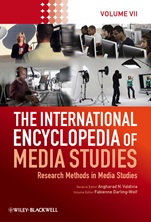
The International Encyclopedia of Media Studies: Research Methods in Media Studies
ISBN 9781118733578
Autor: Fabienne Darling–Wolf
Wydawca: Wiley
Dostępność: 3-6 tygodni
Cena: 763,35 zł
Przed złożeniem zamówienia prosimy o kontakt mailowy celem potwierdzenia ceny.
ISBN13: |
9781118733578 |
ISBN10: |
1118733576 |
Autor: |
Fabienne Darling–Wolf |
Oprawa: |
Hardback |
Rok Wydania: |
2014-01-31 |
Ilość stron: |
682 |
Wymiary: |
255x177 |
Tematy: |
GR |
Available as a stand–alone reference or as the seventh volume of The International Encyclopedia of Media Studies , Research Methods in Media Studies describes the innovative and dynamic nature of the field at present with contributions from a diverse, international group of scholars. The collection examines both theory and practice with an emphasis on the expansion and diversification of the field in recent years. In more than 30 chapters, the contributors provide a full analytical and historical account of media studies research methods––from historical antecedents to innovative and emerging practices. The contributors also discuss quantitative and qualitative methods, recognizing the ways in which they overlap and inform one another in contemporary research. This volume incorporates the impact of new technologies and technological innovation, as well as the increasingly transnational nature of modern life. In doing so, it effectively locates the current state of media studies within a fast–evolving global context. This is a bold and forward–thinking reference that encourages those in the field to transcend methodological boundaries and develop interdisciplinary approaches in order to best study contemporary media.
Table of Contents Notes on Contributors Media Studies Angharad N. Valdivia Convergence, globalization, technological development and interdisciplinarity in a fast–evolving world: The formidable question of method Fabienne Darling–Wolf, Temple University (USA) PART 1: SETTING UP THE STAGE 1. Research Paradigms in Media Studies: Conceptual Distinctions or Divisions? Slavko Splichal, University of Ljubljana, (Slovenia) and Peter Dahlgren, , (Sweden) 2. The Challenge of Media Research Ethics Kevin Healey, University of New Hampshire (USA) PART 2: WORKING WITH PEOPLE 3. Doing Survey Research in Media Studies Suman Mishra, Southern Illinois University Edwardsville (USA) 4. Beyond the Qualitative/Quantitative ‘Divide’: Reflections On The Utility and Challenges of Q Methodology for Media Researchers Carolyn Michelle, The University of Waikato (New Zealand) and Charles H. Davis, Ryerson University (Canada) 5. The interview: A process of Qualitative Inquiry Sue Robinson, The University of Wisconsin–Madison (USA) 6. Research Methods in Media Studies. Mike Conway, Indiana University (USA) 7. Memories of Films and Cinema Going in Monterrey, Mexico: A Critique and Review of In–Depth Interviews as a Methodological Strategy in Audience Studies Lorena Frankenberg, Universidad Metropolitana de Monterrey (Mexico) and Jose–Carlos Lozano, Texas A&M International University at Laredo (USA) 8. Conducting Media Ethnographies in Africa Tanja Bosch, University of Cape Town (South Africa) 9. Autoethnography in media studies: Digitalization of Television in Finland or Carrying Home Cardboard Boxes Johanna Uotinen, University of Eastern Finland (Finland) 10. The Basics of Experimental Research Glenn Leshner, University of Missouri (USA) 11. Between–Subjects Experimental Design and Analysis Kim Bissell, University of Alabama (USA) PART 3: WORKING WITH TEXTS 12. Using a Mixed Approach to Content Analysis: The Case of Modern Presidential Rhetoric Rico Neumann, University for Peace (Costa Rica) and Kevin Coe, University of Utah (USA) 13. Lessons learned from a research saga: An ambitious content analysis of television form Matthew Lombard, Temple University (USA) 14. Text–Based Approaches to Qualitative Research: An overview of methods, process, and ethics Sara McKinnon, University of Wisconsin (USA) 15. Analyzing Text: The Cultural Discourse in Ethnic Food Reviews Elfriede Fürsich, Boston College (USA) 16. Cultural History and Media Studies Richard Popp, University of Wisconsin–Milwaukee (USA) 17. Historical approaches to media studies Mark Hampton, Lingnan University (Hong Kong) 18. Film Analysis James Walters, University of Birminghan (UK) 19. Eyetracking in Media Studies: Theory, Method, and its Exemplary Application in Analyzing Shock–Inducing Advertisements Stephanie Geise, University of Erfurt (Germany) 20. Exploring Visual Aspects of Audience Membership: Media Studies and Photovoice David Novak, Erasmus University Rotterdam (The Netherlands) and Tonny Krijnen, Erasmus University Rotterdam (The Netherlands) PART 4: VIRTUAL CHALLENGES INTERDISCIPLINARY AND MIXED METHOD RESEARCH 21. The Methodology of Online News Analysis: A Quantitative Approach to Ephemeral Media Helle Sjøvaag and Eirik Stavelin, University of Bergen (Norway) 22. Digital Ethnography and Media Practices Elisenda Ardevol, Universitat Oberta de Catalunya (Spain) and Edgar Gomez–Cruz, University of Leeds (UK) 23. Clicks and bricks: Methods and strategies for measuring the effects of similar virtual and physical activity Lillian Spina–Caza, Rensselaer Polytechnic Institute (USA) 24. Exploring TV and movie music effects on childhood Amparo Porta, Universidad Jaume I (Spain) 25. Latino Diaspora and the Media. Interdisciplinary Approaches to Understanding Transnationalism and Communication in Global Cities Jéssica Retis, California State University Northridge (USA)
Fabienne Darling–Wolf is Associate Professor in the Journalism Department and the Media and Communication doctoral program at Temple University’s School of Media and Communication. A global media scholar, her work has been published in leading journals, including Journalism , Journalism and Communication Monographs , Journalism Studies , Communication Theory , Critical Studies in Media Communication , and Visual Communication Quarterly .
Koszyk
Książek w koszyku: 0 szt.
Wartość zakupów: 0,00 zł
Informacje


Kontakt
Gambit
Centrum Oprogramowania
i Szkoleń Sp. z o.o.
Al. Pokoju 29b/22-24
31-564 Kraków
Siedziba Księgarni
ul. Kordylewskiego 1
31-542 Kraków
+48 12 410 5991
+48 12 410 5987
+48 12 410 5989
Subskrypcje
Administratorem danych osobowych jest firma Gambit COiS Sp. z o.o. Na podany adres będzie wysyłany wyłącznie biuletyn informacyjny.
Autoryzacja płatności

Informacje na temat autoryzacji płatności poprzez PayU.

© Copyright 2012: GAMBIT COiS Sp. z o.o. Wszelkie prawa zastrzeżone.
Projekt i wykonanie: Alchemia Studio Reklamy