


Wydawcy
Katalog tematyczny
- Archeologia (109)
- Ekonomia, finanse, business (13704)
- Filozofia (1445)
- Historia (3040)
- Języki i językoznawstwo (2356)
- Lifestyle, hobby i rozrywka (475)
- Medycyna (9704)
- Nauki humanistyczne (4)
- Nauki o Ziemi i środowisku (2638)
- Geografia (299)
- Nauki o Ziemi (1661)
- Geologia (414)
- Hydrologia (237)
- Meteorologia i klimatologia (114)
- Paleontologia (33)
- Wulkanologia i sejsmologia (44)
- Planowanie przestrzenne (53)
- Środowisko (607)
- Nauki ścisłe (20412)
- Nauki społeczne (8486)
- Nauki techniczne (13450)
- Prawo (1696)
- Publikacje informacyjne i interdyscyplinarne (1288)
- Religia i wierzenia (917)
- Technika komputerowa (4067)
- Zdrowie, relacje międzyludzkie i rozwój osobisty (657)





Informacje szczegółowe o książce
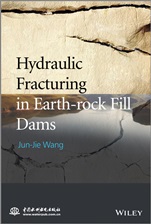
Hydraulic Fracturing in Earth–rock Fill Dams
ISBN 9781118725504
Autor: Jun–Jie Wang
Wydawca: Wiley
Dostępność: 3-6 tygodni
Cena: 729,75 zł
Przed złożeniem zamówienia prosimy o kontakt mailowy celem potwierdzenia ceny.
ISBN13: |
9781118725504 |
ISBN10: |
1118725506 |
Autor: |
Jun–Jie Wang |
Oprawa: |
Hardback |
Rok Wydania: |
2014-05-13 |
Ilość stron: |
280 |
Wymiary: |
245x175 |
Tematy: |
RB |
In several unsolved problems on the safety of earth–rock fill dams, the problem of hydraulic fracturing in the soil core is one that receives a lot of attention from designers and researchers. Hydraulic fracturing is generally considered to be a key cause of dam leakage during first filling. In this extensive book, the conditions, mechanisms and criteria for hydraulic fracturing are investigated, and a new numerical simulation method is suggested. The method is based on the conventional two–dimensional finite element technique and the theoretical formulations to calculate energy release rate using the virtual crack extension method. The book: Presents a systematic and comprehensive study of hydraulic fracturing, original in its concentration on core soil problems Focuses on the problem of hydraulic fracturing in earth–rock fill dams Examines advanced laboratory soil testing, application of numerical methods and field testing/monitoring Provides an essential reference in an area of scarce research in this field: the need for this in high level earth dam construction in developing countries is pressing This book is essential reading for researchers and postgraduate students in hydraulic and geotechnical engineering fields. Designers and constructors in hydraulic and geotechnical engineering will also fi nd it helpful.
About the Author xi Preface xiii Acknowledgments xvii Nomenclature xix 1 Introduction 1 1.1 Types of Embankment Dam 1 1.2 Hydraulic Fracturing 3 1.3 Failure of the Teton Dam 5 1.4 Erosion Damage of the Balderhead Dam 9 1.5 Leakage of the Hyttejuvet Dam 13 1.6 Self–Healing of Core Cracks 17 1.7 Technical Route for Present Study 18 1.8 Summary 20 References 20 2 Review of Literature 23 2.1 Introduction 23 2.2 Theories of Hydraulic Fracturing 23 2.2.1 Theories Based on Circular Cavity Expansion Theory 24 2.2.2 Theories Based on Spherical Cavity Expansion Theory 26 2.2.3 Theories Based on True Triaxial Stress State Analyses 27 2.2.4 Empirical Formulas 31 2.2.5 Theories Based on Fracture Mechanics 34 2.3 Laboratory Experimental Studies on Hydraulic Fracturing 38 2.3.1 Cylindrical Sample 38 2.3.2 Rectangular Sample 39 2.4 Field Testing Studies of Hydraulic Fracturing 40 2.5 Model Testing Studies of Hydraulic Fracturing 41 2.6 Numerical Simulations of Hydraulic Fracturing 42 2.7 Analysis Method for Hydraulic Fracturing 45 2.8 Summary 46 References 47 3 Conditions and Mechanisms of Hydraulic Fracturing 51 3.1 Introduction 51 3.2 Conditions for Hydraulic Fracturing 52 3.2.1 Crack Located at the Upstream Face of Core 52 3.2.2 Low Permeability of Core Soil 55 3.2.3 Rapid Impounding 56 3.2.4 Unsaturated Soil Core 56 3.3 Mechanical Mechanism of Hydraulic Fracturing 61 3.4 Modes of Fracture in Fracture Mechanics 62 3.5 Summary 65 References 66 4 Fracture Toughness and Tensile Strength of Core Soil 69 4.1 Introduction 69 4.2 Tested Soil 71 4.3 Testing Technique on Fracture Toughness 72 4.3.1 Testing Method 72 4.3.2 Apparatus 73 4.3.3 Testing Procedures 75 4.3.4 Testing Program 76 4.4 Testing Results on Fracture Toughness 77 4.4.1 Suitability of Linear Elastic Fracture Mechanics 77 4.4.2 Influence Factors on Fracture Toughness 80 4.5 Testing Technique on Tensile Strength 82 4.5.1 Testing Method and Apparatus 84 4.5.2 Calculation of Tensile Strength 84 4.5.3 Testing Procedures 85 4.5.4 Testing Program 86 4.6 Testing Results on Tensile Strength 86 4.6.1 Water Content 86 4.6.2 Dry Density 88 4.6.3 Preconsolidation Pressure 89 4.7 Relationship between Fracture Toughness and Tensile Strength 89 4.8 Discussions 90 4.8.1 Soils from References 90 4.8.2 Rocks from References 93 4.9 Summary 94 References 95 5 Fracture Failure Criteria for Core Soil under I–II Mixed Modes 99 5.1 Introduction 99 5.2 Experimental Technique 101 5.2.1 Loading Assembly 102 5.2.2 Calculation Theory 102 5.2.3 Testing Procedures 104 5.2.4 Test Program 104 5.3 Testing Results 105 5.4 Fracture Failure Criteria 108 5.5 Discussions 111 5.5.1 Testing Technique 111 5.5.2 Failure Criteria 111 5.6 Summary 115 References 116 6 Hydraulic Fracturing Criterion 121 6.1 Introduction 121 6.2 Failure Criterion 121 6.2.1 Simplification of a Crack 122 6.2.2 Criterion 122 6.3 Cubic Specimen with a Crack 124 6.3.1 Calculation of K I 126 6.3.2 Calculation of K II 126 6.3.3 Calculation of (K 2 I + K 2 II ) 0.5 127 6.3.4 Dangerous Crack Angle 128 6.4 Core with a Transverse Crack 128 6.4.1 Calculation of K I 131 6.4.2 Calculation of K II 131 6.4.3 Calculation of (K 2 I + K 2 II ) 0.5 132 6.4.4 Dangerous Crack Angle 133 6.5 Core with a Vertical Crack 135 6.6 Strike–Dip of Easiest Crack Spreading 137 6.7 Summary 142 References 143 7 Numerical Method for Hydraulic Fracturing 145 7.1 Introduction 145 7.2 Theoretical Formula 146 7.2.1 Failure Criterion for Hydraulic Fracturing 146 7.2.2 Path Independent J Integral 147 7.2.3 Virtual Crack Extensions Method 148 7.2.4 Calculation of the J Integral 149 7.3 Numerical Techniques 150 7.3.1 Virtual Crack 150 7.3.2 Finite Element Model 151 7.3.3 Water Pressure Applied on the Crack Face 151 7.3.4 Simulation of Hydraulic Fracturing 152 7.4 Numerical Investigation 152 7.4.1 Finite Element Model 152 7.4.2 Virtual Crack Depth 155 7.4.3 Mechanical Parameters of Crack Material 155 7.5 Numerical Verification 156 7.5.1 Mode I Crack 156 7.5.2 Mode II and Mixed Mode I–II Cracks 158 7.6 Summary 161 References 161 8 Factors Affecting Hydraulic Fracturing 165 8.1 Introduction 165 8.2 Factors Affecting Stress Arching Action 166 8.2.1 Influence of Material Properties 167 8.2.2 Influence of Dam Structure 171 8.3 Relation between Hydraulic Fracturing and Arching Action 175 8.4 Factors Affecting Hydraulic Fracturing 177 8.4.1 Analyzing Method 178 8.4.2 Influence of Water Level 180 8.4.3 Influence of Crack Depth 181 8.4.4 Influence of Crack Position 182 8.4.5 Influence of Core Soil Features 184 8.5 Summary 189 References 190 9 Self–Healing of a Core Crack 193 9.1 Introduction 193 9.2 Experimental Method and Instrument 194 9.2.1 Experimental Method 194 9.2.2 Experimental Instrument 196 9.3 Tested Soil 197 9.4 Test Program 198 9.5 Results Analysis 199 9.5.1 Influence of Crack Depth 199 9.5.2 Influence of Grain Size 199 9.5.3 Mechanism of Self–Healing 203 9.6 Discussion 203 9.7 Summary 205 References 206 10 Simulation on the Nuozhadu Dam in China 209 10.1 Introduction to the Nuozhadu Dam 209 10.2 Numerical Software 210 10.3 Behavior of Stress–Deformation of Nuozhadu Dam 214 10.3.1 Finite Element Model 214 10.3.2 Material Parameters 214 10.3.3 Behavior of Stress–Deformation after Construction 217 10.3.4 Behavior of Stress–Deformation after Filling 220 10.4 Analysis Method on Hydraulic Fracturing of the Nuozhadu Dam 223 10.4.1 Analysis Method 223 10.4.2 Material Parameters 225 10.4.3 Finite Element Model 225 10.4.4 Schemes Analyzed 227 10.5 Hydraulic Fracturing in Horizontal Cracks 227 10.6 Hydraulic Fracturing in Vertical Cracks 229 10.7 Summary 231 References 231 Index 235
Koszyk
Książek w koszyku: 0 szt.
Wartość zakupów: 0,00 zł
Informacje


Kontakt
Gambit
Centrum Oprogramowania
i Szkoleń Sp. z o.o.
Al. Pokoju 29b/22-24
31-564 Kraków
Siedziba Księgarni
ul. Kordylewskiego 1
31-542 Kraków
+48 12 410 5991
+48 12 410 5987
+48 12 410 5989
Subskrypcje
Administratorem danych osobowych jest firma Gambit COiS Sp. z o.o. Na podany adres będzie wysyłany wyłącznie biuletyn informacyjny.
Autoryzacja płatności

Informacje na temat autoryzacji płatności poprzez PayU.

© Copyright 2012: GAMBIT COiS Sp. z o.o. Wszelkie prawa zastrzeżone.
Projekt i wykonanie: Alchemia Studio Reklamy