


Wydawcy
Katalog tematyczny
- Archeologia (109)
- Ekonomia, finanse, business (13704)
- Filozofia (1445)
- Historia (3040)
- Języki i językoznawstwo (2356)
- Lifestyle, hobby i rozrywka (475)
- Medycyna (9704)
- Nauki humanistyczne (4)
- Nauki o Ziemi i środowisku (2638)
- Nauki ścisłe (20412)
- Nauki społeczne (8486)
- Nauki techniczne (13450)
- Budownictwo lądowe (1045)
- Chemia przemysłowa (2258)
- Elektronika i telekomunikacja (3287)
- Energetyka (1122)
- Elektrotechnika (258)
- Energetyka jądrowa (62)
- Energia odnawialna (372)
- Paliwa kopalne (287)
- Przepływ ciepła (10)
- Inne nauki stosowane (363)
- Inżynieria biochemiczna (507)
- Inżynieria transportu (232)
- Mechanika i materiały (3316)
- Nauka o środowisku (321)
- Rolnictwo (507)
- Technika, ogólnie (475)
- Prawo (1696)
- Publikacje informacyjne i interdyscyplinarne (1288)
- Religia i wierzenia (917)
- Technika komputerowa (4067)
- Zdrowie, relacje międzyludzkie i rozwój osobisty (657)








Informacje szczegółowe o książce
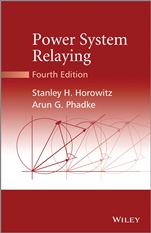
Power System Relaying
ISBN 9781118662007
Autor: Stanley H. Horowitz, Arun G. Phadke, James K. Niemira
Wydawca: Wiley
Dostępność: 3-6 tygodni
Cena: 572,25 zł
Przed złożeniem zamówienia prosimy o kontakt mailowy celem potwierdzenia ceny.
ISBN13: |
9781118662007 |
ISBN10: |
1118662008 |
Autor: |
Stanley H. Horowitz, Arun G. Phadke, James K. Niemira |
Oprawa: |
Hardback |
Rok Wydania: |
2014-01-03 |
Numer Wydania: |
4th Edition |
Ilość stron: |
398 |
Wymiary: |
244x170 |
Tematy: |
THX |
With emphasis on power system protection from the network operator perspective, this classic textbook explains the fundamentals of relaying and power system phenomena including stability, protection, and reliability. The fourth edition brings coverage up to date with important advancements in protective relaying due to significant changes in the conventional electric power system that will integrate renewable forms of energy and, in some countries, adoption of the Smart Grid initiative. New features of the fourth edition include: an entirely new chapter on protection considerations for renewable energy sources, looking at grid interconnection techniques, codes, protection considerations, and practices new concepts in power system protection, such as Wide Area Measurement Systems (WAMS) and system integrity protection schemes (SIPS)—how to use WAMS for protection, and SIPS and control with WAMS phasor measurement units (PMUs), transmission line current differential, high–voltage dead–tank circuit breakers, and relays for multiterminal lines revisions to the Bus Protection Guide IEEE C37.234 (2009) and to the sections on additional protective requirements and restoration. Used by universities and industry courses throughout the world, Power System Relaying is an essential text for graduate students in electric power engineering and a reference for practising relay and protection engineers who want to be kept up to date with the latest advances in the industry.
1. Introduction to protective relaying 1.1. What is relaying? 1.2. Power system structural considerations 1.3. Power system bus configurations + updates 1.4. The nature of relaying 1.5. Elements of a protection system 1.5.1. Circuit breakers 1.6. International practices 1.7. Summary Problems References 2. Relay operating principles 2.1. Introduction 2.2. Detection of faults 2.3. Relay designs 2.4. Electromechanical relays 2.5. Solid–state relays 2.6. Computer relays 2.7. Other relay design considerations 2.8. Control circuits, a beginning 2.9. Summary Problems References 3. Current and voltage transformers 3.1. Introduction 3.2. Steady–state performance of current transformers 3.3. Transient performance of current transformers 3.4. Special connections of current transformers 3.5. Linear couplers and electronic current transformers 3.6. Voltage transformers 3.7. Coupling capacitor voltage transformers 3.8. Transient performance of CCVTs 3.9. Electronic voltage transformers 3.10. Summary Problems References 4. Nonpilot overcurrent protection of transmission lines 4.1. Introduction 4.2. Fuses, sectionalizers, reclosers 4.3. Inverse, time–delay overcurrent relays 4.4. Instantaneous overcurrent relays 4.5. Directional overcurrent relays 4.6. Polarizing 4.7. Summary Problems References 5. Nonpilot distance protection of transmission lines 5.1. Introduction 5.2. Stepped distance protection 5.3. R–X diagram 5.4. Three–phase distance relays 5.5. Distance relay types 5.6. Relay operation with zero voltage 5.7. Polyphase relays 5.8. Relays for multi–terminal lines 5.9. Protection of parallel lines 5.10. Effect of transmission line compensation devices 5.11. Loadability of relays 5.12. Summary Problems References 6. Pilot protection of transmission lines 6.1. Introduction 6.2. Communication channels 6.3. Tripping versus blocking 6.4. Directional comparison blocking 6.5. Directional comparison unblocking 6.6. Underreaching transfer trip 6.7. Permissive overreaching transfer trip 6.8. Permissive underreaching transfer trip 6.9. Phase comparison relaying 6.10. Current differential 6.11. Pilot wire relaying 6.12. Multi–terminal lines 6.13. The Smart Grid 6.14. Current Differential 6.15. Summary Problems References 7. Rotating machinery protection 7.1. Introduction 7.2. Stator faults 7.3. Rotor faults 7.4. Unbalanced currents 7.5. Overload 7.6. Over speed 7.7. Abnormal voltages and frequencies 7.8. Loss of excitation 7.9. Loss of synchronism 7.10. Power plant auxiliary system 7.11. Winding connections 7.12. Start–up and motoring 7.13. Inadvertent energization 7.14. Tensional vibration 7.15. Sequential tripping 7.16. Summary Problems References 8. Transformer protection 8.1. Introduction 8.2. Overcurrent protection 8.3. Percentage differential protection 8.4. Causes of false differential currents 8.5. Supervised differential relays 8.6. Three–phase transformer protection 8.7. Volts–per–hertz protection 8.8. Nonelectrical protection 8.9. Protection systems for transformers 8.10. Summary Problems References 9. Bus, reactor and capacitor protection 9.1. Introduction to bus protection 9.2. Overcurrent relays 9.3. Percentage differential relays 9.4. High–impedance voltage relays 9.5. Moderately high impedance relay 9.6. Linear couplers 9.7. Directional comparison 9.8. Partial differential protection 9.9. Introduction to shunt reactor protection 9.10. Dry–type reactors 9.11. Oil–immersed reactors 9.12. Introduction to shunt capacitor bank protection 9.13. Static var compensator protection 9.14. Static compensator 9.15. Summary Problems References 10. Power system phenomena and relaying considerations 10.1. Introduction 10.2. Power system stability 10.3. Steady–state stability 10.4. Transient stability 10.5. Voltage stability 10.6. Dynamics of system frequency 10.7. Series capacitors and reactors 10.8. Independent power producers 10.9. Islanding 10.10. Blackouts and restoration 10.11. Summary Problems References 11. Relaying for system performance 11.1. Introduction 11.2. System integrity protection schemes 11.3. Underfrequency load shedding 11.4. Undervoltage load shedding 11.5. Out–of–step relaying 11.6. Loss–of–field relaying 11.7. Adaptive relaying 11.8. Hidden failures 11.9. Distance relay polarizing 11.10. Summary Problems References 12. Switching schemes and procedures 12.1. Introduction 12.2. Relay testing 12.3. Computer programs for relay setting 12.4. Breaker failure relaying 12.5. Reclosing 12.6. Single–phase operation 12.7. Summary References 13. Monitoring performance of power systems 13.1. Introduction 13.2. Oscillograph analysis 13.3. Synchronized sampling 13.4. Fault location 13.5. Alarms 13.6. COMTRADE and SYNCHROPHASOR standards 13.7. Summary Problems References 14. Improved Protection with Wide Area Measurements (WAMS) 14.1. Introduction 14.2. WAMS Organiization 14.3. Using WAMS for Protection 14.4. Supervising Back–Up Protection 14.5. Impedance Excursions Into Relay Settings 14.6. Stability Related Protections 14.7. SIPS And Control With WAMS 14.8. Summary and Future Prospects References 15. Protection Considerations for Renewable Sources 15.1 Introduction 15.2 Types of renewable energy sources 15.3 Grid interconnection techniques 15.4 Protection considerations and practices 15.5 Grid codes for interconnection of renewable sources 15.6 Summary 15.7 References Appendix A: IEEE device numbers and functions Appendix B: Symmetrical components Appendix C: Power equipment parameters Appendix D: Inverse time overcurrent relay characteristics Index
Koszyk
Książek w koszyku: 0 szt.
Wartość zakupów: 0,00 zł
Informacje


Kontakt
Gambit
Centrum Oprogramowania
i Szkoleń Sp. z o.o.
Al. Pokoju 29b/22-24
31-564 Kraków
Siedziba Księgarni
ul. Kordylewskiego 1
31-542 Kraków
+48 12 410 5991
+48 12 410 5987
+48 12 410 5989
Subskrypcje
Administratorem danych osobowych jest firma Gambit COiS Sp. z o.o. Na podany adres będzie wysyłany wyłącznie biuletyn informacyjny.
Autoryzacja płatności

Informacje na temat autoryzacji płatności poprzez PayU.

© Copyright 2012: GAMBIT COiS Sp. z o.o. Wszelkie prawa zastrzeżone.
Projekt i wykonanie: Alchemia Studio Reklamy