


Wydawcy
Katalog tematyczny
- Archeologia (109)
- Ekonomia, finanse, business (13704)
- Filozofia (1445)
- Historia (3040)
- Języki i językoznawstwo (2356)
- Lifestyle, hobby i rozrywka (475)
- Medycyna (9704)
- Nauki humanistyczne (4)
- Nauki o Ziemi i środowisku (2638)
- Nauki ścisłe (20412)
- Nauki społeczne (8486)
- Edukacja (229)
- Kryminologia, opieka spełeczna (284)
- Obronność (10)
- Polityka (1389)
- Psychologia (777)
- Socjologia (410)
- Społeczeństwo i kultura (187)
- Nauki techniczne (13450)
- Prawo (1696)
- Publikacje informacyjne i interdyscyplinarne (1288)
- Religia i wierzenia (917)
- Technika komputerowa (4067)
- Zdrowie, relacje międzyludzkie i rozwój osobisty (657)





Informacje szczegółowe o książce
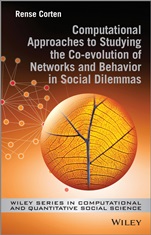
Computational Approaches to Studying the Co–evolution of Networks and Behavior in Social Dilemmas
ISBN 9781118636879
Autor: Rense Corten
Wydawca: Wiley
Dostępność: 3-6 tygodni
Cena: 364,35 zł
Przed złożeniem zamówienia prosimy o kontakt mailowy celem potwierdzenia ceny.
ISBN13: |
9781118636879 |
ISBN10: |
1118636872 |
Autor: |
Rense Corten |
Oprawa: |
Hardback |
Rok Wydania: |
2014-03-28 |
Ilość stron: |
186 |
Wymiary: |
236x153 |
Tematy: |
JB |
Presents empirical testing of computational models for social networks and behavior Social networks play an important role in explanations of outcomes of social dilemmas; situations in which goal–directed individual action can lead to a collectively suboptimal outcome. Among these dilemmas are the cooperation and coordination problems that underlie many social phenomena. In most research on network effects in social dilemmas, networks are considered as static, exogenously determined structures. Yet social network structures often result from individual choices of relations. What happens when actors can not only choose their behavior in social dilemmas, but can also purposefully change the social network in which these interactions are embedded? This book presents theoretical answers to this question, along with experimental and non–experimental empirical studies in which implications of the theoretical models are tested. The studies presented highlight the diverse ways in which computer simulation can be used to bridge abstract theoretical models and empirical applications. This book: • Explores an important theoretical puzzle which is only rarely explicitly modeled • Combines game–theoretical modeling with empirical research • Combines different types of empirical research: lab experiments and survey researchin a field setting • Uses computer simulation to explore implications of the models, and also to generate specific testable hypotheses for research Academic researchers, postgraduate students, sociologists, economists, and all social scientists with an interest in social dilemma research, social network analysis and computational methods
Preface ix 1 Introduction 1 1.1 Social dilemmas and social networks 1 1.1.1 Cooperation and social networks 4 1.1.2 Coordination and social networks 5 1.2 Dynamic networks, co–evolution, and research questions 6 1.3 Social networks and social dilemmas between sociology and economics 9 1.4 Approach: Models, simulation, and empirical tests 10 1.4.1 Theoretical models 13 1.4.2 Empirical approach 14 1.5 Description of the remaining chapters 15 References 17 2 Consent or conflict: Co–evolution of coordination and networks 23 2.1 Introduction 23 2.1.1 Polarization, conflict, and coordination 24 2.1.2 Coordination and social networks 26 2.2 The model 28 2.3 Stable states 29 2.4 Simulation design 32 2.5 Simulation results 35 2.5.1 Predicting stable states I: Polarization 36 2.5.2 Predicting stable states II: Efficiency 39 2.6 Conclusions and discussion 41 References 42 3 Cooperation and reputation in dynamic networks 47 3.1 Introduction 47 3.1.1 Cooperation and network effects 48 3.1.2 The case for network dynamics 49 3.1.3 Learning in networks 50 3.1.4 Related theoretical literature 51 3.2 The model 52 3.2.1 Formalization of the problem 52 3.2.2 Individual strategies 54 3.2.3 Reputation 56 3.2.4 Network decisions 58 3.2.5 Convergence 59 3.3 Analysis of the model 60 3.3.1 Dynamics of behavior with two actors 60 3.3.2 Stable states in fixed networks 61 3.3.3 Stable states in dynamic networks 63 3.4 Setup of the simulation 65 3.4.1 Dependent variables 66 3.4.2 Parameters of the simulation 66 3.4.3 Initial conditions of the simulation 67 3.4.4 Convergence of the simulation 68 3.5 Simulation results 68 3.5.1 Results for fixed networks 68 3.5.2 Results for dynamic networks 70 3.6 Conclusions and discussion 73 References 77 4 Co–evolution of conventions and networks: An experimental study 81 4.1 Introduction 81 4.1.1 Coordination, conventions, and networks 82 4.1.2 An experimental approach 85 4.2 Model and simulation 86 4.2.1 The model 86 4.2.2 Analytic results 88 4.2.3 Simulation 90 4.2.4 Overview of micro–level and macro–level hypotheses 93 4.3 Experimental design 96 4.4 Results 97 4.4.1 Macro–level results 97 4.4.2 Individual behavior I: Decisions in the coordination game 101 4.4.3 Individual behavior II: Linking decisions 104 4.5 Conclusions and discussion 107 References 109 5 Alcohol use among adolescents as a coordination problem in a dynamic network 113 5.1 Introduction 113 5.1.1 Coordination, influence, and alcohol use 115 5.1.2 Approaches to the study of selection and influence 117 5.2 Predictions 120 5.3 Data 123 5.3.1 Data collection 123 5.3.2 Variables and measures 123 5.4 Methods of analysis 125 5.5 Results 126 5.5.1 Descriptive results 126 5.5.2 Multilevel regression using combined network measures 130 5.5.3 Multilevel regression using non–reciprocated friendship ties 132 5.5.4 Additional analyses 132 5.6 Conclusions 134 References 136 6 Conclusions 139 6.1 Summary of the findings 139 6.2 Theory, computer simulation, and empirical tests 142 6.3 Suggestions for further research 145 6.3.1 Theoretical extensions 145 6.3.2 Suggestions for empirical studies 148 References 149 Appendix A: Instructions used in the experiment 151 Appendix B: The computer interface used for the experiment 159 Reference 167 Index 169
Rense Corten Department of Sociology, Utrecht University, The Netherlands benefit from the novel approaches presented in this book.
Koszyk
Książek w koszyku: 0 szt.
Wartość zakupów: 0,00 zł
Informacje


Kontakt
Gambit
Centrum Oprogramowania
i Szkoleń Sp. z o.o.
Al. Pokoju 29b/22-24
31-564 Kraków
Siedziba Księgarni
ul. Kordylewskiego 1
31-542 Kraków
+48 12 410 5991
+48 12 410 5987
+48 12 410 5989
Subskrypcje
Administratorem danych osobowych jest firma Gambit COiS Sp. z o.o. Na podany adres będzie wysyłany wyłącznie biuletyn informacyjny.
Autoryzacja płatności

Informacje na temat autoryzacji płatności poprzez PayU.

© Copyright 2012: GAMBIT COiS Sp. z o.o. Wszelkie prawa zastrzeżone.
Projekt i wykonanie: Alchemia Studio Reklamy