


Wydawcy
Katalog tematyczny
- Archeologia (109)
- Ekonomia, finanse, business (13704)
- Filozofia (1445)
- Historia (3040)
- Języki i językoznawstwo (2356)
- Lifestyle, hobby i rozrywka (475)
- Medycyna (9704)
- Nauki humanistyczne (4)
- Nauki o Ziemi i środowisku (2638)
- Nauki ścisłe (20412)
- Nauki społeczne (8486)
- Nauki techniczne (13450)
- Prawo (1696)
- Publikacje informacyjne i interdyscyplinarne (1288)
- Religia i wierzenia (917)
- Technika komputerowa (4067)
- Zdrowie, relacje międzyludzkie i rozwój osobisty (657)





Informacje szczegółowe o książce
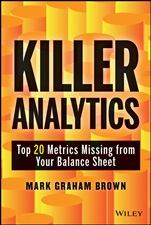
Killer Analytics: Top 20 Metrics Missing from your Balance Sheet
ISBN 9781118631713
Autor: Mark Graham Brown
Wydawca: Wiley
Dostępność: 3-6 tygodni
Cena: 248,85 zł
Przed złożeniem zamówienia prosimy o kontakt mailowy celem potwierdzenia ceny.
ISBN13: |
9781118631713 |
ISBN10: |
1118631714 |
Autor: |
Mark Graham Brown |
Oprawa: |
Hardback |
Rok Wydania: |
2013-11-05 |
Ilość stron: |
320 |
Wymiary: |
236x160 |
Tematy: |
KM |
Praise for KILLER ANALYTICS "Mark Brown brings a wealth of experience and a unique talent in making common sense of organizational performance measurement. With his usual pragmatic, down-to-earth style, Mark is sharing his extensive knowledge of what works and what doesn't. If you are serious about understanding how to effectively measure business performance, this is the book to read." Mike Watson, CEO, New Zealand Business Excellence Foundation "Mark Brown has spent decades helping companies use metrics to improve performance. In this insightful book, Mark goes deeper into the hidden measures that provide early predictions of future results. This guide helps readers get a jump on the competition by showing how to find the analytics that drive eventual profit and loss including innovation, customer engagement, and culture." Steve Player, coauthor of Beyond Performance Management and Future Ready: How to Master Business Forecasting "Mark is a true expert on practical analytics. In his typical no-nonsense fashion, Mark brings the reader up to speed on analytics that actually matter." Adam Pollard, PhD, Quality Systems, Nestle Purina PetCare Company "Brown's book combines refreshing candor with next-generation thinking on corporate performance metrics. Killer Analytics provides a practical, no-nonsense approach that significantly improves state-of-the-art thinking on what needs to be measured and why. Grounded in 'what works' as opposed to 'what is easy,' Brown's book is entertaining, very readable, and, most important, right on the money." Ken Dean, Director of Quality Systems, Nestle Purina PetCare Company "Mark's latest book, Killer Analytics , continues his tradition of sharing important information in an easy-to-understand way with interesting examples. As with his earlier books, his insights into the world of performance management are invaluable to anyone who wants to learn more, stay current and be better informed. Mark does all us performance management and measurement practitioners a favor by tackling the hard stuffidentifying and thoroughly describing leading performance measures, and the things to focus on, that provide guidance on how an organization can achieve future results and improve performance. Add this book to your 'must-read' list." Howard Rohm, cofounder and CEO, Balanced Scorecard Institute
Foreword xv Preface xix Acknowledgments xxvii Introduction: What Are Predictive Analytics? 1 Learning from Past Mistakes 1 Organizational Cholesterol 3 Uses of Predictive Analytics 3 Analytics versus Formulas versus Singular Metrics 8 Time Perspectives 10 Past, Present, and Future 10 Analytics Are Superior to Individual Metrics 11 Myths and Facts about Analytics 15 Analytics Used for Studies versus Ongoing Performance Measurement 18 Part One Operational Analytics 21 Chapter 1 The Innovation Index 23 What Is Important about Innovation? 24 Types of Organizations Where This Metric Is Appropriate 28 How Does This Impact Performance? 29 Mostly Worthless Innovation Metrics 30 Cost and Effort to Measure 31 How Do I Measure It? 32 Formula and Frequency 35 Variations 35 Targets and Benchmarks 36 Benefits of Data 36 Note 37 Chapter 2 The Supply Chain Index 39 Types of Organizations Where This Metric Is Appropriate 41 How Does This Impact Performance? 42 Cost and Effort to Measure 42 How Do I Measure It? 43 Formula and Frequency 47 Variations 48 Targets and Benchmarks 48 Benefits of Data 49 Chapter 3 The Project Management Index 51 Types of Organizations Where This Metric Is Appropriate 53 How Does This Impact Performance? 53 Cost and Effort to Measure 54 How Do I Measure It? 56 Process and Churn: Two Additional Metrics to Consider in a Project Management Analytic 57 Measuring Risk on Projects 59 Variations 60 Formula and Frequency 61 Targets and Benchmarks 62 Benefits of Data 62 Chapter 4 The Enterprise Excellence Index 65 Why Trash All These Sacred Cows? 65 Types of Organizations Where This Metric Is Appropriate 67 How Does This Impact Performance? 68 Cost and Effort to Measure 69 How Do I Measure It? 70 Knowledge Management Metrics 71 Lean or Six Sigma Metrics 74 Formula and Frequency 75 Variations 77 Targets and Benchmarks 77 Benefits of Data 77 Note 78 Chapter 5 The Risk Index 79 Types of Organizations Where This Metric Is Appropriate 80 How Does This Impact Performance? 80 Cost and Effort to Measure 81 How Do I Measure It? 82 Variations 88 Formula and Frequency 89 Benefits of Data 89 Chapter 6 The Opportunity Management Index 91 Types of Organizations Where This Metric Is Appropriate 92 How Does This Impact Performance? 93 Cost and Effort to Measure 95 How Do I Measure It? 95 Formula and Frequency 99 Variations 99 Targets and Benchmarks 100 Benefits of Data 100 Chapter 7 The External Factors Index 103 Types of Organizations Where This Metric Is Appropriate 105 How Does This Impact Performance? 106 Cost and Effort to Measure 107 How Do I Measure It? 107 Variations 109 Formula and Frequency 109 Targets and Benchmarks 110 Benefits of Data 110 Chapter 8 The Sustainability Index 113 Types of Organizations Where This Metric Is Appropriate 114 How Does This Impact Performance? 115 Cost and Effort to Measure 115 How Do I Measure It? 116 Variations 118 Formula and Frequency 120 Targets and Benchmarks 121 Benefits of Data 121 Note 121 Part Two Customer and Stakeholder Analytics 123 Chapter 9 The Outcomes Index 125 Types of Organizations Where This Metric Is Appropriate 127 How Does This Impact Performance? 128 Cost and Effort to Measure 129 How Do I Measure It? 129 Formula and Frequency 131 Variations 132 Targets and Benchmarks 132 Benefits of Data 133 Chapter 10 The Customer Engagement Index 135 Types of Organizations Where This Metric Is Appropriate 136 How Does This Impact Performance? 137 Cost and Effort to Measure 138 How Do I Measure It? 139 What Factors Should Be Included in a Customer Engagement Index? 141 Variations 146 Formula and Frequency 147 Benefits of Data 147 Note 147 Chapter 11 The Social Network Index 149 Net Promoter Score: The New and Improved Survey Method 151 Types of Organizations Where This Metric Is Appropriate 151 How Does This Impact Performance? 153 Cost and Effort to Measure 155 How Do I Measure It? 156 Sorting Out the Beautiful from the Ugly Customers 157 Variations 160 Targets and Benchmarks 160 Benefits of Data 161 Notes 161 Chapter 12 The Service Excellence Index 163 Types of Organizations Where This Metric Is Appropriate 164 How Does This Impact Performance? 165 Cost and Effort to Measure 165 How Do I Measure It? 166 Formula and Frequency 172 Variations 173 Targets and Benchmarks 173 Benefits of Data 174 Chapter 13 The Customer Rage Index 175 Problems with Customer Surveys 177 Types of Organizations Where This Metric Is Appropriate 178 How Does This Impact Performance? 179 Cost and Effort to Measure 180 How Do I Measure It? 181 Tracking Aggravations at Different Types of Organizations 181 Hospital Rage Index 182 Advantages and Disadvantages of the Aggravation or Rage Index 183 Constructing the Index 183 Formula and Frequency 184 Variations 185 Targets and Benchmarks 185 Benefits of Data 185 Chapter 14 The American Index 187 Types of Organizations Where This Metric Is Appropriate 189 How Does This Impact Performance? 189 Cost and Effort to Measure 190 How Do I Measure It? 191 Variations 191 Formula and Frequency 192 Targets and Benchmarks 193 Benefits of Data 193 Chapter 15 The Corporate Citizenship Index 195 Types of Organizations Where This Metric Is Appropriate 197 How Does This Impact Performance? 198 Cost and Effort to Measure 199 How Do I Measure It? 199 Formula and Frequency 204 Variations 205 Targets and Benchmarks 205 Benefits of Data 205 Notes 206 Part Three People Analytics 207 Chapter 16 The Human Capital Index 209 Types of Organizations Where This Metric Is Appropriate 211 How Does This Impact Performance? 212 Cost and Effort to Measure 214 How Do I Measure It? 215 Formula and Frequency 221 Variations 222 Targets and Benchmarks 223 Benefits of Data 223 Chapter 17 The Workforce Happiness Index 225 What Makes Employees Happy? 226 Types of Organizations Where This Metric Is Appropriate 227 How Does This Impact Performance? 228 A Culture of Weirdness and Fun 230 Cost and Effort to Measure 231 How Do I Measure It? 231 Net Promoter Score 233 Using Social Media to Track Employee Happiness 234 Formula and Frequency 235 Variations 236 Targets and Benchmarks 237 Benefits of Data 237 Note 238 Chapter 18 The Culture Index 239 Types of Organizations Where This Metric Is Appropriate 240 How Does This Impact Performance? 243 Pets before Profits: Purina’s Corporate Culture 244 Cost and Effort to Measure 245 How Do I Measure It? 245 Variations 248 Formula and Frequency 249 Targets and Benchmarks 250 Benefits of Data 250 Note 251 Chapter 19 The Distraction Index 253 Types of Organizations Where This Metric Is Appropriate 254 How Does This Impact Performance? 255 Cost and Effort to Measure 256 How Do I Measure It? 257 Formula and Frequency 258 Variations 258 Targets and Benchmarks 259 Benefits of Data 259 Chapter 20 The Corporate Wellness Index 261 Types of Organizations Where This Metric Is Appropriate 263 How Does This Impact Performance? 264 Halfhearted Approaches to Wellness 265 What Really Works: Tough Policies 265 What Really Works: In–House Health and Wellness Centers 266 What Really Works: Hiring the Right People 267 Cost and Effort to Measure 268 How Do I Measure It? 269 Variations 273 Formula and Frequency 274 Targets and Benchmarks 274 Benefits of Data 275 Note 275 About the Author 277 Index 279
For more than thirty years, MARK GRAHAM BROWN has consulted for businesses, including Pfizer, Medtronic, Nestle Purina, and Sysco, as well as a host of government and military clients on how to improve their performance. Regarded as one of the top experts in the world on performance measurement, Mark has written over fifty articles on performance management and is the author of four books. He conducts public workshops in the United States and Europe for the Institute of Management Studies and keynotes for professional events around the world.
Koszyk
Książek w koszyku: 0 szt.
Wartość zakupów: 0,00 zł
Informacje


Kontakt
Gambit
Centrum Oprogramowania
i Szkoleń Sp. z o.o.
Al. Pokoju 29b/22-24
31-564 Kraków
Siedziba Księgarni
ul. Kordylewskiego 1
31-542 Kraków
+48 12 410 5991
+48 12 410 5987
+48 12 410 5989
Subskrypcje
Administratorem danych osobowych jest firma Gambit COiS Sp. z o.o. Na podany adres będzie wysyłany wyłącznie biuletyn informacyjny.
Autoryzacja płatności

Informacje na temat autoryzacji płatności poprzez PayU.

© Copyright 2012: GAMBIT COiS Sp. z o.o. Wszelkie prawa zastrzeżone.
Projekt i wykonanie: Alchemia Studio Reklamy