


Wydawcy
Katalog tematyczny
- Archeologia (109)
- Ekonomia, finanse, business (13704)
- Filozofia (1445)
- Historia (3040)
- Języki i językoznawstwo (2356)
- Lifestyle, hobby i rozrywka (475)
- Medycyna (9704)
- Nauki humanistyczne (4)
- Nauki o Ziemi i środowisku (2638)
- Nauki ścisłe (20412)
- Nauki społeczne (8486)
- Nauki techniczne (13450)
- Prawo (1696)
- Publikacje informacyjne i interdyscyplinarne (1288)
- Religia i wierzenia (917)
- Technika komputerowa (4067)
- Zdrowie, relacje międzyludzkie i rozwój osobisty (657)





Informacje szczegółowe o książce
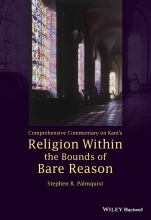
Comprehensive Commentary on Kants Religion Within the Bounds of Bare Reason
ISBN 9781118619209
Autor: Stephen R. Palmquist
Wydawca: Wiley
Dostępność: 3-6 tygodni
Cena: 888,30 zł
Przed złożeniem zamówienia prosimy o kontakt mailowy celem potwierdzenia ceny.
ISBN13: |
9781118619209 |
ISBN10: |
111861920X |
Autor: |
Stephen R. Palmquist |
Oprawa: |
Hardback |
Rok Wydania: |
2015-12-11 |
Ilość stron: |
640 |
Wymiary: |
251x176 |
Tematy: |
HP |
Stephen Palmquist s
Comprehensive Commentary provides the first definitive explication of Kant s
Religion within the Bounds of Bare Reason. The volume includes the full text of Kant s original work in a revised version of Pluhar s translation divided into short quotations. Palmquist offers editorial commentary on each segment, as well as detailed notes tracing other important issues including problems of translation, Kant s sources, and key arguments in the recent secondary literature.
The
Commentary reflects contemporary currents in Kant scholarship and takes Kant seriously as a theorist on religion, rather than merely a philosopher who discusses religion as an appendix to his ethics. Palmquist s distinctive interpretation provides detailed evidence that Kant s approach is not reductionist; a balanced focus on both of Kant s two so–called experiments ; and an appreciation for and acknowledgement of the deep respect Kant had for the Christian tradition, despite his criticisms. In doing so, Palmquist provides Kant students and scholars with an essential reference, demonstrating that Kant s arguments in
Religion are not only cogent, but have clear and profound practical applications to the way religion is actually practiced in the world today.
Preface
Acknowledgements
List of Abbreviations
Introduction: The Hermeneutic Background of Kant s Religion (The Two Prefaces; R:3–14)
1. Kant s private beliefs and writing of Religion
2. 1793 Preface: (A) Religion as the final purpose of morality
3. 1793 Preface: (B) Unifying philosophical and biblical theology
4. 1794 Preface: Two experiments and their unification
Part One: Human Nature s Transcendental Problem Evil and the Boundary of Goodness (First Piece)
I. The Original Goodness of Human Nature (Introduction, Comment and Section I; R:19–28)
1. Untitled introduction: Is humanity good or evil by nature?
2. Comment: (A) Why moral neutrality is impossible
3. Comment: (B) Could humans be partly good and partly evil?
4. Section I: Human nature s original predisposition is good
II. The Propensity to Evil in Human Nature (Sections II and III; R:28–39)
1. Section II: (A) Three sources of moral evil
2. Section II: (B) Defining evil as perversion of moral reasoning
3. Section III: (A) Empirical evil and its origin on the boundary
4. Section III: (B) The need for (and form of) an a priori proof
III. Evil s Rational Origin and Hope of Recovery (Sections IV and V; R:39–52)
1. Section IV: (A) Transcendental versus empirical origins
2. Section IV: (B) Assessing the Bible s account of evil s origin
3. Section V: (A) Divine aid and conversion s possibility
4. Section V: (B) God s role in transforming moral character
Appendix I. Experiencing the Effects of Grace against Evil (The First General Comment; R:52–53)
Part Two: The Individual s Logical Struggle The Power of Belief in Divine Aid (Second Piece)
IV. The Personified Idea of the Good Principle (Introduction and Section One, Subsections A & B; R:57–66)
1. Untitled introduction: How to distinguish evil from good
2. Section One, A: The archetype of perfection as a divine gift
3. Section One, B: (A) Becoming exemplary via practical faith
4. Section One, B: (B) An archetypal person s twofold nature
V. Legitimizing Hope in Divine Grace (Section One, Subsection C; R:66–78)
1. First difficulty: How can imperfect beings become holy?
2. Second difficulty: Can we be certain of our eternal destiny?
3. Third difficulty: How can God punish pre–conversion evil?
4. Overview: Grace as the basis for a legal claim to being good
VI. Biblical Symbols of the Struggle with Evil (Section Two; R:78–84)
1. The Genesis narrative on evil s legal claim to dominion
2. Advent of a unique person, free from the propensity to evil
3. In what sense does the crucifixion defeat the power of evil?
4. The narrative s rational meaning
Appendix II: Experiencing Miracles as Self–Negating (The Second General Comment; R:84–89)
Part Three: The Community s Empirical Victory Church as a Historical Vehicle for Good (Third Piece)
VII. The Founding of a True Church (R:93–109)
1. Untitled introduction: Hope for victory in struggling with evil
2. Division One, Sections I–III: Founding the ethical community
i. Sections I and II: The duty to leave the state of nature
ii. Section III: An ethical community requires God
3. Division One, Sections IV–V: Establishing a true church
i. Section IV: The four principles of church organization
ii. Section V: Every true church begins as a revelation faith
4. Untitled comments: Different faiths can express one religion
VIII. Interpreting Religious Ideas in a Church (R:109–124)
1. Division One, Section VI: (A) Interpretations must be moral
2. Division One, Section VI: (B) Non–moral interpretive methods
i. Scriptural scholarship is secondary to the moral method
ii. Feeling as a common but unreliable third method
3. Division One, Section VII: (A) Interpreting faith as a vehicle
i. The remarkable antinomy of sanctifying faith
ii. Perspectival solution to the antinomy of faith
4. Division One, Section VII: (B) The coming of God s kingdom
IX. Gradual Victory of Good in Church History (R:125–137)
1. Division Two: (A) The unchangeable basis of the true church
2. Division Two: (B) Christianity s radical break with Judaism
i. The allegedly non–universal emphasis of the Jewish faith
ii. The universal heart of Jesus message
3. Division Two: (C) The role of scholarship in church history
i. The diversion of historical Christianity from its true aim
ii. Qualified optimism about the present state of religion
4. Division Two: (D) Symbols of the inward kingdom
Appendix III: Mysteries as Symbols in Communities of Faith (The Third Genera Comment; R:137–147)
Part Four: Religion s Hypothetical Application How To Serve God in a Church (Fourth Piece)
X. Natural Christianity: True and False Service (R:151–163)
1. Untitled introduction: Two approaches to serving God
2. Part One, introduction: Approaches to interpreting religion
3. Part One, Section One: (A) The moral core of Jesus teachings
4. Part One, Section One: (B) Jesus teachings on the afterlife
XI. Learning Statutory Religion Without Delusion (R:163–175)
1. Part One, Section Two: (A) Biblical scholarship as a means
2. Part One, Section Two: (B) Christian Judaism as prudential
3. Part Two, introduction & §1: The origin of religious delusion
4. Part Two, §2: The moral principle opposing religious delusion
XII. The Authentic Guide: Clergy vs. Conscience (R:175–190)
1. Part Two, §3: The deception of priestery
2. Part Two, §3, Appendix: Teaching godliness without idolatry
3. Part Two, §4: (A) Conscience as the guide for church teaching
4. Part Two, §4: (B) Avoiding hypocrisy in affirming creeds
Appendix IV: Means of Grace in the Service of God (The Fourth General Comment; R:190–202)
Glossary
Works Cited
Stephen R. Palmquist is Professor of Philosophy and Religion at Hong Kong Baptist University. He lectures on a wide variety of subjects in the fields of philosophy, psychology, and religious studies. Palmquist has written numerous scholarly articles on various aspects of Kant′s philosophy, and has published 10 books, the most recent of which is Cultivating Personhood: Kant and Asian Philosophy (2010). In addition to Kant, his research interests include depth psychology, philosophy of love, philosophical anthropology, mysticism, logic of symbolism, theology of politics, and philosophy of religion.
Koszyk
Książek w koszyku: 0 szt.
Wartość zakupów: 0,00 zł
Informacje


Kontakt
Gambit
Centrum Oprogramowania
i Szkoleń Sp. z o.o.
Al. Pokoju 29b/22-24
31-564 Kraków
Siedziba Księgarni
ul. Kordylewskiego 1
31-542 Kraków
+48 12 410 5991
+48 12 410 5987
+48 12 410 5989
Subskrypcje
Administratorem danych osobowych jest firma Gambit COiS Sp. z o.o. Na podany adres będzie wysyłany wyłącznie biuletyn informacyjny.
Autoryzacja płatności

Informacje na temat autoryzacji płatności poprzez PayU.

© Copyright 2012: GAMBIT COiS Sp. z o.o. Wszelkie prawa zastrzeżone.
Projekt i wykonanie: Alchemia Studio Reklamy