


Wydawcy
Katalog tematyczny
- Archeologia (109)
- Ekonomia, finanse, business (13704)
- Filozofia (1445)
- Historia (3040)
- Języki i językoznawstwo (2356)
- Lifestyle, hobby i rozrywka (475)
- Medycyna (9704)
- Nauki humanistyczne (4)
- Nauki o Ziemi i środowisku (2638)
- Nauki ścisłe (20412)
- Nauki społeczne (8486)
- Nauki techniczne (13450)
- Prawo (1696)
- Publikacje informacyjne i interdyscyplinarne (1288)
- Religia i wierzenia (917)
- Technika komputerowa (4067)
- Zdrowie, relacje międzyludzkie i rozwój osobisty (657)





Informacje szczegółowe o książce
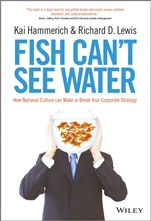
Fish Cant See Water: How National Culture Can Make or Break Your Corporate Strategy
ISBN 9781118608562
Autor: Kai Hammerich, Richard D. Lewis
Wydawca: Wiley
Dostępność: 3-6 tygodni
Cena: 152,25 zł
Przed złożeniem zamówienia prosimy o kontakt mailowy celem potwierdzenia ceny.
ISBN13: |
9781118608562 |
ISBN10: |
1118608569 |
Autor: |
Kai Hammerich, Richard D. Lewis |
Oprawa: |
Hardback |
Rok Wydania: |
2013-08-23 |
Ilość stron: |
312 |
Wymiary: |
251x175 |
Tematy: |
KM |
The message of this book is simple: national culture, through its influence on corporate culture, has a powerful but often–invisible impact on the success of global companies. What’s more, the very same national traits that accelerate growth at one stage of the corporate life cycle may derail that growth at a different stage or when an inevitable crisis hits. How did Samsung Electronics become the world’s largest consumer electronics company in less than 20 years, unseating dominant Sony Corporation in the process? What pivotal role did the national heritage of both companies play in this? How did Toyota create a sustainable competitive advantage for almost 25 years, by adapting a global business philosophy deeply rooted in Japanese culture? How did the Finnish roots of Nokia and the American roots of GM first help both companies, only later to derail their success? In a global world where most processes and products can and will be copied, culture matters more than ever, and as this book shows, can be a source of sustainable competitive advantage! As they say: ‘Culture eats Strategy for lunch!’ Through case examples that include: Toyota, Austin Motor Company (later British Leyland), Samsung, Sony, Nokia, and P&G, Hammerich and Lewis provide a new conceptual framework and 10 vital tools for analyzing corporate culture and diagnosing the dynamics that drive the success of global companies.
Preface xiii Acknowledgements xv Introduction 1 What is “culture”? 4 The water that we couldn’t see when analyzing culture 6 The long–term view: corporate lifecycles and corporate culture 9 The innovation phase 10 The geographic expansion 10 Product–line expansion 11 Efficiency and scale focus 11 Consolidation 12 Interruptions of the lifecycle – when the crisis hit 13 “Global” companies 15 Summary 17 A brief chapter overview 19 Part I Developing the Cultural Dynamic Model® 23 1 Corporate Culture, Strategy and Business Results 25 What is corporate culture? 26 The three levels of culture 26 How leaders embed their values, beliefs and assumptions early on 28 Reinforced by the daily work practices in the mature organization 28 The six dimensions of corporate culture 29 Corporate culture and strategy: the cultural dynamic model® 30 Results come from work that gets done: “the work practices” 31 Work practices infl uenced by . . . 31 The water people don’t see: the national influencers 41 The three levels of culture 44 The time lag of culture and cultural agility as a competitive advantage 45 Chapter summary 47 2 The Lewis Model – Setting the Scene 49 Linear–active cultures 57 Multi–active cultures 58 Reactive cultures 60 Getting things done 64 3 Nation–State Traits and how they affect Corporate Cultures in Seven Countries 69 The United States 70 Key nation–state traits 70 Historical background 70 Expression of nation–state traits within corporate culture 71 Potential advantages/disadvantages of US nation–state traits 73 Summary 76 Sweden 77 Key nation–state traits 77 Historical background 77 Expression of nation–state traits within corporate culture 78 Potential advantages/disadvantages of Swedish national traits 79 Summary 80 France 80 Key nation–state traits 80 Historical background 81 Expression of nation–state traits within corporate culture 81 Potential advantages/disadvantages of French national traits 82 Summary 83 Japan 84 Key nation–state traits 84 Historical background 84 Expression of nation–state traits within corporate culture 85 Potential advantages/disadvantages of Japanese national traits 86 Summary 90 Italy 90 Key nation–state traits 90 Historical background 90 Expression of nation–state traits within corporate culture 91 Potential advantages/disadvantages of Italian national traits 94 Summary 94 Germany 95 Key nation–state traits 95 Historical background 95 Expression of nation–state traits within corporate culture 95 Potential advantages/disadvantages of German national traits 96 Summary 98 Great Britain 98 Key nation–state traits 98 Historical background 98 Expression of nation–state traits within corporate culture 99 Potential advantages/disadvantages of British national traits 100 Summary 102 4 The Cultural Dynamic Model® and the Austin Motors Case 105 Introduction 105 The static cultural dynamic model® – bringing it all together 106 The embedded values and beliefs from the business realities and the national culture 106 Work practices 108 Organizational structure and hierarchy (formal and informal) 108 Decision–making processes 110 Organizational skills and capabilities 110 Workflow processes 112 The performance management, reward and compensation systems 112 Work practice across borders 113 Decoding observed behaviours and vision statements 114 Mission and vision statements 116 Identifying the values, assumptions and beliefs underpinning the “cultural universe” 117 A cultural dynamic and the full cultural dynamic model® 119 Case study: Austin Motors 121 A brief 70–year history of Austin Motors 121 The work practices 126 Artefacts, rituals and communicated values 127 Observed behaviour at Austin 128 The results 128 One enabling cultural dynamic – “the bias–for–action” 129 The potentially derailing short–term wing–it cultural dynamic 130 Conclusion 131 Chapter closing 132 Part II Cases: The Lifecycle of a Company from Innovation to Consolidation 133 5 The Embryonic Period 135 Values embedded during the early years: Apple, Microsoft and Dell 136 Apple 136 Microsoft 137 Dell 138 Traits that enable success over the business cycles 140 The embryonic period 141 Case study: Nokia 144 The Finnish culture 144 The embryonic period of the new Nokia 1.0 145 The work practices at Nokia 1.0 147 Nokia 2.0 149 Nokia 3.0 152 Case study: KONE – agility and humility 154 Case study: Walmart – an American business tackling foreign markets 155 Walmart in China 158 Walmart in South Korea 159 Walmart cultural adjustments 159 Chapter close – preview the growth period 160 6 The Growth Period 161 The product line expansion stage 162 Description of this phase 162 National traits that tend to enable or derail during the innovation phase 164 The scale and efficiency phase 164 National traits that tend to enable or derail during the scale and efficiency phase 165 Case study: Sony versus Samsung Electronics 166 Sony 166 Samsung Electronics 172 Conclusion on Sony versus Samsung Electronics 180 Chapter close 184 7 The Maturity Period 185 The consolidation phase 187 Description of the consolidation phase 187 National traits that tend to enable or derail during the maturity period 188 Case study: Toyota 190 The founder and Toyota’s embedded corporate values 191 The Toyota Way and work practices at Toyota 191 The Toyota Way as a source of sustainable differentiation 193 Toyota in America 195 The crisis and conclusion 197 Case study: FLSmidth 198 The Danish national culture 199 A brief history and the values the founder embedded 200 The next 70 years – disaster strikes – and a new strategy is outlined 201 A new footprint challenges the culture and the work practices 202 The “small country” dilemma facing FLSmidth as it moves from 1.0 to 2.0 203 The three cultural strategies options facing FLSmidth 203 Epilogue on FLSmidth 205 Case study: P&G 205 A brief history of P&G 206 A few central embedded values 206 Key lessons from the eight cases 210 Part III The Model in Action (Lessons for Boards, Managers and Investors) 213 8 Whither the West 215 Whither the West 215 Appearance and reality 218 Golden rules for dealing with reactive cultures 220 1. Speech is to promote harmony 220 2. Good listening is important 220 3. Never interrupt 221 4. Never confront 221 5. Never disagree openly 221 6. Never cause anyone to lose face 222 7. Suggestions, especially criticism, must be indirect 223 8. Be ambiguous, so as to leave options open 223 9. Prioritize diplomacy over truth 224 10. Follow the rules but interpret them flexibly 224 11. Utilize networks 225 12. Don’t rush or pressure Asians. Do things at appropriate times 225 13. Observe fixed power distances and hierarchy 227 14. Work hard at building trust 228 Golden rules for dealing with multi–active cultures 228 1. Speech is for opinions 233 2. Let them talk at length and then reply fully 233 3. Be prepared to discuss several things at once 234 4. Be prepared for several people talking at once 234 5. Display feelings and emotion 235 6. Interrupt when you like 235 7. Truth is flexible and situational 235 8. Be diplomatic rather than direct 236 9. Socialize enthusiastically, be gregarious 236 10. Think aloud 236 11. Complete human transactions 237 12. Seek and give favours with key people 237 13. Overt body language and tactility are acceptable 238 14. Reputation is as important as profit 238 15. Accept unpunctuality 238 16. Remain relationship oriented 238 9 The Crisis 241 Strategy v. competition: being “outplayed” 243 The Prussian Army and Field Marshall Von Moltke 243 The effect of national traits 246 Problems in execution 247 Examples – Sony and GM 247 The effect of national traits on poor execution 247 Disruption 248 Technology disruption 248 The effect of national traits on technology disruption 250 Process disruption 250 The effect of national traits on process disruption 251 Success – the success crisis 251 Success makes blind – the success trap 252 Success has no memory 252 The share price trap 253 The burning platform 254 Time – if you don’t move forwards you move backwards 255 Change of leadership 256 Navigating a transformation point 256 Differing cultural performances in times of crisis 257 Poor strategy facing competition 257 Poor execution 258 Disruption 259 Success 259 Time 260 Change of leadership 260 Navigating transformation 261 Meeting crises 262 Chapter closing 263 10 Enhancing Corporate Performance in a Multicultural World 265 Seeing the water that surrounds you 266 The national lifecycle fingerprint 266 Examples of 17 national traits that both enable and derail 269 Two recommendations to investors 269 1. Watch out for the tell–tale signs of a derailing cultural dynamic and promote diversity in the board 269 2. Analyze the cultural implications carefully when merging two organizations 271 Two recommendations to boards 272 1. Conduct a full strategy and cultural dynamics audit at least every five years 272 2. Promote diversity at the board and in the executive team 273 Four recommendations to management 273 1. Carefully balance diversity with day–to–day performance and make the organization culturally aware 273 2. Establish a recurrent methodology for making culture discussion more data driven and establish a cross–functional task force to systematically monitor culture 274 3. Ensure there is a clear strategy for embedding key elements of the corporate culture globally 275 4. Align the talent and leadership agenda with the cultural imperatives 276 Implications for countries 277 Chapter and book conclusion 278 Appendix 281 References and Websites 287 Index 289
Kai Hammerich , MBA (Kellogg Business School with Distinction), MSc. is Danish and an international headhunter with Russell Reynolds Associates, living in London. He has been nominated by Business Week as one of the most influential headhunters worldwide. He advises boards and leadership teams of global corporations on talent, succession and cross–cultural effectiveness. Richard D. Lewis is a well renowned British linguist who created Richard Lewis Communications – a language school for executives as well as a company that advises on cross–cultural issues facing business executives. Richard has written a number of books including the bestselling When Cultures Collide.
Koszyk
Książek w koszyku: 0 szt.
Wartość zakupów: 0,00 zł
Informacje


Kontakt
Gambit
Centrum Oprogramowania
i Szkoleń Sp. z o.o.
Al. Pokoju 29b/22-24
31-564 Kraków
Siedziba Księgarni
ul. Kordylewskiego 1
31-542 Kraków
+48 12 410 5991
+48 12 410 5987
+48 12 410 5989
Subskrypcje
Administratorem danych osobowych jest firma Gambit COiS Sp. z o.o. Na podany adres będzie wysyłany wyłącznie biuletyn informacyjny.
Autoryzacja płatności

Informacje na temat autoryzacji płatności poprzez PayU.

© Copyright 2012: GAMBIT COiS Sp. z o.o. Wszelkie prawa zastrzeżone.
Projekt i wykonanie: Alchemia Studio Reklamy