


Wydawcy
Katalog tematyczny
- Archeologia (109)
- Ekonomia, finanse, business (13704)
- Filozofia (1445)
- Historia (3040)
- Języki i językoznawstwo (2356)
- Lifestyle, hobby i rozrywka (475)
- Medycyna (9704)
- Chirurgia (272)
- Inne gałęzie medycyny (1871)
- Medycyna kliniczna (4187)
- Choroby wewnętrzne (514)
- Dermatologia (51)
- Diagnostyka medyczna (3)
- Endokrynologia (144)
- Gastroenterologia (27)
- Geriatria (50)
- Ginekologia i położnictwo (134)
- Hematologia (46)
- Hepatologia (10)
- Kardiologia (71)
- Laryngologia (12)
- Nefrologia (10)
- Neurologia (500)
- Oftalmologia (50)
- Pediatria (33)
- Pulmunologia (32)
- Reumatologia (14)
- Terapia genowa (1)
- Układ mięśniowo-szkieletowy (1)
- Urologia (14)
- Medycyna niekonwencjonalna (14)
- Medycyna przedkliniczna (269)
- Medycyna, ogólnie (1740)
- Medyczne służby pomocnicze (745)
- Studia medyczne (16)
- Weterynaria (548)
- Nauki humanistyczne (4)
- Nauki o Ziemi i środowisku (2638)
- Nauki ścisłe (20412)
- Nauki społeczne (8486)
- Nauki techniczne (13450)
- Prawo (1696)
- Publikacje informacyjne i interdyscyplinarne (1288)
- Religia i wierzenia (917)
- Technika komputerowa (4067)
- Zdrowie, relacje międzyludzkie i rozwój osobisty (657)





Informacje szczegółowe o książce
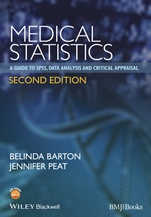
Medical Statistics: A Guide to SPSS, Data Analysis and Critical Appraisal
ISBN 9781118589939
Autor: Belinda Barton, Jennifer Peat
Wydawca: Wiley
Dostępność: 3-6 tygodni
Cena: 307,65 zł
Przed złożeniem zamówienia prosimy o kontakt mailowy celem potwierdzenia ceny.
ISBN13: |
9781118589939 |
ISBN10: |
1118589939 |
Autor: |
Belinda Barton, Jennifer Peat |
Oprawa: |
Paperback |
Rok Wydania: |
2014-09-26 |
Numer Wydania: |
2nd Edition |
Ilość stron: |
408 |
Wymiary: |
240x170 |
Tematy: |
MJ |
Medical Statistics provides you with the essential knowledge and skills to undertake and understand evidence–based clinical research. This book is invaluable for researchers and clinicians engaged in a wide range of research studies. A practical, comprehensive, step–by–step guide is provided – from study design, required sample size, selecting the correct statistical test, checking test assumptions, conducting and interpreting statistics, interpretation of effect sizes and P values, to how best report results for presentation and publication. The SPSS commands for methods of statistical analyses frequently conducted in the health care literature are included such, as t –tests, ANOVA, regression, survival analysis, diagnostic and risk statistics etc. In addition, the most relevant corresponding output and interpretation is presented, with clear and concise explanations. Each chapter includes worked research examples with real data sets that can be downloaded. Critical appraisal checklists are also included to help researchers systemically evaluate the results of studies. This new edition includes a new chapter on longitudinal data that includes both a repeated measures and mixed models approach. Furthermore, all commands and output have been updated to IBM Statistics SPSS version 21 and SigmaPlot version 13. Data sets for this book can be downloaded fromwww.wiley.com/go/barton/medicalstatistics2e
Introduction, ix Acknowledgements, xiii About the companion website, xv Chapter 1 Creating an SPSS data file and preparing to analyse the data, 1 1.1 Creating an SPSS data file, 1 1.2 Opening data from Excel in SPSS, 6 1.3 Categorical and continuous variables, 7 1.4 Classifying variables for analyses, 7 1.5 Hypothesis testing and P values, 8 1.6 Choosing the correct statistical test, 9 1.7 Sample size requirements, 10 1.8 Study handbook and data analysis plan, 12 1.9 Documentation, 13 1.10 Checking the data, 13 1.11 Avoiding and replacing missing values, 14 1.12 SPSS data management capabilities, 16 1.13 Managing SPSS output, 20 1.14 SPSS help commands, 21 1.15 Golden rules for reporting numbers, 21 1.16 Notes for critical appraisal, 21 References, 23 Chapter 2 Descriptive statistics, 24 2.1 Parametric and non–parametric statistics, 25 2.2 Normal distribution, 25 2.3 Skewed distributions, 26 2.4 Checking for normality, 29 2.5 Transforming skewed variables, 43 2.6 Data analysis pathway, 49 2.7 Reporting descriptive statistics, 49 2.8 Checking for normality in published results, 50 2.9 Notes for critical appraisal, 51 References, 51 Chapter 3 Comparing two independent samples, 52 3.1 Comparing the means of two independent samples, 52 3.2 One– and two–sided tests of significance, 54 3.3 Effect sizes, 55 3.4 Study design, 57 3.5 Influence of sample size, 58 3.6 Two–sample t–test, 71 3.7 Confidence intervals, 73 3.8 Reporting the results from two–sample t–tests, 75 3.9 Rank–based non–parametric tests, 80 3.10 Notes for critical appraisal, 88 References, 89 Chapter 4 Paired and one–sample t–tests, 90 4.1 Paired t–tests, 90 4.2 Non–parametric test for paired data, 97 4.3 Standardizing for differences in baseline measurements, 99 4.4 Single–sample t–test, 102 4.5 Testing for a between–group difference, 106 4.6 Notes for critical appraisal, 110 References, 111 Chapter 5 Analysis of variance, 112 5.1 Building ANOVA and ANCOVA models, 113 5.2 ANOVA models, 113 5.3 One–way analysis of variance, 117 5.4 Effect size for ANOVA, 127 5.5 Post–hoc tests for ANOVA, 128 5.6 Testing for a trend, 133 5.7 Reporting the results of a one–way ANOVA, 134 5.8 Factorial ANOVA models, 135 5.9 An example of a three–way ANOVA, 140 5.10 Analysis of covariance (ANCOVA), 145 5.11 Testing the model assumptions of ANOVA/ANCOVA, 149 5.12 Reporting the results of an ANCOVA, 158 5.13 Notes for critical appraisal, 158 References, 160 Chapter 6 Analyses of longitudinal data, 161 6.1 Study design, 161 6.2 Sample size and power, 162 6.3 Covariates, 163 6.4 Assumptions of repeated measures ANOVA and mixed models, 163 6.5 Repeated measures analysis of variance, 164 6.6 Linear mixed models, 182 6.7 Notes for critical appraisal, 195 References, 196 Chapter 7 Correlation and regression, 197 7.1 Correlation coefficients, 197 7.2 Regression models, 205 7.3 Multiple linear regression, 213 7.4 Interactions, 230 7.5 Residuals, 235 7.6 Outliers and remote points, 237 7.7 Validating the model, 240 7.8 Reporting a multiple linear regression, 241 7.9 Non–linear regression, 242 7.10 Centering, 244 7.11 Notes for critical appraisal, 247 References, 247 Chapter 8 Rates and proportions, 249 8.1 Summarizing categorical variables, 249 8.2 Describing baseline characteristics, 251 8.3 Incidence and prevalence, 252 8.4 Chi–square tests, 253 8.5 2 × 3 Chi–square tables, 260 8.6 Cells with small numbers, 262 8.7 Exact chi square test, 263 8.8 Number of cells that can be tested, 264 8.9 Reporting chi–square tests and proportions, 266 8.10 Large contingency tables, 267 8.11 Categorizing continuous variables, 271 8.12 Chi–square trend test for ordered variables, 273 8.13 Number needed to treat (NNT), 277 8.14 Paired categorical variables: McNemar’s chi–square test, 281 8.15 Notes for critical appraisal, 285 References, 286 Chapter 9 Risk statistics, 287 9.1 Risk statistics, 287 9.2 Study design, 288 9.3 Odds ratio, 288 9.4 Protective odds ratios, 296 9.5 Adjusted odds ratios, 298 9.6 Relative risk, 308 9.7 Number needed to be exposed for one additional person to be harmed (NNEH), 312 9.8 Notes for critical appraisal, 312 References, 313 Chapter 10 Tests of reliability and agreement, 314 10.1 Reliability and agreement, 314 10.2 Kappa statistic, 317 10.3 Reliability of continuous measurements, 321 10.4 Intra–class correlation, 322 10.5 Measures of agreement, 325 10.6 Notes for critical appraisal, 329 References, 329 Chapter 11 Diagnostic statistics, 331 11.1 Coding for diagnostic statistics, 331 11.2 Positive and negative predictive values, 332 11.3 Sensitivity and specificity, 335 11.4 Likelihood ratio, 338 11.5 Receiver Operating Characteristic (ROC) Curves, 339 11.6 Notes for critical appraisal, 348 References, 349 Chapter 12 Survival analyses, 350 12.1 Study design, 351 12.2 Censored observations, 351 12.3 Kaplan–Meier survival method, 351 12.4 Cox regression, 360 12.5 Questions for critical appraisal, 368 References, 368 Glossary, 370 Useful websites, 381 Index, 385
Koszyk
Książek w koszyku: 0 szt.
Wartość zakupów: 0,00 zł
Informacje


Kontakt
Gambit
Centrum Oprogramowania
i Szkoleń Sp. z o.o.
Al. Pokoju 29b/22-24
31-564 Kraków
Siedziba Księgarni
ul. Kordylewskiego 1
31-542 Kraków
+48 12 410 5991
+48 12 410 5987
+48 12 410 5989
Subskrypcje
Administratorem danych osobowych jest firma Gambit COiS Sp. z o.o. Na podany adres będzie wysyłany wyłącznie biuletyn informacyjny.
Autoryzacja płatności

Informacje na temat autoryzacji płatności poprzez PayU.

© Copyright 2012: GAMBIT COiS Sp. z o.o. Wszelkie prawa zastrzeżone.
Projekt i wykonanie: Alchemia Studio Reklamy