


Wydawcy
Katalog tematyczny
- Archeologia (109)
- Ekonomia, finanse, business (13704)
- Filozofia (1445)
- Historia (3040)
- Języki i językoznawstwo (2356)
- Lifestyle, hobby i rozrywka (475)
- Medycyna (9704)
- Nauki humanistyczne (4)
- Nauki o Ziemi i środowisku (2638)
- Nauki ścisłe (20412)
- Nauki społeczne (8486)
- Nauki techniczne (13450)
- Prawo (1696)
- Publikacje informacyjne i interdyscyplinarne (1288)
- Religia i wierzenia (917)
- Technika komputerowa (4067)
- Zdrowie, relacje międzyludzkie i rozwój osobisty (657)





Informacje szczegółowe o książce
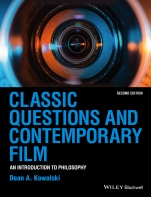
Classic Questions and Contemporary Film: An Introduction to Philosophy
ISBN 9781118585603
Autor: Dean A. Kowalski
Wydawca: Wiley
Dostępność: 3-6 tygodni
Cena: 260,40 zł
Przed złożeniem zamówienia prosimy o kontakt mailowy celem potwierdzenia ceny.
ISBN13: |
9781118585603 |
ISBN10: |
1118585607 |
Autor: |
Dean A. Kowalski |
Oprawa: |
Paperback |
Rok Wydania: |
2015-10-09 |
Numer Wydania: |
2nd Edition |
Ilość stron: |
344 |
Wymiary: |
244x190 |
Tematy: |
HP |
A great blend of classic sources, modern movies, and critical analysis. This is the perfect textbook for teaching and learning philosophy through film.
William Irwin, King s College, General Editor of the Blackwell Philosophy and Pop Culture Series
Dean Kowalski has produced a textbook that is both comprehensive and accessible to students. One of the marvelous qualities of the book is that it has high expectations of students. The selections of readings, the student guides, and, most impressively, the range of films discussed makes this an excellent introduction to philosophical thought and, equally important, a model for how to engage students with philosophy through the use of film. The latter takes real skill and Kowalski is an expert guide. The integration of a wide range of films along with the readings, exposition, and applications will provide any student with an excellent foundation in philosophy and should spark that wonder in students to which all philosophy classes aspire.
James B. South, Marquette University
Fully revised and updated, Classic Questions and Contemporary Film: An Introduction to Philosophy, Second Edition, aims to excite and motivate students to do philosophy by introducing them to core philosophical concepts through explorations of popular movies. The new edition includes discussion of eighteen additional films, including Inception, V for Vendetta, and Hotel Rwanda, and coverage of fresh topics such as rhetoric and sophistry, Plato s Republic, and religious experience. A new chapter on the human condition, which includes discussions of personal identity, the meaningfulness of life and death, and existentialism, has also been added. The features that made the first edition so successful have been kept and enhanced. Each chapter opens with a classic philosophical reading, and offers a rich pedagogical framework, including learning outcomes, jargon–free argument analysis, critical thinking and trivia questions, and textboxes with helpful notes on the movies discussed. These features provide readers with the tools they need to make the leap from reading about philosophy to doing philosophy. Engaging and thought–provoking, Classic Questions and Contemporary Film, Second Edition, offers a wealth of insights into the myriad critical philosophical issues raised in popular films.
Preface ix
Acknowledgments xii
About the Website xiii
Philosophy, Rhetoric, and Argument 1
1.1 Historical Setting: Plato, Gorgias 2
1.2 Discussion and Analysis 6
1.3 Films 23
Thank You for Smoking (2005) 23
Minority Report (2002) 27
The Emperor s Club (2002) 31
1.4 Synthesis, Review, and Going Forward 34
Epistemology and Skepticism 37
2.1 Historical Setting: Descartes, Meditations I and II 38
2.2 Discussion and Analysis 44
2.3 Films 59
The Matrix (1999) 59
Inception (2010) 62
Vanilla Sky (2001) 66
2.4 Synthesis, Review, and Going Forward 69
God, Creation, and Evil 71
3.1 Historical Setting: Paley, The Argument from Design 72
3.2 Discussion and Analysis 74
3.3 Films 91
Bruce Almighty (2003) 91
Creation (2009) 94
Schindler s List (1993) 98
3.4 Synthesis, Review, and Going Forward 101
Freedom, Fate, and Determinism 104
4.1 Historical Setting: D Holbach, System of Nature 105
4.2 Discussion and Analysis 109
4.3 Films 121
The Adjustment Bureau (2011) 121
Gattaca (1997) 124
Run, Lola, Run (1998) 128
4.4 Synthesis, Review, and Going Forward 132
Mind, Body, and Consciousness 134
5.1 Historical Setting: Descartes, Meditation VI 135
5.2 Discussion and Analysis 138
5.3 Films 156
Being John Malkovich (1999) 156
Bicentennial Man (1999) 159
Eternal Sunshine of the Spotless Mind (2004) 163
5.4 Synthesis, Review, and Going Forward 166
Ethical Foundations and Moral Truth 169
6.1 Historical Setting: Sumner, Folkways 170
6.2 Discussion and Analysis 173
6.3 Films 190
Hotel Rwanda (2004) 190
Frailty (2001) 194
The Cider House Rules (1999) 197
6.4 Synthesis, Review, and Going Forward 200
Ethics and Values 203
7.1 Historical Setting: Reid, Of the First Principles of Morals 204
7.2 Discussion and Analysis 208
7.3 Films 221
Saving Private Ryan (1998) 221
Horton Hears a Who! (2008) 225
Groundhog Day (1993) 228
7.4 Synthesis, Review, and Going Forward 232
The State, Social Contracts, and Justice 235
8.1 Historical Setting: Hobbes, Leviathan 236
8.2 Discussion and Analysis 240
8.3 Films 256
Star Wars: Revenge of the Sith (2005) 256
V for Vendetta (2005) 259
Serenity (2005) 263
8.4 Synthesis, Review, and Going Forward 266
The Human Condition 269
9.1 H istorical Setting: Russell, The Value of Philosophy 270
9.2 Discussion and Analysis 273
9.3 Films 288
Memento (2000) 288
A.I.: Artificial Intelligence (2001) 292
Crimes and Misdemeanors (1989) 296
9.4 Synthesis, Review, and Going Forward 299
Appendix
A.1 A Deductive Logic Primer 302
A.2 Film 312
Monty Python and the Holy Grail (1974) 312
Glossary 316
Index 323
Dean A. Kowalski is Associate Professor of Philosophy at the University of Wisconsin–Waukesha. He is the author of Classic Questions and Contemporary Film (2005) and Moral Theory at the Movies (2012). He is the editor of Steven Spielberg and Philosophy (2008), The Philosophy of The X–Files (2009), and The Big Bang Theory and Philosophy (Wiley, 2012), and the coeditor of The Philosophy of Joss Whedon (2011).
Koszyk
Książek w koszyku: 0 szt.
Wartość zakupów: 0,00 zł
Informacje


Kontakt
Gambit
Centrum Oprogramowania
i Szkoleń Sp. z o.o.
Al. Pokoju 29b/22-24
31-564 Kraków
Siedziba Księgarni
ul. Kordylewskiego 1
31-542 Kraków
+48 12 410 5991
+48 12 410 5987
+48 12 410 5989
Subskrypcje
Administratorem danych osobowych jest firma Gambit COiS Sp. z o.o. Na podany adres będzie wysyłany wyłącznie biuletyn informacyjny.
Autoryzacja płatności

Informacje na temat autoryzacji płatności poprzez PayU.

© Copyright 2012: GAMBIT COiS Sp. z o.o. Wszelkie prawa zastrzeżone.
Projekt i wykonanie: Alchemia Studio Reklamy