


Wydawcy
Katalog tematyczny
- Archeologia (109)
- Ekonomia, finanse, business (13704)
- Filozofia (1445)
- Historia (3040)
- Języki i językoznawstwo (2356)
- Lifestyle, hobby i rozrywka (475)
- Medycyna (9704)
- Nauki humanistyczne (4)
- Nauki o Ziemi i środowisku (2638)
- Nauki ścisłe (20412)
- Nauki społeczne (8486)
- Nauki techniczne (13450)
- Prawo (1696)
- Publikacje informacyjne i interdyscyplinarne (1288)
- Religia i wierzenia (917)
- Technika komputerowa (4067)
- Zdrowie, relacje międzyludzkie i rozwój osobisty (657)





Informacje szczegółowe o książce
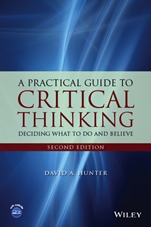
A Practical Guide to Critical Thinking: Deciding What to Do and Believe
ISBN 9781118583081
Autor: David A. Hunter
Wydawca: Wiley
Dostępność: 3-6 tygodni
Cena: 348,60 zł
Przed złożeniem zamówienia prosimy o kontakt mailowy celem potwierdzenia ceny.
ISBN13: |
9781118583081 |
ISBN10: |
1118583086 |
Autor: |
David A. Hunter |
Oprawa: |
Paperback |
Rok Wydania: |
2014-11-14 |
Numer Wydania: |
2nd Edition |
Ilość stron: |
256 |
Wymiary: |
232x157 |
Tematy: |
HP |
Praise for the First Edition “…a well–structured path of increasing difficulty, disseminated by useful examples and study cases taken from a variety of disciplines as well as from common situations." – Zentralblatt MATH A thoroughly updated introduction to the concepts, methods, and standards of critical thinking, A Practical Guide to Critical Thinking: Deciding What to Do and Believe, Second Edition is a unique presentation of the formal strategies used when thinking through reasons and arguments in many areas of expertise. Pursuing an interdisciplinary approach to critical thinking, the book offers a broad conception of critical thinking and explores the practical relevance to conducting research across fields such as, business, education, and the biological sciences. Applying rigor when necessary, the Second Edition maintains an informal approach to the fundamental core concepts of critical thinking. With practical strategies for defining, analyzing, and evaluating reasons and arguments, the book illustrates how the concept of an argument extends beyond philosophical roots into experimentation, testing, measurement, and policy development and assessment. Featuring plenty of updated exercises for a wide range of subject areas, A Practical Guide to Critical Thinking Deciding What to Do and Believe, Second Edition also includes: Numerous real–world examples from many fields of research, which reflect the applicability of critical thinking in everyday life New topical coverage, including the nature of reasons, assertion and supposing, narrow and broad definitions, circumstantial reasons, and reasoning about causal claims Selected answers to various exercises to provide readers with instantaneous feedback to support and extend the lessons A Practical Guide to Critical Thinking Deciding What to Do and Believe, Second Edition is an excellent textbook for courses on critical thinking and logic at the undergraduate and graduate levels as well as an appropriate reference for anyone with a general interest in critical thinking skills. David A. Hunter, PhD, is Associate Professor of Philosophy at Ryerson University, Canada. He has published numerous journal articles in his areas of research interest, which include the philosophy of language, the philosophy of mind, epistemology, and critical thinking.
Preface Note to Instructors Chapter 1 The Nature and Value of Critical Thinking 1. The Nature of Critical Thinking 2. Critical Thinking and Knowledge 3. Knowledge and Truth 4. Knowledge and Belief 5. Knowledge and Justification 6. Good Reasons are Sufficient and Acceptable 7. When Evidence Conflicts 8. Critical Thinking and Personal Autonomy 9. Critical Thinking in Practice Chapter 2 Clarifying Meaning 1. The Place of Definitions in Critical Thinking 2. Assertion and the Assertion Test 3. Assertion Test 4. Constructing and Evaluating Definitions 5. Give a Slogan 6. Expand on the Slogan 7. Give Examples 8. Identify Contrasting Ideas 9. Thinking Critically about Frameworks 10. Clarifying Beliefs and Problems 11. Technical Definitions 12. Meaning in Advertisements 13. Critical Thinking in Practice Chapter 3 Sufficient Reasons 1. Critical Thinking and Arguments 2. Identifying Premises and Conclusions 3. Dependent and Independent Premises 4. Sub–Arguments 5. Evaluating Logical Support 6. Missing Premises 7. Piling on Independent Premises 8. Critical Thinking in Practice Chapter 4 Acceptable Reasons 1. Reliable Sources 2. Undermining and Overriding Evidence 3. Observation 4. Memory 5. Testimony 6. Advertising 7. News Reports 8. Measurement 9. Surveys 10. Critical Thinking in Practice Chapter 5 Reasoning about Alternatives and about Necessary and Sufficient Conditions 1. Reasoning about Alternatives 2. The Meaning of Disjunctions 3. Reasoning by Denying a Disjunct 4. False Disjunctions 5. When are Disjunctions Acceptable? 6. Exclusive Disjunctions 7. How to Criticize Reasoning about Alternatives 8. Reasoning about Necessary and Sufficient Conditions 9. The Meaning of Conditionals 10. Valid Forms of Reasoning about Necessary and Sufficient Conditions 11. Invalid Forms of Reasoning about Necessary and Sufficient Conditions 12. Making Necessary and Sufficient Conditions Explicit 13. When are Claims about Necessary and Sufficient Conditions Acceptable? 14. Reasoning with Definitions and Standards 15. Necessary and Sufficient Causal Conditions 16. Reasoning with Causal Claims 17. Discovering Causal Conditions 18. Critical Thinking in Practice Chapter 6 Reasoning by Analogy 1. Reasoning by Perfect Analogy 2. Is Reasoning by Analogy valid? 3. When is an Analogical Claim True? 4. Reasoning using Representational Analogy 5. Reasoning with Samples 6. When are Samples Representative? 7. Reasoning with Maps and Models 8. Critical Thinking in Practice Chapter 7 Critical Thinking in Action 1. Thinking Critically about a Discipline 2. Identifying a Discipline’s Sources of Evidence 3. Identifying a Discipline’s forms of Reasoning 4. Critical Thinking Questions 5. Thinking Critically in your own Decision Making 6. Thinking Critically in Discussion 7. From Theory to Practice: applying what we have learned Appendix A: Critical Thinking Mistakes Appendix B: Critical Thinking Strategies
David A. Hunter, PhD, is Associate Professor of Philosophy at Ryerson University, Canada. He has published numerous journal articles in his areas of research interest, which include the philosophy of language, the philosophy of mind, epistemology, and critical thinking.
Koszyk
Książek w koszyku: 0 szt.
Wartość zakupów: 0,00 zł
Informacje


Kontakt
Gambit
Centrum Oprogramowania
i Szkoleń Sp. z o.o.
Al. Pokoju 29b/22-24
31-564 Kraków
Siedziba Księgarni
ul. Kordylewskiego 1
31-542 Kraków
+48 12 410 5991
+48 12 410 5987
+48 12 410 5989
Subskrypcje
Administratorem danych osobowych jest firma Gambit COiS Sp. z o.o. Na podany adres będzie wysyłany wyłącznie biuletyn informacyjny.
Autoryzacja płatności

Informacje na temat autoryzacji płatności poprzez PayU.

© Copyright 2012: GAMBIT COiS Sp. z o.o. Wszelkie prawa zastrzeżone.
Projekt i wykonanie: Alchemia Studio Reklamy