


Wydawcy
Katalog tematyczny
- Archeologia (109)
- Ekonomia, finanse, business (13704)
- Filozofia (1445)
- Historia (3040)
- Języki i językoznawstwo (2356)
- Lifestyle, hobby i rozrywka (475)
- Medycyna (9704)
- Nauki humanistyczne (4)
- Nauki o Ziemi i środowisku (2638)
- Nauki ścisłe (20412)
- Nauki społeczne (8486)
- Nauki techniczne (13450)
- Prawo (1696)
- Publikacje informacyjne i interdyscyplinarne (1288)
- Religia i wierzenia (917)
- Technika komputerowa (4067)
- Zdrowie, relacje międzyludzkie i rozwój osobisty (657)





Informacje szczegółowe o książce
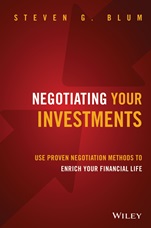
Negotiating Your Investments: Use Proven Negotiation Methods to Enrich Your Financial Life
ISBN 9781118583074
Autor: Steven G. Blum
Wydawca: Wiley
Dostępność: 3-6 tygodni
Cena: 211,05 zł
Przed złożeniem zamówienia prosimy o kontakt mailowy celem potwierdzenia ceny.
ISBN13: |
9781118583074 |
ISBN10: |
1118583078 |
Autor: |
Steven G. Blum |
Oprawa: |
Hardback |
Rok Wydania: |
2014-05-30 |
Ilość stron: |
288 |
Wymiary: |
235x153 |
Tematy: |
KF |
PRAISE FOR NEGOTIATING YOUR INVESTMENTS Two subjects I enjoy but had never thought about as a pair come together in this book, which gives away the secrets of a successful negotiator, and then applies those secrets to investing. Maria E. Rodriguez, Partner, Venable LLP; former editor–in–chief, Litigation This book is a timely and daring endeavor; it combines practical knowledge in negotiations and in investing, while often exposing the misdeeds of a very powerful industry. Many readers will simply wish that they had read all this earlier. Above all, however, this is an effort of a committed educator to extend his teaching hours and student base across time and space. An educator some of us still call affectionately: il professore. Dr. Seraphim Voliotis, Barrister (np), Mediator; Assistant Professor of Strategy, ALBA Graduate Business School at the American College of Greece The financial advice is in this book is sound and merits a close read, but it is Steve Blums insights about negotiating that make this book a game–changer. I highly recommend it. Dan Solin, Author of the Smartest series of books Negotiating Your Investments is two books in onethe first lets the reader slip into the back row of Steve Blums popular Wharton class for a well–organized and illustrated overview of negotiation. The second offers individual investors the clients chair in Blums thriving practice, with pointed advice about how to invest with a negotiators mindset. A must–read about how to think like a skilled negotiator when you select a financial advisor or buy investment products. Jennifer Beer, Negotiation & Dispute Resolution instructor, Wharton School, University of Pennsylvania; Principal, JB Intercultural Consulting; Author of The Mediators Handbook Professor Blum undertakes a doubly difficult task: explaining the elements of wise investing and explaining strategies for working with the sometimes strange characters who are financial professionals. The book is a complete success. Even though his topics will not in themselves excite all readers, Blum writes so engagingly that anybody concerned about his or her financial future will enjoy learning from this book. So many works offering financial advice merely put old wine in new jugs. By focusing on negotiation aspects of investment, Blum introduces something new and deeply important. Alan Strudler, Professor, Legal Studies and Business Ethics, Wharton School, University of Pennsylvania
Prologue Acknowledgments Introduction Part I: What the Best Negotiators Do – The Ivy League Method of Negotiating Chapter 1: What Is a Good Outcome? Identify Truly Good Outcomes and Don’t Get Distracted What Makes for a Good Outcome? Chapter Summary Chapter 2: Interests, Options and Goals What Do You Really, Really Want? Shared Interests Dig Deep to Explore Underlying Interests Don’t Settle for Win–Win Options Structure the Deal to Meet Their Needs, Too Work With Them to Create More Value Chapter Summary Chapter 3: Fairness What is “Fair”? Move Beyond “Market Value” to Measure Fairness Chapter Summary Chapter 4: Communication to Build the Kind of Relationship You Want Set Relationship Goals Choose Communication Tools Carefully Work to Create the Atmosphere You Want Focus on What You Want to Tell Them – And How Use Active Listening Techniques Be Aware of the Power Dynamics – And Consider Changing Them Plan a Process That Will Lead to Good Outcomes Chapter Summary Chapter 5: Thinking about Commitments How Tight Are The Bindings? When Should We Be Bound? Commitment is Not Just About the Ending – Consider It Throughout the Process Many Little Agreement Steps Chapter Summary Chapter 6: Best Alternative: Where Your Power Comes From Step 1 – An Inventory of Your Possible Alternatives Step 2 – Identify Your BATNA Step 3 – Strengthen Your BATNA Step 4 – Estimate What the Other Side’s BATNA Might Be Step 5 – Consider Whether You Can Weaken the Other Side’s BATNA Work to Shape Their Perceptions Be Careful Not To Rely Too Much on BATNA – Especially Where Relationships Are Important Chapter Summary Chapter 7: The Preparation Phase Where Do We Hope to End Up? Consider the Substantive Issues Then Consider the Relationship Issues You Want Good Substance and Good Relationships – But Don’t Trade One for the Other Set High Achievable Goals Who Are These People Who Will Soon Be Sitting Across from Us? Chapter Summary Chapter 8: Exchanging Information Phase Ask Lots of Questions Strengthen Your Bonds With the Other Parties Gather Up All the Facts That They Are Comfortable Sharing Managing the Danger That They May Lie to Us Chapter Summary Chapter 9: The Bargaining Phase Work to Increase the Pie – And to Claim a Fair Slice Use Conditional Language to Explore Trades That May Create Value Propose Terms Favorable to You – But Defensible as Fair Make Small Concessions Slowly and Deliberately – And Insist on Fairness Be Resolute About Claiming Your Fair Share Chapter Summary Chapter 10: Closing and Commitment Phase You Want Promises They are Sure to Keep Create Scarcity to Enhance Their Enthusiasm for the Deal Prepare to Be Patient Chapter Summary Chapter 11: The Problem with Agents Sometimes Employing an Agent is Wise Often Employing an Agent is Foolish Are the Agent’s Interests the Same as Yours? Chapter Summary Part II: Applying Negotiating Skills to Investing Chapter 12: Why Is Investing Really Just Another Type of Negotiation? Investing is Similar to Other Big Ticket Negotiations Do Not Be Fooled into Thinking It is Something Other Than a Negotiation Chapter Summary Chapter 13: What is a Good Outcome Regarding Your Investments? Investment Goals are Narrower Than For Some Other Negotiations Chapter Summary Chapter 14: Applying the Negotiation Methods to Your Investing Understanding Your Own Interests Getting To Know Their Interests Many Different Possible Options for How to Structure the Deal Insist on Using Objective Standards of Fairness Set Relationship Goals Choose the Communication Tools That Are Best for You Good Negotiating Process Contributing to the Kind of Relationship We Want When to Commit – And to What Have a Strong Best Alternative The Four Phases of the Investment Negotiation Chapter Summary Chapter 15: The Problem of Conflicts of Interest Incentives Matter Some Conflicts other than Money Chapter Summary Chapter 16: The Problem of Asymmetric Information They Know Much More Than You Do About the Tricks of the Trade Knowing More Creates Vast Opportunities to Take Advantage of Others Chapter Summary Chapter 17: Who Can You Trust? And Why? Be Extremely Careful About Who You Trust – And How Much You Can Work Well With People Without Trusting Them You Can Trust Those Whose Best Interests Make Them Trustworthy Chapter Summary Chapter 18: Professionalism: Who is a True Professional and Why? The Traditional Professions Struggle with Society’s Need for Trustworthy Help The Traditional Professions Don’t Always Succeed – But They Must Always Try Reclaiming Professionalism Chapter Summary Part III: The Economic Truths You Need to Know in Order to Be an Effective Investor–Negotiator Chapter 19: Nobody Can Consistently Beat the Market The Markets Are, For the Most Part, Rrational Don’t Confuse Random Chance with Skill Stock Research Offers Little Value Chapter Summary Chapter 20: Past Performance Does Not Guarantee Future Results No One Can Predict the Future Chapter Summary Chapter 21: The Concept of Present Value What is Tax Deferral Wworth? Present Value and Life Insurance Present Value and Money Back Guarantees Present Value and Comparing Investments Chapter Summary Chapter 22: There is Really Only One Interest Rate Higher Rates Reflect Higher Levels of Risk Risky Investments Involve a Danger of Losing Much of Your Principal Chapter Summary Chapter 23: There Is No Such Thing as a “Free Lunch”… Except Diversification Why You Want to Diversify Chapter Summary Chapter 24: Create a Highly Diversified Investment Portfolio Be Honest With Yourself About Your Risk Tolerance How to Achieve Diversification of an Investment Portfolio Diversifying Asset Classes Beyond Stocks The “Efficient Markets Theory” Some Practical Aadvice on Choosing Specific Categories of Index Funds Chapter Summary Chapter 25: We Know What Has Happened in the Past The Historical Average Return on Stock Investments is a Very Good Result Seeking Higher Than Market Returns is Called Gambling Chapter Summary Chapter 26: Costs Are Important – They Reduce Your Returns Higher Costs Result in Lower Returns Many Investments Carry Expenses That Aare Just Too High to Be a Good Deal Figure Out How Much You Are Paying to Those Who Lay Hands on Your Investments How You Can Minimize Costs Chapter Summary Chapter 27: Investments to Avoid Variable Annuities Hedge Funds Derivatives Callable Bonds Convertible Securities Complex Partnership Deals Chapter Summary Chapter 28: How Much Is At Stake? The Impact of the Fees You Pay for Advice The Need for Action Chapter Summary Afterword: What is a Good Outcome in your Financial Life? About the Author Index
STEVEN G. BLUM is an expert negotiator who works with corporations, individuals, and nonprofits to refine their negotiating techniques. He is a principal in the firm of Steven G. Blum and Associates, LLC, and has conducted seminars in the Executive Education Programs at the University of Pennsylvania and Harvard Law School. He has been teaching in the Department of Legal Studies and Business Ethics at the Wharton School of the University of Pennsylvania for over twenty years.
Koszyk
Książek w koszyku: 0 szt.
Wartość zakupów: 0,00 zł
Informacje


Kontakt
Gambit
Centrum Oprogramowania
i Szkoleń Sp. z o.o.
Al. Pokoju 29b/22-24
31-564 Kraków
Siedziba Księgarni
ul. Kordylewskiego 1
31-542 Kraków
+48 12 410 5991
+48 12 410 5987
+48 12 410 5989
Subskrypcje
Administratorem danych osobowych jest firma Gambit COiS Sp. z o.o. Na podany adres będzie wysyłany wyłącznie biuletyn informacyjny.
Autoryzacja płatności

Informacje na temat autoryzacji płatności poprzez PayU.

© Copyright 2012: GAMBIT COiS Sp. z o.o. Wszelkie prawa zastrzeżone.
Projekt i wykonanie: Alchemia Studio Reklamy