


Wydawcy
Katalog tematyczny
- Archeologia (109)
- Ekonomia, finanse, business (13704)
- Filozofia (1445)
- Historia (3040)
- Języki i językoznawstwo (2356)
- Lifestyle, hobby i rozrywka (475)
- Medycyna (9704)
- Chirurgia (272)
- Inne gałęzie medycyny (1871)
- Medycyna kliniczna (4187)
- Choroby wewnętrzne (514)
- Dermatologia (51)
- Diagnostyka medyczna (3)
- Endokrynologia (144)
- Gastroenterologia (27)
- Geriatria (50)
- Ginekologia i położnictwo (134)
- Hematologia (46)
- Hepatologia (10)
- Kardiologia (71)
- Laryngologia (12)
- Nefrologia (10)
- Neurologia (500)
- Oftalmologia (50)
- Pediatria (33)
- Pulmunologia (32)
- Reumatologia (14)
- Terapia genowa (1)
- Układ mięśniowo-szkieletowy (1)
- Urologia (14)
- Medycyna niekonwencjonalna (14)
- Medycyna przedkliniczna (269)
- Medycyna, ogólnie (1740)
- Medyczne służby pomocnicze (745)
- Studia medyczne (16)
- Weterynaria (548)
- Nauki humanistyczne (4)
- Nauki o Ziemi i środowisku (2638)
- Nauki ścisłe (20412)
- Nauki społeczne (8486)
- Nauki techniczne (13450)
- Prawo (1696)
- Publikacje informacyjne i interdyscyplinarne (1288)
- Religia i wierzenia (917)
- Technika komputerowa (4067)
- Zdrowie, relacje międzyludzkie i rozwój osobisty (657)





Informacje szczegółowe o książce
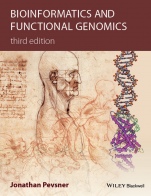
Bioinformatics and Functional Genomics
ISBN 9781118581780
Autor: Jonathan Pevsner
Wydawca: Wiley
Dostępność: 3-6 tygodni
Cena: 595,35 zł
Przed złożeniem zamówienia prosimy o kontakt mailowy celem potwierdzenia ceny.
ISBN13: |
9781118581780 |
ISBN10: |
1118581784 |
Autor: |
Jonathan Pevsner |
Oprawa: |
Hardback |
Rok Wydania: |
2015-10-23 |
Numer Wydania: |
3rd Edition |
Ilość stron: |
1168 |
Wymiary: |
283x219 |
Tematy: |
MJ |
The bestselling introduction to bioinformatics and genomics now in its third edition
Widely received in its previous editions, Bioinformatics and Functional Genomics offers the most broad–based introduction to this explosive new discipline. Now in a thoroughly updated and expanded third edition, it continues to be the go–to source for students and professionals involved in biomedical research.
This book provides up–to–the–minute coverage of the fields of bioinformatics and genomics. Features new to this edition include:
Extensive revisions and a slight reorder of chapters for a more effective organization
A brand new chapter on next–generation sequencing
An expanded companion website, also updated as and when new information becomes available
Greater emphasis on a computational approach, with clear guidance of how software tools work and introductions to the use of command–line tools such as software for next–generation sequence analysis, the R programming language, and NCBI search utilities
The book is complemented by lavish illustrations and more than 500 figures and tables – many newly–created for the third edition to enhance clarity and understanding. Each chapter includes learning objectives, a problem set, pitfalls section, boxes explaining key techniques and mathematics/statistics principles, a summary, recommended reading, and a list of freely available software. Readers may visit a related Web page for supplemental information such as PowerPoints and audiovisual files of lectures, and videocasts of how to perform many basic operations: www.wiley.com/go/pevsnerbioinformatics.
Bioinformatics and Functional Genomics, Third Edition serves as an excellent single–source textbook for advanced undergraduate and beginning graduate–level courses in the biological sciences and computer sciences. It is also an indispensable resource for biologists in a broad variety of disciplines who use the tools of bioinformatics and genomics to study particular research problems; bioinformaticists and computer scientists who develop computer algorithms and databases; and medical researchers and clinicians who want to understand the genomic basis of viral, bacterial, parasitic, or other diseases.
Part I: Bioinformatics: Analyzing DNA, RNA, and protein sequences
Chapter 1. Introduction
Chapter 2. Access to information
Chapter 3. Pairwise alignment
Chapter 4. BLAST
Chapter 5. Advanced BLAST
Chapter 6. Multiple sequence alignment
Chapter 7. Molecular phylogeny and evolution
Part II: Functional genomics: Bioinformatics from DNA to RNA to protein
Chapter 8. DNA: The eukaryotic chromosome
Chapter 9. DNA analysis: microarrays and next–generation sequencing
Chapter 10. RNA
Chapter 11. RNA analysis: microarrays and next–generation sequencing
Chapter 12. Proteomics
Chapter 13. Protein structure
Chapter 14. Functional genomics
Part III: Genomics
Chapter 15. The tree of life
Chapter 16. Viruses
Chapter 17. Bacteria and archaea
Chapter 18. The fungi
Chapter 19. Eukaryotic genomes
Chapter 20. The human genome
Chapter 21. Human disease
Appendix I: Solutions to quizzes
Appendix II: Glossary
Bibliography
Index (general)
Index (names)
Jonathan Pevsner, PhD, is a Professor in the Department of Neurology at Kennedy Krieger Institute, an internationally recognized institution dedicated to improving the lives of children with neurodevelopmental disorders. He holds a primary faculty appointment as Professor in the Department of Psychiatry and Behavioral Sciences (Johns Hopkins University School of Medicine). He holds joint or secondary appointments in the Department of Neuroscience, the Institute of Genetic Medicine, and the Division of Health Sciences Informatics (Johns Hopkins School of Medicine), and the Department of Molecular Microbiology and Immunology (Johns Hopkins Bloomberg School of Public Health). He has taught bioinformatics courses since 2000 at the Johns Hopkins School of Medicine, and was awarded Teacher of the Year honors by the Graduate Student Association in both 2001 and 2006, the Professors Award for Excellence in Teaching awarded by the medical faculty (2003), Teacher of the Year (Advanced Academic Programs, 2009), and Teaching Excellence Award in the Johns Hopkins Bloomberg School of Public Health (2011). In 2013 his lab used whole genome sequencing and reported a mutation that causes a rare disease, Sturge–Weber syndrome, as well as a commonly occurring port–wine stain birthmark.
Koszyk
Książek w koszyku: 0 szt.
Wartość zakupów: 0,00 zł
Informacje


Kontakt
Gambit
Centrum Oprogramowania
i Szkoleń Sp. z o.o.
Al. Pokoju 29b/22-24
31-564 Kraków
Siedziba Księgarni
ul. Kordylewskiego 1
31-542 Kraków
+48 12 410 5991
+48 12 410 5987
+48 12 410 5989
Subskrypcje
Administratorem danych osobowych jest firma Gambit COiS Sp. z o.o. Na podany adres będzie wysyłany wyłącznie biuletyn informacyjny.
Autoryzacja płatności

Informacje na temat autoryzacji płatności poprzez PayU.

© Copyright 2012: GAMBIT COiS Sp. z o.o. Wszelkie prawa zastrzeżone.
Projekt i wykonanie: Alchemia Studio Reklamy