


Wydawcy
Katalog tematyczny
- Archeologia (109)
- Ekonomia, finanse, business (13704)
- Filozofia (1445)
- Historia (3040)
- Języki i językoznawstwo (2356)
- Lifestyle, hobby i rozrywka (475)
- Medycyna (9704)
- Nauki humanistyczne (4)
- Nauki o Ziemi i środowisku (2638)
- Nauki ścisłe (20412)
- Nauki społeczne (8486)
- Edukacja (229)
- Kryminologia, opieka spełeczna (284)
- Obronność (10)
- Polityka (1389)
- Psychologia (777)
- Socjologia (410)
- Społeczeństwo i kultura (187)
- Nauki techniczne (13450)
- Prawo (1696)
- Publikacje informacyjne i interdyscyplinarne (1288)
- Religia i wierzenia (917)
- Technika komputerowa (4067)
- Zdrowie, relacje międzyludzkie i rozwój osobisty (657)





Informacje szczegółowe o książce
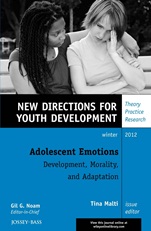
Adolescent Emotions: Development, Morality, and Adaptation: New Directions for Youth Development, Number 136
ISBN 9781118580882
Autor: Tina Malti
Wydawca: Wiley
Dostępność: 3-6 tygodni
Cena: 152,25 zł
Przed złożeniem zamówienia prosimy o kontakt mailowy celem potwierdzenia ceny.
ISBN13: |
9781118580882 |
ISBN10: |
1118580885 |
Autor: |
Tina Malti |
Oprawa: |
Paperback |
Rok Wydania: |
2013-03-22 |
Ilość stron: |
136 |
Wymiary: |
228x149 |
Tematy: |
JC |
Emotions shape our social lives. They play an influential role in how young people evaluate morally relevant situations such as conflicts about fairness, justice, and social inclusion and exclusion. Feelings of empathy or guilt can help adolescents understand the difference between moral concerns, such as fairness, and amoral concerns, such as personal gains or peer group functioning. Such feelings can also serve as motives for prosocial behavior and can inhibit antisocial behavior. Still, young people’s emotional experiences in morally relevant situations are complex and do not necessarily lead to moral choices or adaptive social behavior. This volume examines the question of how emotions relate to adolescents’ decision making, reasoning, and behavior in morally relevant situations. It provides a summary of current research on emotions, morality, and adaptive behaviors. Furthermore, it discusses new approaches to research on emotions, morality, and socially adaptive behavior in adolescence. By doing so, the articles provide new insights into adolescents’ emotional and moral development and show how emotions contribute to the way adolescents negotiate, resolve, and adapt to the moral and social conflicts that inevitably occur in their everyday lives. By integrating innovative perspectives from developmental, educational, and clinical research, this volume has much to offer for researchers, youth practitioners, and educators.
Editor’s Notes 1 Tina Malti Executive Summary 7 1. Emotion and the moral lives of adolescents: Vagaries and complexities in the emotional experience of doing harm 13 Cecilia Wainryb, Holly E. Recchia The authors address the diversity of adolescents’ affective experiences following their own moral transgressions. 2. Adolescents’ emotions and reasoning in contexts of moral conflict and social exclusion 27 Tina Malti, Sophia F. Ongley, Sebastian P. Dys, Tyler Colasante For reasons of fairness and empathy, adolescents experience a variety of negative emotions when they intentionally harm or exclude others. Adolescents with higher sympathy are more likely to report feelings of guilt following these moral and social conflict situations. 3. Moral judgments and emotions: Adolescents’ evaluations in intergroup social exclusion contexts 41 Shelby Cooley, Laura Elenbaas, Melanie Killen The moral and emotional development of young people is informed by their social experiences and understanding of group dynamics. Due to the increasing salience of group membership in adolescence, youth today often weigh the consequences of resisting group norms. The authors provide new insights into the integration of emotional evaluations and moral judgments in the context of social exclusion in childhood and adolescence. 4. Linking moral emotion attributions with behavior: Why “(un)happy victimizers” and “(un)happy moralists” act the way they feel 59 Tobias Krettenauer The author discusses conceptual links between moral emotion attributions and children’s and adolescents’ social behavior. He proposes three links that exemplify three forms of moral agency as they emerge over the course of children’s and adolescents’ moral development. 5. Behaving badly or goodly: Is it because I feel guilty, shameful, or sympathetic? Or is it a matter of what I think? 75 Gustavo Carlo, Meredith McGinley, Alexandra Davis, Cara Streit The authors provide a brief review of moral psychological theory and predicting moral behaviors. They offer results that demonstrate support for both guilt–based and sympathy–based models and discuss the implications of their findings. 6. Adolescents’ perceptions of institutional fairness: Relations with moral reasoning, emotions, and behavior 95 William F. Arsenio, Susanna Preziosi, Erica Silberstein, Benjamin Hamburger The authors address low–income urban adolescents’ perceptions regarding the fairness of American society and how those perceptions relate to interpersonal moral reasoning, emotions, and behavior. 7. Mindfulness for adolescents: A promising approach to supporting emotion regulation and preventing risky behavior 111 Patricia C. Broderick, Patricia A. Jennings Adolescents require effective emotion regulation skills to navigate the psychological and environmental challenges of their developmental period. Mindfulness, as taught in universal prevention programs such as Learning to BREATHE, is a promising tool in reducing distress and promoting resilience. Index 127
Koszyk
Książek w koszyku: 0 szt.
Wartość zakupów: 0,00 zł
Informacje


Kontakt
Gambit
Centrum Oprogramowania
i Szkoleń Sp. z o.o.
Al. Pokoju 29b/22-24
31-564 Kraków
Siedziba Księgarni
ul. Kordylewskiego 1
31-542 Kraków
+48 12 410 5991
+48 12 410 5987
+48 12 410 5989
Subskrypcje
Administratorem danych osobowych jest firma Gambit COiS Sp. z o.o. Na podany adres będzie wysyłany wyłącznie biuletyn informacyjny.
Autoryzacja płatności

Informacje na temat autoryzacji płatności poprzez PayU.

© Copyright 2012: GAMBIT COiS Sp. z o.o. Wszelkie prawa zastrzeżone.
Projekt i wykonanie: Alchemia Studio Reklamy