


Wydawcy
Katalog tematyczny
- Archeologia (109)
- Ekonomia, finanse, business (13704)
- Filozofia (1445)
- Historia (3040)
- Języki i językoznawstwo (2356)
- Lifestyle, hobby i rozrywka (475)
- Medycyna (9704)
- Nauki humanistyczne (4)
- Nauki o Ziemi i środowisku (2638)
- Nauki ścisłe (20412)
- Nauki społeczne (8486)
- Nauki techniczne (13450)
- Budownictwo lądowe (1045)
- Chemia przemysłowa (2258)
- Elektronika i telekomunikacja (3287)
- Energetyka (1122)
- Inne nauki stosowane (363)
- Inżynieria biochemiczna (507)
- Inżynieria transportu (232)
- Mechanika i materiały (3316)
- Nauka o środowisku (321)
- Rolnictwo (507)
- Technika, ogólnie (475)
- Prawo (1696)
- Publikacje informacyjne i interdyscyplinarne (1288)
- Religia i wierzenia (917)
- Technika komputerowa (4067)
- Zdrowie, relacje międzyludzkie i rozwój osobisty (657)





Informacje szczegółowe o książce
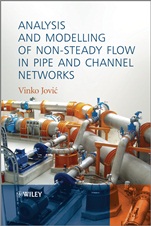
Analysis and Modelling of Non–Steady Flow in Pipe and Channel Networks
ISBN 9781118532140
Autor: Vinko Jovic
Wydawca: Wiley
Dostępność: 3-6 tygodni
Cena: 662,55 zł
Przed złożeniem zamówienia prosimy o kontakt mailowy celem potwierdzenia ceny.
ISBN13: |
9781118532140 |
ISBN10: |
1118532147 |
Autor: |
Vinko Jovic |
Oprawa: |
Hardback |
Rok Wydania: |
2013-04-19 |
Ilość stron: |
544 |
Wymiary: |
250x177 |
Tematy: |
TDCB |
Analysis and Modelling of Non–Steady Flow in Pipe and Channel Networks deals with flows in pipes and channel networks from the standpoints of hydraulics and modelling techniques and methods. These engineering problems occur in the course of the design and construction of hydroenergy plants, water–supply and other systems. In this book, the author presents his experience in solving these problems from the early 1970s to the present day. During this period new methods of solving hydraulic problems have evolved, due to the development of computers and numerical methods. This book is accompanied by a website which hosts the author′s software package, Simpip ( an abbreviation of sim ulation of pip e flow) for solving non–steady pipe flow using the finite element method. The program also covers flows in channels. The book presents the numerical core of the SimpipCore program (written in Fortran). Key features: Presents the theory and practice of modelling different flows in hydraulic networks Takes a systematic approach and addresses the topic from the fundamentals Presents numerical solutions based on finite element analysis Accompanied by a website hosting supporting material including the SimpipCore project as a standalone program Analysis and Modelling of Non–Steady Flow in Pipe and Channel Networks is an ideal reference book for engineers, practitioners and graduate students across engineering disciplines.
1 Chapter Hydraulic Networks 1 1.1 Finite element technique 1 1.1.1 Functional approximations 1 1.1.2 Discretization, finite element mesh 3 1.1.3 Approximate solution of differential equations 6 1.2 Unified hydraulic networks 20 1.3 Equation system 22 1.3.1 Elemental equations 22 1.3.2 Nodal equations 22 1.3.3 Fundamental system 24 1.4 Boundary conditions 27 1.4.1 Natural boundary conditions 27 1.4.2 Essential boundary conditions 28 1.5 Finite element matrix and vector 29 2 Chapter Modelling of incompressible fluid flow 35 2.1 Steady flow of an incompressible fluid 35 2.1.1 Equation of steady flow in pipes 35 2.1.2 Subroutine SteadyPipeMtx 37 2.1.3 Algorithms and procedures 39 2.1.4 Frontal procedure 42 2.1.5 Frontal solution of steady problem 49 2.1.6 Steady test example 54 2.2 Gradually varied flow in time 56 2.2.1 Time–dependent variability 56 2.2.2 Quasy non–steady model 57 2.2.3 Subroutine QuasyUnsteadyPipeMtx 58 2.2.4 Frontal solution of unsteady problem 59 2.2.5 Quasy non–steady test example 61 2.3 Unsteady flow of an incompressible fluid 63 2.3.1 Dynamic equation 63 2.3.2 Subroutine RgdUnsteadyPipeMtx 64 2.3.3 Incompressible fluid acceleration 65 2.3.4 Acceleration test 67 2.3.5 Rigid test example 68 3 Chapter Natural boundary conditions objects 71 3.1 Tank object 71 3.1.1 Tank dimensioning 71 3.1.2 Tank model 73 3.1.3 Tank test examples 76 3.2 Storage 83 3.2.1 Storage equation 83 3.2.2 Fundamental system vector and matrix updating 84 3.3 Surge tank 84 3.3.1 Surge tank role in the hydropower plant 84 3.3.2 Surge tank types 87 3.3.3 Equations of oscillations in the supply system 92 3.3.4 Cylindrical surge tank 93 3.3.5 Model of a simple surge tank with upper and lower chamber 100 3.3.6 Differential surge tank model 103 3.3.7 Example 109 3.4 Vessel 112 3.4.1 Simple vessel 112 3.4.2 Vessel with air valves 115 3.4.3 Vessel model 116 3.4.4 Example 118 3.5 Air valves 120 3.5.1 Air valve positioning 120 3.5.2 Air valve model 123 3.6 Outlets 125 3.6.1 Discharge curves 125 3.6.2 Outlet model 127 4 Chapter Water hammer – classic theory 129 4.1 Description of the phenomenon 129 4.1.1 Surge wave travel following the sudden halt of a locomotive 129 4.1.2 Pressure wave propagation after sudden valve closure 130 4.1.3 Pressure increase due to a sudden flow arrest – the Joukowsky water hammer 130 4.2 Water hammer celerity 131 4.2.1 Relative movement of the coordinate system 131 4.2.2 Differential pressure and velocity changes at the water hammer front 133 4.2.3 Water hammer celerity in circular pipes 134 4.3 Water hammer phases 136 4.3.1 Sudden flow stop, velocity change 138 4.3.2 Sudden pipe filling, velocity change 140 4.3.3 Sudden filling of blind pipe, velocity change 141 4.3.4 Sudden valve opening 143 4.3.5 Sudden forced inflow 147 4.4 Underpressure and column separation 148 4.5 Influence of extreme friction 152 4.6 Gradual velocity changes 155 4.6.1 Gradual valve closing 155 4.6.2 Linear flow arrest 157 4.7 Influence of outflow area change 159 4.7.1 Graphic solution 160 4.7.2 Modified graphical procedure 161 4.8 Real closure laws 162 4.9 Water hammer propagation through branches 164 4.10 Complex pipelines 166 4.11 Wave kinematics 166 4.11.1 Wave functions 166 4.11.2 General solution 169 5 Chapter Equations of non–steady flow in pipes 171 5.1 Equation of state 171 5.1.1 p,T phase diagram 172 5.1.2 p,V phase diagram 172 5.2 Flow of an ideal fluid in the streamtube 177 5.2.1 Flow kinematics along the streamtube 177 5.2.2 Flow dynamics along the streamtube 180 5.3 The real flow velocity profile 184 5.3.1 Reynolds number, flow regimes 184 5.3.2 Velocity profile in the developed boundary layer 184 5.3.3 Calculations at the cross–section 186 5.4 Control volume 187 5.5 Mass conservation, equation of continuity 187 5.5.1 Integral form 187 5.5.2 Differential form 188 5.5.3 Elastic liquid 188 5.5.4 Compressible liquid 190 5.6 Energy conservation law, dynamic equation 190 5.6.1 Total energy of control volume 190 5.6.2 Rate of change of internal energy 191 5.6.3 Rate of change of potential energy 191 5.6.4 Rate of change of kinetic energy 191 5.6.5 Power of normal forces 192 5.6.6 Power of resistance forces 193 5.6.7 Dynamic equation 193 5.6.8 Flow resistances, the dynamic equation discussion 194 5.7 Flow models 196 5.7.1 Steady flow 196 5.7.2 Non–steady flow 197 5.8 Characteristic equations 200 5.8.1 Elastic liquid 200 5.8.2 Compressible fluid 203 5.9 Analytical solutions 206 5.9.1 Linearization of equations – wave equations 206 5.9.2 Riemann general solution 206 5.9.3 Some analytical solutions of water hammer 207 6 Chapter Modelling of non–steady flow of compressible liquid in pipes 211 6.1 Solution by the method of characteristics 211 6.1.1 Characteristic equations 211 6.1.2 Integration of characteristic equations, wave functions 212 6.1.3 Integration of characteristic equations, variables h, v 213 6.1.4 Water hammer is the pipe with no resistance 215 6.1.5 Water hammer in pipe with friction 222 6.2 Subroutine UnsteadyPipeMtx 229 6.2.1 Subroutine FemUnsteadyPipeMtx 230 6.2.2 Subroutine ChtxUnsteadyPipeMtx 233 6.2.3 Comparison tests 238 7 Chapter Valves and Joints 243 7.1 Valves 243 7.1.1 Local losses of energy head at valves 243 7.1.2 Valve status 245 7.1.3 Steady flow modelling 245 7.1.4 Non–steady flow modelling 247 7.2 Joints 256 7.2.1 Energy head losses at joints 256 7.2.2 Steady flow modelling 258 7.2.3 Non–steady flow modelling 260 7.3 Test example 265 8 Chapter Pumping units 269 8.1 Introduction 269 8.2 Euler′s equations of turbo engines 270 8.3 Normal characteristics of the pump 273 8.4 Dimensionless pump characteristics 277 8.5 Pump specific speed 280 8.6 Complete characteristics of turbo engine 281 8.6.1 Normal and abnormal operation 281 8.6.2 Presentation of turbo engine characteristics depending on the direction of rotation 281 8.6.3 Knapp circle diagram 282 8.6.4 Suter curves 284 8.7 Drive engines 286 8.7.1 Asynchronous or induction motor 286 8.7.2 Adjustment of rotational speed by frequency variation 287 8.7.3 Pumping unit operation 288 8.8 Numerical model of pumping units 290 8.8.1 Normal pump operation 290 8.8.2 Reconstruction of complete characteristics from normal characteristics 294 8.8.3 Reconstruction of a hypothetic pumping unit 297 8.8.4 Reconstruction of the electric motor torque curve 298 8.9 Pumping element matrices 299 8.9.1 Steady flow modelling 299 8.9.2 Unsteady flow modelling 303 8.10 Examples of transient operation stages modelling 308 8.10.1 Test example A) 309 8.10.2 Test example B) 312 8.10.3 Test example C) 314 8.10.4 Test example D) 315 8.11 Analysis of operation and types of protection against pressure excesses 319 8.11.1 Normal and accidental operation 319 8.11.2 Layout 319 8.11.3 Supply pipeline, suction basin 320 8.11.4 Pressure pipeline and pumping station 322 8.11.5 Booster station 324 8.12 Something about protection of sewage pressure pipelines 326 8.13 Pumping units in pressurized system with no tank 328 8.13.1 Introduction 328 8.13.2 Pumping unit regulation by pressure switches 329 8.13.3 Hydrophor regulation 331 8.13.4 Pumping unit regulation by variable rotational speed 333 9 Chapter Open channel flow 337 9.1 Introduction 337 9.2 Steady flow in a mildly sloping channel 337 9.3 Uniform flow in a mildly sloping channel 339 9.3.1 Uniform flow velocity in open channel 339 9.3.2 Conveyance, discharge curve 342 9.3.3 Specific energy in a cross–section. Froude number 345 9.3.4 Uniform flow programming solution 349 9.4 Non–uniform gradually varied flow 351 9.4.1 Non–uniform flow characteristics 351 9.4.2 Water level differential equation 352 9.4.3 Water level shapes in prismatic channels 354 9.4.4 Transitions between supercritical and subcritical flow, hydraulic jump 355 9.4.5 Water level shapes in non–prismatic channel 362 9.4.6 Gradually varied flow programming solutions 365 9.5 Sudden changes in cross–sections 368 9.6 Steady flow modelling 372 9.6.1 Channel stretch discretization 372 9.6.2 Initialization of channel stretches 372 9.6.3 Subroutine SubCriticalSteadyChannelMtx 375 9.6.4 Subroutine SuperCriticalSteadyChannelMtx 376 9.7 Wave kinematics in channels 377 9.7.1 Propagation of positive and negative waves 377 9.7.2 Velocity of the wave of finite amplitude 377 9.7.3 Elementary wave celerity 379 9.7.4 Shape of positive and negative waves 381 9.7.5 Standing wave – hydraulic jump 381 9.7.6 Wave propagation through transitional stretches 382 9.8 Equations of non–steady flow in open channels 384 9.8.1 Continuity equation 384 9.8.2 Dynamic equation 385 9.8.3 Law of momentum conservation 387 9.9 Equation of characteristics 391 9.9.1 Transformation of non–steady flow equations 391 9.9.2 Procedure of transformation into characteristics 392 9.10 Initial and boundary conditions 392 9.11 Non–steady flow modelling 394 9.11.1 Integration along characteristics 394 9.11.2 Matrix and vector of the channel finite element 396 9.11.3 Test examples 400 10 Chapter Numerical modelling in karst 405 10.1 Underground karst flows 405 10.1.1 Introduction 405 10.1.2 Investigation works in karst catchment 405 10.1.3 The main development forms of karst phenomena in the Dinaric area 406 10.1.4 The size of the catchment 410 10.2 Conveyance of the karst channel system 413 10.2.1 Transformation of rainfall into spring hydrographs 413 10.2.2 Linear filltration law 414 10.2.3 Turbulent filtration law 416 10.2.4 Complex flow, channel flow and filtration 418 10.3 Modelling of karst channel flows 420 10.3.1 Karst channel finite elements 420 10.3.2 Subroutine SteadyKanalMtx 421 10.3.3 Subroutine UnsteadyKanalMtx 423 10.3.4 Tests 425 10.4 Method of catchment discretization 428 10.4.1 Discretization of karst catchment channel system without diffuse flow 428 10.4.2 Equation of the underground accumulation of karst sub–catchment 431 10.5 Rainfall transformation 433 10.5.1 Uniform input hydrograph 433 10.5.2 Rainfall ...
Koszyk
Książek w koszyku: 0 szt.
Wartość zakupów: 0,00 zł
Informacje


Kontakt
Gambit
Centrum Oprogramowania
i Szkoleń Sp. z o.o.
Al. Pokoju 29b/22-24
31-564 Kraków
Siedziba Księgarni
ul. Kordylewskiego 1
31-542 Kraków
+48 12 410 5991
+48 12 410 5987
+48 12 410 5989
Subskrypcje
Administratorem danych osobowych jest firma Gambit COiS Sp. z o.o. Na podany adres będzie wysyłany wyłącznie biuletyn informacyjny.
Autoryzacja płatności

Informacje na temat autoryzacji płatności poprzez PayU.

© Copyright 2012: GAMBIT COiS Sp. z o.o. Wszelkie prawa zastrzeżone.
Projekt i wykonanie: Alchemia Studio Reklamy