


Wydawcy
Katalog tematyczny
- Archeologia (109)
- Ekonomia, finanse, business (13704)
- Filozofia (1445)
- Historia (3040)
- Języki i językoznawstwo (2356)
- Lifestyle, hobby i rozrywka (475)
- Medycyna (9704)
- Nauki humanistyczne (4)
- Nauki o Ziemi i środowisku (2638)
- Nauki ścisłe (20412)
- Astronomia (294)
- Biologia (5119)
- Chemia (6540)
- Chemia analityczna (361)
- Chemia fizyczna (346)
- Chemia nieorganiczna (137)
- Chemia organiczna (535)
- Krystalografia (27)
- Minerologia (46)
- Fizyka (3309)
- Matematyka (4574)
- Nauki ścisłe, ogólnie (503)
- Nauki społeczne (8486)
- Nauki techniczne (13450)
- Prawo (1696)
- Publikacje informacyjne i interdyscyplinarne (1288)
- Religia i wierzenia (917)
- Technika komputerowa (4067)
- Zdrowie, relacje międzyludzkie i rozwój osobisty (657)





Informacje szczegółowe o książce
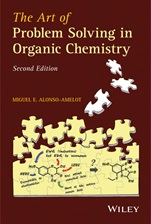
The Art of Problem Solving in Organic Chemistry
ISBN 9781118530214
Autor: Miguel E. Alonso–Amelot
Wydawca: Wiley
Dostępność: 3-6 tygodni
Cena: 257,25 zł
Przed złożeniem zamówienia prosimy o kontakt mailowy celem potwierdzenia ceny.
ISBN13: |
9781118530214 |
ISBN10: |
1118530217 |
Autor: |
Miguel E. Alonso–Amelot |
Oprawa: |
Paperback |
Rok Wydania: |
2014-08-12 |
Numer Wydania: |
2nd Edition |
Ilość stron: |
480 |
Wymiary: |
234x156 |
Tematy: |
PN |
This long–awaited new edition includes updated organic reactions and helps students understand and solve the complex mechanistic problems that organic chemists face. Using 60 solved and worked–through problems the author uses a step–by–step approach to discuss each through the application of various problem–solving techniques. He also addresses questions for students as a guide to help them find their own way before relying on the author′s solutions. Three chapters preceding the problems section cover a number of issues relative to improving problem–solving skills required for organic reaction mechanisms, each topic being illustrated with a problem the reader is asked to solve before resuming reading. In this approachable manner, the author makes sure each principle is not only clearly understood but also retained in the reader′s working memory for later use –– yielding more active reader involvement than a simple, straightforward text. The author puts forth multiple solutions for each problem, with related experimental evidence and critical reviews of organic chemistry methods. In addition, the book also includes supplementary material for the chapters and problems, along with useful links that can be found at http://tapsoc.yolasite.com. Advanced undergraduate and graduate students as well as professionals in chemistry will benefit from this edition.
1 PROBLEM ANALYSIS IN ORGANIC REACTION MECHANISM 1.1 Overview 1.2 Introduction 1.2.1 Pushing forward a solution in formal and exhaustive terms 1.2.2 Lessons from this example 1.3 Avoiding the quagmire 1.4 The basic steps of Problem Analysis 1.4.1 Recognizing the problem 1.4.2 Analyzing problems by asking the right questions 1.4.3 Drawing a first outline for guidance 1.4.4 Asking the right questions and proposing the right answers… is enough? 1.5 Intuition and problem solving 1.6 Summing up 1.7 References and notes 2 ELECTRON FLOW IN ORGANIC REACTIONS 2.1 Overview 2.2 Introduction 2.3 Practical rules governing electron redeployment 2.3.1 Issue 1: Electrons within orbitals 2.3.2 Issue 2: Electron transfer and stereochemistry 2.3.3 Issue 3: Electron energy level and accessibility 2.3.4 Issue 4: Electron flow and molecular active sectors 2.3.4.1 Case A: π → π interactions 2.3.4.2 Case B: π→ σ interactions 2.3.4.3 Case C.– When reactivity patterns seem to break down 2.3.5 Issue 5: Electron traffic and electron density differences 2.3.6 Issue 6: Creating zones of high electron density 2.3.6.1 The natural polarization 2.3.6.2 Reversing the natural polarization: umpolung 2.3.7 Issue 7: Electron flow and low electron density zones (LEDZ) 2.3.7.1 Identifying LEDZs 2.3.7.2 Creating a new LEDZ 2.3.7.3 Finding unsuspected LEDZs among reagents 2.3.7.4 When compounds show double personality 2.4 Summing up 2.5 A flowchart of organized problem analysis 2.6 References and notes 3 ADDITIONAL TECHNIQUES TO POSTULATE ORGANIC REACTION MECHANISMS 3.1 Overview 3.2 Take your time 3.3 Clear and informative molecular renderings 3.3.1 The value of molecular sketches 3.3.2 Two versus three dimensional renderings and the ‘flat’ organic compounds 3.4 Element and bond budgets 3.5 Looking at molecules from different perspectives 3.6 Separating the grain from the chaff 3.7 Dissecting products in terms of reactants: Fragmentation Analysis 3.7.1 The fundamental proposition 3.7.2 Adding potentially nucleophilic or electrophilic character to fragments 3.7.3 When fragmentation analysis fails, getting help from atom labels 3.8 Oxidation level and mechanism 3.8.1 Methods to estimate oxidation status 3.9 The Funtionality Number (FN) 3.9.1 What exactly is FN? 3.9.2 Properties of FN 3.10 Combining Fragmentation Analysis and Functionality Numbers 3.11 Summing up 3.12 References 4 SOLVED PROBLEMS COLLECTION Problems 1 to 60. See graphics index 5 Subject and reaction index 6 Graphic index for problems 7 Glossary
Miguel Alonso is a Professor of Organic and Ecological Chemistry at the Universidad de Los Andes in Venezuela. With over forty years of teaching experience, he has also led courses on these topics in the US, Europe, and Latin America. His previous research interest includes the theory and application of metal carbenoids in cyclopropanes and heterocycles, and currently, focuses on chemical ecology of tropical mountain ecosystems. Among his publications, Dr. Alonso has over 90 research articles, 5 book chapters, and 4 books including the first edition of The Art of Problem Solving in Organic Chemistry , published by Wiley.
Koszyk
Książek w koszyku: 0 szt.
Wartość zakupów: 0,00 zł
Informacje


Kontakt
Gambit
Centrum Oprogramowania
i Szkoleń Sp. z o.o.
Al. Pokoju 29b/22-24
31-564 Kraków
Siedziba Księgarni
ul. Kordylewskiego 1
31-542 Kraków
+48 12 410 5991
+48 12 410 5987
+48 12 410 5989
Subskrypcje
Administratorem danych osobowych jest firma Gambit COiS Sp. z o.o. Na podany adres będzie wysyłany wyłącznie biuletyn informacyjny.
Autoryzacja płatności

Informacje na temat autoryzacji płatności poprzez PayU.

© Copyright 2012: GAMBIT COiS Sp. z o.o. Wszelkie prawa zastrzeżone.
Projekt i wykonanie: Alchemia Studio Reklamy