


Wydawcy
Katalog tematyczny
- Archeologia (109)
- Ekonomia, finanse, business (13704)
- Filozofia (1445)
- Historia (3040)
- Języki i językoznawstwo (2356)
- Lifestyle, hobby i rozrywka (475)
- Medycyna (9704)
- Nauki humanistyczne (4)
- Nauki o Ziemi i środowisku (2638)
- Nauki ścisłe (20412)
- Nauki społeczne (8486)
- Edukacja (229)
- Kryminologia, opieka spełeczna (284)
- Obronność (10)
- Polityka (1389)
- Psychologia (777)
- Socjologia (410)
- Społeczeństwo i kultura (187)
- Nauki techniczne (13450)
- Prawo (1696)
- Publikacje informacyjne i interdyscyplinarne (1288)
- Religia i wierzenia (917)
- Technika komputerowa (4067)
- Zdrowie, relacje międzyludzkie i rozwój osobisty (657)





Informacje szczegółowe o książce
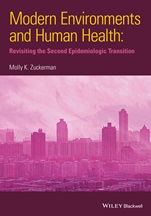
Modern Environments and Human Health: Revisiting the Second Epidemiological Transition
ISBN 9781118504208
Autor: Molly K. Zuckerman
Wydawca: Wiley
Dostępność: 3-6 tygodni
Cena: 708,75 zł
Przed złożeniem zamówienia prosimy o kontakt mailowy celem potwierdzenia ceny.
ISBN13: |
9781118504208 |
ISBN10: |
1118504208 |
Autor: |
Molly K. Zuckerman |
Oprawa: |
Hardback |
Rok Wydania: |
2014-05-16 |
Ilość stron: |
416 |
Wymiary: |
261x184 |
Tematy: |
JBK |
Modern Environments and Human Health: Revisiting the Second Epidemiologic Transition demonstrates by example how methods, theoretical approaches, and data from a wide range of disciplines can be used to resolve longstanding questions about the second epidemiologic transition – the shift from a high burden of epidemic, infectious illness to greater morbidity and mortality from chronic and degenerative diseases. Understanding how, why, and when the transition occurred across different regions and communities can provide critical insight into the relationships between economic growth, environmental quality and change, and human health. This comprehensive book brings together skeletal, archaeological, biodemographic, geochemical, environmental, epidemiological, cemetery, social history, and parasitological data to shed light on this important epidemiologic transition, and to inform current debates on the best ways to allocate public health funding in developed and developing countries. The first book to address the second epidemiologic transition from a multi–regional, comparative, and interdisciplinary perspective, Modern Environments and Human Health will be a valuable resource for students and academics in biological anthropology, economics, history, public health, demography, and epidemiology. Key features include: • discusses the second epidemiologic transition from a multi–regional, comparative, and interdisciplinary perspective • brings together skeletal, archaeological, biodemographic, geochemical, environmental, epidemiological, cemetery, social history, and parasitological data • written in an engaging and jargon–free style by a team of international and interdisciplinary experts • provides significant detail on data, methods and findings for potential replication
Contributors vii Acknowledgments ix 1 Introduction: Interdisciplinary Approaches to the Second Epidemiologic Transition 1 Molly K. Zuckerman Part 1 Causes of the Second Epidemiologic Transition 2 Infectious Disease in Philadelphia, 1690–1807: An Ecological Perspective 17 Gilda M. Anroman 3 Modeling the Second Epidemiologic Transition in London: Patterns of Mortality and Frailty during Industrialization 35 Sharon N. DeWitte 4 The Wider Background of the Second Transition in Europe: Information from Skeletal Material 55 Nikola Koepke 5 The Epidemiological Transition in Practice: Consumption, Phthisis, and TB in the 19th Century 81 Jeffrey K. Beemer Part 2 Epidemic Infectious Disease and the Second Epidemiologic Transition 6 Agent–Based Modeling and the Second Epidemiologic Transition 105 Carolyn Orbann, Jessica Dimka, Erin Miller and Lisa Sattenspiel 7 Does Exposure to Influenza Very Early in Life Affect Mortality Risk during a Subsequent Outbreak? The 1890 and 1918 Pandemics in Canada 123 Stacey Hallman and Alain Gagnon Part 3 Regional and Temporal Variation in the Second Epidemiologic Transition 8 The Second Epidemiologic Transition in Western Poland 139 Alicja Budnik 9 The Timing of the Second Epidemiologic Transition in Small US Towns and Cities: Evidence from Local Cemeteries 163 Lisa Sattenspiel and Rebecca S. Lander 10 Industrialization and the Changing Mortality Environment in an English Community during the Industrial Revolution 179 Peter M. Kitson Part 4 Marginalized and Underrepresented Communities in the Second Epidemiologic Transition 11 Short Women and Their Stagnating Growth: A Study of Biological Welfare and Inequality of Women in Postcolonial India 201 Aravinda Meera Guntupalli 12 Tracking the Second Epidemiologic Transition Using Bioarchaeological Data on Infant Morbidity and Mortality 225 Megan A. Perry 13 The Biological Effects of Urbanization and In–Migration on 19th–Century–Born African Americans and Euro–Americans of Low Socioeconomic Status: An Anthropological and Historical Approach 243 Carlina de la Cova Part 5 The Environment and the Second Epidemiologic Transition 14 Reassessing the Good and Bad of Modern Environments: Developing a More Comprehensive Approach to Health Trend Assessment 267 Lawrence M. Schell 15 Childhood Lead Exposure in the British Isles during the Industrial Revolution 279 Andrew Millard, Janet Montgomery, Mark Trickett, Julia Beaumont, Jane Evans, and Simon Chenery 16 The Hygiene Hypothesis and the Second Epidemiologic Transition 301 Molly K. Zuckerman and George J. Armelagos 17 Comparative Parasitological Perspectives on Epidemiologic Transitions: The Americas and Europe 321 Karl J. Reinhard and Elisa Pucu de Araújo Part 6 Epilogue 18 The Second Epidemiologic Transition, Adaptation, and the Evolutionary Paradigm 339 George J. Armelagos 19 The Second Epidemiologic Transition from an Epidemiologist’s Perspective 353 Nancy L. Fleischer and Robert E. McKeown 20 Methodological Perspectives on the Second Epidemiologic Transition: Current and Future Research 369 Richard H. Steckel 21 The Current State of Knowledge on the Industrial Epidemiologic Transition: Where Do We Go from Here? 377 Timothy B. Gage Index 393
Molly K. Zuckerman is Assistant Professor in the Department of Anthropology and Middle Eastern Cultures at Mississippi State University. The author of numerous peer–reviewed publications, Dr. Zuckerman also teaches introductory courses in anthropology and biological anthropology, osteology, and human behavior and disease.
Koszyk
Książek w koszyku: 0 szt.
Wartość zakupów: 0,00 zł
Informacje


Kontakt
Gambit
Centrum Oprogramowania
i Szkoleń Sp. z o.o.
Al. Pokoju 29b/22-24
31-564 Kraków
Siedziba Księgarni
ul. Kordylewskiego 1
31-542 Kraków
+48 12 410 5991
+48 12 410 5987
+48 12 410 5989
Subskrypcje
Administratorem danych osobowych jest firma Gambit COiS Sp. z o.o. Na podany adres będzie wysyłany wyłącznie biuletyn informacyjny.
Autoryzacja płatności

Informacje na temat autoryzacji płatności poprzez PayU.

© Copyright 2012: GAMBIT COiS Sp. z o.o. Wszelkie prawa zastrzeżone.
Projekt i wykonanie: Alchemia Studio Reklamy