


Wydawcy
Katalog tematyczny
- Archeologia (109)
- Ekonomia, finanse, business (13704)
- Filozofia (1445)
- Historia (3040)
- Języki i językoznawstwo (2356)
- Lifestyle, hobby i rozrywka (475)
- Medycyna (9704)
- Chirurgia (272)
- Inne gałęzie medycyny (1871)
- Anestezjologia (139)
- Farmakologia (495)
- Medycyna ekologiczna (12)
- Medycyna nuklearna (21)
- Medycyna paliatywna (2)
- Medycyna sądowa (6)
- Medycyna sportowa (11)
- Obrazowanie medyczne (130)
- Patologia (255)
- Psychiatria (226)
- Psychologia kliniczna (131)
- Ratownictwo medyczne (73)
- Stomatologia (302)
- Terapia (30)
- Medycyna kliniczna (4187)
- Medycyna niekonwencjonalna (14)
- Medycyna przedkliniczna (269)
- Medycyna, ogólnie (1740)
- Medyczne służby pomocnicze (745)
- Studia medyczne (16)
- Weterynaria (548)
- Nauki humanistyczne (4)
- Nauki o Ziemi i środowisku (2638)
- Nauki ścisłe (20412)
- Nauki społeczne (8486)
- Nauki techniczne (13450)
- Prawo (1696)
- Publikacje informacyjne i interdyscyplinarne (1288)
- Religia i wierzenia (917)
- Technika komputerowa (4067)
- Zdrowie, relacje międzyludzkie i rozwój osobisty (657)





Informacje szczegółowe o książce
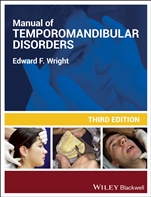
Manual of Temporomandibular Disorders
ISBN 9781118502693
Autor: Edward F. Wright
Wydawca: Wiley
Dostępność: 3-6 tygodni
Cena: 459,90 zł
Przed złożeniem zamówienia prosimy o kontakt mailowy celem potwierdzenia ceny.
ISBN13: |
9781118502693 |
ISBN10: |
1118502698 |
Autor: |
Edward F. Wright |
Oprawa: |
Paperback |
Rok Wydania: |
2014-02-21 |
Numer Wydania: |
3rd Edition |
Ilość stron: |
464 |
Wymiary: |
245x190 |
Tematy: |
MMD |
Manual of Temporomandibular Disorders, Third Edition is a handbook of information on temporomandibular disorders and an array of medical and dental conditions that affect the temporomandibular joint (TMJ), masticatory muscles, and contiguous structures. The book provides evidence–based, clinically practical information that allows dentists to diagnose TMD accurately, rule out disorders that mimic TMD (that is, make a differential diagnosis), and provide effective therapy for most patients. This book offers comprehensive coverage in a compact package. In a conversational tone, Dr. Wright focuses on solving TMD problems at chairside. The author’s crisp, engaging writing style allows the clinician to find precise answers quickly, without wading through a morass of detail. Changes to this third edition include: integration of sleep apnea with TMD (including graphs from studies about TMD aggravation and occlusal changes from oral sleep apnea appliances); expansion of the Topical Medications section including new topical medications (including efficacy graphs); expansion of the Nutritional Supplements section (including efficacy graphs); techniques for preventing TMD aggravation from dental treatment; more tables summarizing material; updated patient handouts; revised terminology to correspond with the newly recommended terminology; and completely updated references.
Preface Introduction Part I. Initial Evaluation Chapter 1. Patient Interview Chapter 2. Review of the “Initial Patient Questionnaire,” Chapter 3. Clinical Examination Range of Motion TMJ Noise TMD Palpations Intraoral Examination Occlusal Changes TMD Pain Caused by a Tooth Tooth Pain without Local Pathology Additional Evaluations Chapter 4. Imaging Plain Radiographs Panoramic Radiograph Axially Corrected Sagittal Tomography Computed Tomography Cone Beam Computed Tomography Magnetic Resonance Imaging Arthrography High–Resolution Ultrasound Imaging Strategies Imaging Recommendations Chapter 5. TMD Diagnostic Categories TMJ Disorders Masticatory Muscle Disorders Headache Disorders Associated Structures Chapter 6. Contributing Factors Part II. Common Acute TMD Conditions and Treatments Chapter 7. TMD Secondary to Trauma Chapter 8. TMD Secondary to Dental Treatment Preventing Aggravation from Dental Treatment Medial Pterygoid Muscle Pain Inability to Close into Maximum Intercuspation Occlusal Interference Sequelae Obstructive Sleep Apnea Appliances Chapter 9. Lateral Pterygoid Spasm Chapter 10. Intermittent and Continuous forms of TMJ Disc Displacement without Reduction with Limited Opening Chapter 11. TMJ Subluxation and Luxation Part III. Occlusal Appliance Therapy Chapter 12. Stabilization Appliance Mandibular Positions and Interocclusal Record Physical Variables Full or Partial Coverage Maxillary or Mandibular Hard, Intermediate, or Soft Material Thick or Thin Appliance or Clasp Retention Summary of Physical Variables Appliance Adjustments Internal Adjustments Internal Reline External Adjustments External Reline Appliance Repair Appliance Examples Pressure–Cured Mandibular Acrylic Stabilization Appliance Maxillary Acrylic Stabilization Appliance Hard Thermoplastic Stabilization Appliance Impak Stabilization Appliance Dual Laminate Thermoplastic Stabilization Appliance Soft Thermoplastic Stabilization Appliance Appliance Management Chapter 13. Anterior Positioning Appliance Mandibular Position and Interocclusal Record Design and Adjustments Appliance Management Part IV. Multidisciplinary Treatment Approach Chapter 14. Self–Management Therapy Self–Management Instructions Closure Muscle–Stretching Exercise Lateral Pterygoid Muscle–Stretching Exercise Posture Exercises Breaking Daytime Habits Chapter 15. Physical Medicine Muscle Massage Yoga Trigger–Point Compression Trigger–Point Injection Physical Therapy Acupuncture Chiropractics Magnetic Therapy Chapter 16. Cognitive–Behavioral Intervention Breaking Daytime Habits Relaxation Hypnotherapy Biofeedback Assisted Relaxation Stress Management Chapter 17. Pharmacological Management Analgesics Anti–inflammatory Medications Nonsteroidal Anti–inflammatory Drugs (Ingested Form) Steroidal Anti–inflammatory Drugs Muscle Relaxants Tricyclic Antidepressants Topical Medications Nutritional Supplements Chapter 18. Other Dental Procedures Occlusal Equilibration Orthodontic–Orthognathic Therapy Prosthodontic Therapy TMJ Surgery and TMJ Implants Chapter 19. Integrating Multidisciplinary Therapies Treatment Summaries and Clinical Implications Self–Management Therapy Massage and Trigger–Point Compression Lateral Pterygoid Muscle–Stretching Exercise Closure Muscle–Stretching Exercise Posture Exercises Occlusal Appliances Physical Therapy Yoga Trigger–Point Injections Acupuncture Chiropractics Magnetic Therapy Breaking Daytime Parafunctional, Muscle–Tightening, or Fatiguing Habits Relaxation Hypnotherapy Biofeedback Assisted Relaxation Stress Management Pharmacological Management Occlusal Therapy TMJ Surgery Integrating Conservative Therapies TMD Refractory to Initial Therapy Long–Term Management Part V. Case Scenarios Case 1: Pulpal Pathosis Mimicking TMD Symptoms Case 2: Tooth Pain—No TMD Pain Case 3: Chronic Sinusitis Case 4: Chronic Forehead Pain Referred from the Neck Case 5: Myalgia Secondary to Nocturnal Parafunctional Habits Case 6: Tooth Attrition—No Pain Case 7: Myalgia Secondary to Daytime Parafunctional Habits Case 8: Medial Pterygoid Spasm Case 9: Tension, Depression, and Poor Sleep as Contributing Factors Case 10: Fibromyalgia as a Contributing Factor Case 11: TMJ Disc Displacements and When to Treat Them—No Pain Case 12: TMJ Arthralgia Case 13: TMJ Disc Displacement with Reduction with Intermittent Locking Case 14: TMJ Disc Displacement without Reduction with Limited Opening —Unlocked Case 15: TMJ Disc Displacement without Reduction with Limited Opening —Not Unlocked Case 16: Osteitis Causing Inability to Open Wide Case 17: Lateral Pterygoid Spasm Case 18: Acute Exacerbation of TMD Case 19: Multiple Forms of Head and Neck Pain after Crown Insertion Case 20: Appliance that Positioned Condyles into Their “Proper Position,” Part VI. Fundamentals of Clinical Studies Designs of and Advice for Performing Clinical Studies Literature Review Study Population Institutional Review Board (IRB) Approval Developing Study’s Parameters Strengthening your Study Writing and Submitting Manuscript Practice–Based Research Prominent Clinical Study Designs Case Report Case Series Study Cross–Sectional Study Case–Control Study Cohort Study Nonrandomized Clinical Trial Randomized Controlled Trial Parallel–Group Randomized Clinical Trials Cross–Over Randomized Clinical Trials Other Types of Publications You May Want to Consider Literature Reviews Systematic Reviews Meta–analyses Considerations in Assessing Clinical Trials Conclusions Appendices 1. Referral Criteria for Hygienists 2. Initial Patient Questionnaire 3. TMJ Disc–Condyle Complex Disorders 4. TMD Self–Management Therapies 5. Occlusal Appliance Care Instructions 6. Closure Muscle–Stretching Exercise 7. Posture Improvement Exercises 8. Laboratory Stabilization Appliance Instructions 9. Example of Dental Record Entries 10. Examples of Physical Therapy Referral 11. Examples of Psychology Referral 12. Working with Insurance Companies 13. Sources for Additional TMD Information Glossary Index Files on Accompanying CD Appendices 1. Referral Criteria for Hygienists.doc 2. Initial Patient Questionnaire.doc 3. TMJ Disc–Condyle Complex Disorders.doc 4. TMD Self–Management Therapies.doc 5. Occlusal Appliance Care Instructions.doc 6. Closure Muscle–Stretching Exercise.doc 7. Posture Improvement Exercises.doc 8. Laboratory Stabilization Appliance Instructions.doc 9. Example of Dental Record Entries.doc 10. Examples of Physical Therapy Referral.doc 11. Examples of Psychology Referral.doc 12. Working with Insurance Companies.doc 13. Sources for Additional TMD Information.doc Appendices in Spanish Initial Patient Questionnaire in Spanish.doc TMD Self–Management Therapies in Spanish.doc Occlusal Appliance Care Instructions in Spanish.doc Closure Muscle–Stretching Exercise in Spanish.doc TMD Course Material Part I.ppt Part II.ppt Part III.ppt Part IV.ppt Part V.ppt TMD Course Manual.doc
Edward F. Wright, DDS, MS, MAGD, is a professor at the University of Texas Health Science Center–San Antonio (UTHSCSA). He completed a one–year general dentistry residency and the University of Minnesota’s two–year TMJ and Craniofacial Pain Fellowship. He taught TMD diagnosis and treatment to more than 100 U.S. Air Force residents in general dentistry, orthodontics, periodontics, and prosthodontics. Upon retiring from the Armed Forces, he completed a two–year research fellowship in TMD diagnosis and treatment at the South Texas Veterans Health Care System and taught TMD diagnosis and treatment to their general dentistry residents. He is now UTHSCSA’s Course Director for their predoctoral dental students’ TMD Course and Dental Anatomy and Occlusion Course, and teaches TMD to the school’s general dentistry, orthodontics, periodontics, and prosthodontics residents. Dr. Wright is the primary author of more than 30 journal articles.
Koszyk
Książek w koszyku: 0 szt.
Wartość zakupów: 0,00 zł
Informacje


Kontakt
Gambit
Centrum Oprogramowania
i Szkoleń Sp. z o.o.
Al. Pokoju 29b/22-24
31-564 Kraków
Siedziba Księgarni
ul. Kordylewskiego 1
31-542 Kraków
+48 12 410 5991
+48 12 410 5987
+48 12 410 5989
Subskrypcje
Administratorem danych osobowych jest firma Gambit COiS Sp. z o.o. Na podany adres będzie wysyłany wyłącznie biuletyn informacyjny.
Autoryzacja płatności

Informacje na temat autoryzacji płatności poprzez PayU.

© Copyright 2012: GAMBIT COiS Sp. z o.o. Wszelkie prawa zastrzeżone.
Projekt i wykonanie: Alchemia Studio Reklamy