


Wydawcy
Katalog tematyczny
- Archeologia (109)
- Ekonomia, finanse, business (13704)
- Filozofia (1445)
- Historia (3040)
- Języki i językoznawstwo (2356)
- Lifestyle, hobby i rozrywka (475)
- Medycyna (9704)
- Chirurgia (272)
- Inne gałęzie medycyny (1871)
- Medycyna kliniczna (4187)
- Medycyna niekonwencjonalna (14)
- Medycyna przedkliniczna (269)
- Medycyna, ogólnie (1740)
- Medyczne służby pomocnicze (745)
- Studia medyczne (16)
- Weterynaria (548)
- Nauki humanistyczne (4)
- Nauki o Ziemi i środowisku (2638)
- Nauki ścisłe (20412)
- Nauki społeczne (8486)
- Nauki techniczne (13450)
- Prawo (1696)
- Publikacje informacyjne i interdyscyplinarne (1288)
- Religia i wierzenia (917)
- Technika komputerowa (4067)
- Zdrowie, relacje międzyludzkie i rozwój osobisty (657)





Informacje szczegółowe o książce
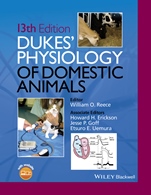
Dukes Physiology of Domestic Animals
ISBN 9781118501399
Autor: William O. Reece, Howard H. Erickson, Jesse P. Goff, Etsuro E. Uemura
Wydawca: Wiley
Dostępność: 3-6 tygodni
Cena: 483,00 zł
Przed złożeniem zamówienia prosimy o kontakt mailowy celem potwierdzenia ceny.
ISBN13: |
9781118501399 |
ISBN10: |
111850139X |
Autor: |
William O. Reece, Howard H. Erickson, Jesse P. Goff, Etsuro E. Uemura |
Oprawa: |
Hardback |
Rok Wydania: |
2015-05-29 |
Numer Wydania: |
13th Edition |
Ilość stron: |
760 |
Wymiary: |
290x232 |
Tematy: |
MZ |
Dukes Physiology of Domestic Animals, Thirteenth Edition offers a thorough update to the classic comprehensive text on domestic animal physiology. Now in full color throughout, the book has been fully revised to provide an increased clinical focus, more pedagogical features, and online supplements to promote learning and increase the book s usefulness in the classroom and in the clinic. Each chapter includes outlines, introductions, key terms, more images, questions addressing important information, and self–evaluation exercises.
Throughout the book, domestic animal structure and dysfunction is applied to the practice setting, with clinical correlations, notes of relevance, and exercises featuring clinical situations to demonstrate the practical relevance. Presenting detailed, complete descriptions of mammalian and avian function, Dukes Physiology of Domestic Animals is equally useful as a primary text for veterinary students, as a practice reference for clinicians, and as a basic resource for researchers.
Key features
List of Contributors Preface Tribute Dedication Acknowledgements About the companion website Section I: Neurophysiology Etsuro E. Uemura, ed. Chapter 1: Nervous Tissue Etsuro E. Uemura Chapter 2: Electrochemical Basis of Neuronal Function Etsuro E. Uemura Chapter 3: Synaptic Transmission Etsuro E. Uemura Chapter 4: Somatic and Visceral Senses Etsuro E. Uemura Chapter 5: Olfaction and Gustation Etsuro E. Uemura Chapter 6: Auditory System Etsuro E. Uemura Chapter 7: Visual System Etsuro E. Uemura Chapter 8: Motor System Etsuro E. Uemura Chapter 9: Vestibular System Etsuro E. Uemura Chapter 10: Autonomic Nervous System Etsuro E. Uemura Section II: Body Fluids and Homeostasis William O. Reece, ed Chapter 11: Body Water: Properties and Functions William O. Reece Chapter 12: The Composition and Functions of Blood William O. Reece Chapter 13: Fundamentals of Acid–Base Balance William O. Reece Chapter 14: Body Temperature and Its Regulation William O. Reece Section III: The Kidneys and Urinary System William O. Reece, ed Chapter 15:The Renal System: Structures and Function William O. Reece Chapter 16: Glomerular Filtration and Tubular Transport William O. Reece Chapter 17: Maintenance of Extracellular Fluid Hydration William O. Reece Chapter 18: Kidney Regulation of Extracellular Volume and Electrolytes William O. Reece Chapter 19: Micturition, Characteristics of Urine, and Renal Clearance William O. Reece Chapter 20: Kidney Function in Birds William O. Reece Section IV: Respiration William O. Reece, ed Chapter 21: Overview of the Respiratory System William O. Reece Chapter 22: Physical and Mechanical Aspects of Respiration William O. Reece Chapter 23: Pulmonary Ventilation and Transport of Gases William O. Reece Chapter 24: Regulation of Respiration William O. Reece Chapter 25: Other Functions of the Respiratory System William O. Reece Chapter 26: Respiration in Birds John W. Ludders Section V: Muscle Physiology William O. Reece, ed Chapter 27: Physiology of Skeletal Muscle William O. Reece Chapter 28: Physiology of Smooth Muscle William O. Reece Chapter 29: Physiology of Cardiac Muscle, Muscle Adaptations and Disorders William O. Reece Section VI: The Cardiovascular System Howard H. Erickson, ed. Chapter 30: The Heart: Gross Structures and Basic Properties Dean H. Riedesel and Richard L. Engen Chapter 31: Electrophysiology of the Heart Robert F. Gilmour, Jr. Chapter 32: The Electrocardiogram and Cardiac Arrhythmias Robert F Gilmour, Jr. and N. Sydney Moïse Chapter 33: Mechanical Activity of the Heart Dean H. Riedesel Chapter 34: Regulation of the Heart David D. Kline, Eileen M. Hasser, and Cheryl M. Heesch Chapter 35: Control Mechanisms of the Circulatory System Cheryl M. Heesch, David D. Kline, and Eileen M. Hasser. Chapter 36: Microcirculation. Lymph, and Edema Luis A. Martinez–Lemus and M. Harold Laughlin Chapter 37: Pulmonary Circulation David C. Poole and Howard H. Erickson Chapter 38: Special Circulations Eileen M. Hasser, Cheryl M. Heesch, David D. Kline, and M. Harold Laughlin Chapter 39: Heart Sounds and Murmurs Michele Borgarelli and Jens Häggström Chapter 40: Hypertension, Heart Failure, and Shock Scott A. Brown Chapter 41: Exercise Physiology of Terrestrial Animals David C. Poole and Howard H. Erickson Section VII: Digestion, Absorption, and Metabolism Jesse P. Goff, ed Chapter 42: Gastrointestinal Motility Jesse P. Goff Chapter 43: Secretions of Gastrointestinal Tract and Accessory Organs Jesse P. Goff Chapter 44: Digestion and Absorption Jesse P. Goff Chapter 45: Ruminant Digestion and Intestinal Microbiology Jesse P. Goff Chapter 46: Avian Digestion William O. Reece and Darrell W. Trampel Chapter 47: Disorders of Carbohydrates and Fat Metabolism Jesse P. Goff Chapter 48: Vitamins Jesse P. Goff Section VIII: Minerals, Bones, and Joints Jesse P. Goff, ed Chapter 49: Minerals Jesse P. Goff Chapter 50: Bones and Joints Jesse P. Goff Section IX: Endocrinology, Reproduction, and Lactation Jesse P. Goff, ed Chapter 51: Endocrinology Jesse P. Goff Chapter 52: Male Reproduction in Mammals William O. Reece Chapter 53: Female Reproduction in Mammals William O. Reece Chapter 54: Lactation Patrick J. Gordon and Leo L. Timms Chapter 55: Avian Reproduction Patricia A. Johnson
William O. Reece, DVM, PhD, is University Professor Emeritus in the Department of Biomedical Sciences, College of Veterinary Medicine, Iowa State University, Ames, Iowa, USA.
Howard Erickson, DVM, PhD, is Professor Emeritus of Physiology in the Department of Anatomy and Physiology, College of Veterinary Medicine, Kansas State University, Manhattan, Kansas, USA.
Jesse P. Goff, DVM, PhD, is Professor and Anderson Chair in the Department of Biomedical Sciences, Iowa State University, College of Veterinary Medicine, Ames, Iowa, USA.
Etsuro E. Uemura, DVM, MS, PhD, is Professor in the Department of Biomedical Sciences, College of Veterinary Medicine, Iowa State University, Ames, Iowa, USA.
Koszyk
Książek w koszyku: 0 szt.
Wartość zakupów: 0,00 zł
Informacje


Kontakt
Gambit
Centrum Oprogramowania
i Szkoleń Sp. z o.o.
Al. Pokoju 29b/22-24
31-564 Kraków
Siedziba Księgarni
ul. Kordylewskiego 1
31-542 Kraków
+48 12 410 5991
+48 12 410 5987
+48 12 410 5989
Subskrypcje
Administratorem danych osobowych jest firma Gambit COiS Sp. z o.o. Na podany adres będzie wysyłany wyłącznie biuletyn informacyjny.
Autoryzacja płatności

Informacje na temat autoryzacji płatności poprzez PayU.

© Copyright 2012: GAMBIT COiS Sp. z o.o. Wszelkie prawa zastrzeżone.
Projekt i wykonanie: Alchemia Studio Reklamy