


Wydawcy
Katalog tematyczny
- Archeologia (109)
- Ekonomia, finanse, business (13704)
- Filozofia (1445)
- Historia (3040)
- Języki i językoznawstwo (2356)
- Lifestyle, hobby i rozrywka (475)
- Medycyna (9704)
- Nauki humanistyczne (4)
- Nauki o Ziemi i środowisku (2638)
- Nauki ścisłe (20412)
- Nauki społeczne (8486)
- Nauki techniczne (13450)
- Prawo (1696)
- Publikacje informacyjne i interdyscyplinarne (1288)
- Religia i wierzenia (917)
- Technika komputerowa (4067)
- Zdrowie, relacje międzyludzkie i rozwój osobisty (657)





Informacje szczegółowe o książce
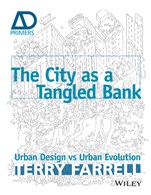
The City As A Tangled Bank: Urban Design versus Urban Evolution
ISBN 9781118487341
Autor: Sir Terry Farrell
Wydawca: Wiley
Dostępność: 3-6 tygodni
Cena: 195,30 zł
Przed złożeniem zamówienia prosimy o kontakt mailowy celem potwierdzenia ceny.
ISBN13: |
9781118487341 |
ISBN10: |
1118487346 |
Autor: |
Sir Terry Farrell |
Oprawa: |
Paperback |
Rok Wydania: |
2013-11-15 |
Ilość stron: |
192 |
Wymiary: |
218x173 |
Tematy: |
AM |
How can we in an urban context reconcile design with evolution? Designers are generally educated to offer a certain, controlled view of the world, seeking definite solutions, whereas the city tends to represent collective human life and be unharnessed in its growth and contractions. Throughout history, human habitats have largely been the consequence of organic growth – the layering of many hands – rather than the result of a single grand design. But in today’s worldwide climate of accelerated urbanisation, the need for architects and designers to engage with the city in flux is more compelling than ever. Cities with their urban populations are accreting and evolving in the developing world with a super–charged energy and diversity all of their own. The speed and complexity of current change is not just unsurpassed for our species, but unprecedented in life on earth. Meanwhile, long–established cities in the developed world continue to need to adapt in order to remain liveable for their own ever–growing populations. Here Sir Terry Farrell, who has built an international career as an architect–planner, encourages other planners and architects to follow the biologists – look at, learn from and indeed admire the nature of the forces that drive the change, and then with humility and respect work with them to nudge, anticipate and prepare for where it takes us. Searching for patterns within the apparent turbulence and complexity, he analyses the notions of urban design and urban evolution and examines whether or not they need necessarily be seen as opposing one another. The first two chapters discuss emergence as an idea in a biological and architectural context, as well as the distinction between urban design and planning in both education and practice, and the impact of other fields such as landscape design. Seven further chapters examine a range of themes embracing the importance of chain reactions in the progress of urban engineering; the character of habitation; layering; taste and context; adaptation and conversion; the advocacy of the architect–planner; and the effects of digital technology on city evolution. Farrell brings his considerable experience in practice to bear, elucidating his thoughts with examples from cities across the world, including Beijing, Hong Kong, London, New York and Paris.
Preface Introduction Chapter 1: The Emergence of Emergence Chapter 2: The Urbicultural Revolution Chapter 3: Connectedness and the Nurturing of Invention Chapter 4: The DNA of Habitat Chapter 5: Time, Layers and City Identity Chapter 6: Architecture Out Of Urbanism Chapter 7: The High Art of Adaptation Chapter 8: Urban Activism Chapter 9: The Era of the Digital City Conclusion Acknowledgements Picture Credits
Sir Terry Farrell is considered to be the UK’s leading architect–planner, with offices in London and Hong Kong. During 40 years in practice he has completed many award–winning projects in the UK including the MI6 Building and the Home Office Headquarters in London, The Deep in Hull, the Centre For Life in Newcastle, and masterplans for the Greenwich Peninsula, Brindleyplace in Birmingham and Newcastle’s Quayside. In East Asia, notable projects include Incheon Airport in Seoul, Beijing Station and Guangzhou Station in China (the largest in the world) and in Hong Kong he designed the Peak Tower, Kowloon Station and development and the British consulate. Throughout his career, Sir Terry has championed urban planning and helped shape central and local government policy on key issues. In London, he is a member of the Mayor’s Design Advisory Panel and he has advised the Department for Transport on high–speed rail, as well as the Department for Communities and Local Government. He has led for several years the design and planning of the Thames Gateway, Europe’s largest regeneration project. In 2010, he was appointed masterplanner for the transformation of Holborn and Earls Court. In 2013, he was invited by the Minister of Culture to lead an independent review of architecture and the built environment. He is the recipient of the London Planning Award 2012–13 for ‘Greatest Contribution to Planning and Development over the last 10 years’.
Koszyk
Książek w koszyku: 0 szt.
Wartość zakupów: 0,00 zł
Informacje


Kontakt
Gambit
Centrum Oprogramowania
i Szkoleń Sp. z o.o.
Al. Pokoju 29b/22-24
31-564 Kraków
Siedziba Księgarni
ul. Kordylewskiego 1
31-542 Kraków
+48 12 410 5991
+48 12 410 5987
+48 12 410 5989
Subskrypcje
Administratorem danych osobowych jest firma Gambit COiS Sp. z o.o. Na podany adres będzie wysyłany wyłącznie biuletyn informacyjny.
Autoryzacja płatności

Informacje na temat autoryzacji płatności poprzez PayU.

© Copyright 2012: GAMBIT COiS Sp. z o.o. Wszelkie prawa zastrzeżone.
Projekt i wykonanie: Alchemia Studio Reklamy