


Wydawcy
Katalog tematyczny
- Archeologia (109)
- Ekonomia, finanse, business (13704)
- Filozofia (1445)
- Historia (3040)
- Języki i językoznawstwo (2356)
- Lifestyle, hobby i rozrywka (475)
- Medycyna (9704)
- Nauki humanistyczne (4)
- Nauki o Ziemi i środowisku (2638)
- Nauki ścisłe (20412)
- Astronomia (294)
- Biologia (5119)
- Biochemia (575)
- Biologia człowieka (14)
- Biologia komórkowa (377)
- Biologia molekularna (398)
- Biologia rozwoju (130)
- Biologia, ogólnie (1277)
- Botanika (280)
- Hydrobiologia (92)
- Mikrobiologia (363)
- Mykologia (22)
- Zoologia (303)
- Chemia (6540)
- Fizyka (3309)
- Matematyka (4574)
- Nauki ścisłe, ogólnie (503)
- Nauki społeczne (8486)
- Nauki techniczne (13450)
- Prawo (1696)
- Publikacje informacyjne i interdyscyplinarne (1288)
- Religia i wierzenia (917)
- Technika komputerowa (4067)
- Zdrowie, relacje międzyludzkie i rozwój osobisty (657)





Informacje szczegółowe o książce
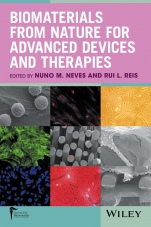
Biomaterials from Nature for Advanced Devices and Therapies
ISBN 9781118478059
Autor: Nuno M. Neves, Rui L. Reis
Wydawca: Wiley
Dostępność: 3-6 tygodni
Cena: 1 005,90 zł
Przed złożeniem zamówienia prosimy o kontakt mailowy celem potwierdzenia ceny.
ISBN13: |
9781118478059 |
ISBN10: |
1118478053 |
Autor: |
Nuno M. Neves, Rui L. Reis |
Oprawa: |
Hardback |
Rok Wydania: |
2016-11-29 |
Ilość stron: |
704 |
Wymiary: |
241x160 |
Tematy: |
PS |
The book provides in–depth information on natural biomaterials and their applications for translational medicine, covering topics such as tissue engineering with collagens or gelatines and natural materials for protein purification and drug delivery.
Edited by world–leading experts with contributions from top–notch international scientists, it collates the experience and cutting–edge knowledge on natural biomaterials from all over the world, making the book a must–have publication on the shelf of every biomaterials lab.
Nuno M. Neves is Professor at the Department of Polymer Engineering of the University of Minho, Portugal, where he is Vice–Director of the 3B s Research Group Biomaterials, Biodegradables and Biomimetics. Nuno M. Neves received his PhD degree in Polymer Science and Engineering from the University of Minho in collaboration with the University of Twente, The Netherlands. His main area of research is the development of biomaterials from natural origin polymers. His research group focuses mainly on tissue engineering and regenerative medicine strategies using stem cells and advanced drug delivery scaffolds and medical devices.
Rui L. Reis is Professor of Tissue Engineering, Regenerative Medicine, Biomaterials and Stem Cells at the Department of Polymer Engineering of the University of Minho, Portugal. He is the Vice–Rector for Research of the University of Minho, Director of the 3B s Research Group and the Director of the Portuguese Government Associate Laboratory ICVS/3B s. Rui L. Reis received his PhD degree in Polymer Engineering from the University of Minho in collaboration with Brunel University in London, UK. His main area of research is the development of biomaterials from natural origin polymers that his group proposes for a range of biomedical applications.
Contributors
Preface
PART 1
Chapter 1. Collagen–Based Porous Scaffolds for Tissue Engineering
Guoping Chen and Naoki Kawazo
1.1 Introduction
1.2 Collagen Sponges
1.3 Collagen sponges with micropatterned pore structures
1.4 Collagen sponges with controlled bulk structures
1.5 Hybrid scaffolds
1.6 Conclusions
References
Chapter 2. Marine Collagen Isolation and Processing Envisaging Biomedical Applications
Joana Moreira–Silva, Gabriela D. Carlos, Ana L. Marques, Tiago H. Silva, Rui L. Reis
2.1 Introduction
2.2 Extraction of Collagen from Marine Sources
2.3 Collagen characterization
2.4 Marine Collagen wide Applications
2.5 Final Remarks
Acknowledgements
References
Chapter 3. Gelatin–Based Biomaterials for Tissue Engineering and Stem Cell Bioengineering
Mehdi Nikkhah, Mohsen Akbari, Arghya Paul, Adnan Memic, Alireza Dolatshahi–Pirouz, and
Ali Khademhosseini
3.1 Introduction
3.2 Crosslinking of Gelatin
3.3 Physical Properties of Gelatin
3.4 Application of Gelatin–based Biomaterials in Tissue Engineering
3.5 Gelatin for Stem Cell Therapy
3.6 Application of Gelatin in Delivery Systems
3.7 Conclusion and perspectives
Acknowledgments
Abbreviations
References
Chapter 4. Hyaluronic Acid Based Hydrogels at Micro and Macro Scale
Assunta Borza Borzacchiello, Luisa Russo, Luigi Ambrosio
4.1 Classification and structure of hydrogels
4.2 Hyaluronic acid
4.3 Hydrogel mechanical properties
4.4 HA based hydrogel for biomedical applications
References
Chapter 5. Chondroitin Sulfate as a Bioactive Macromolecule for Advanced Biological Applications and Therapies
Nicola Volpi
5.1 CS structure
5.2 Biological roles of CS
5.3 Osteoarthritis treatment
5.4 Cardio–cerebrovascular disease
5.5 Tissue regeneration and engineering
5.6 Chondroitin sulfate–polymer conjugates
5.7 Conclusions and future perspectives
References
Chapter 6. Keratin
Mark Van Dyke
6.1 Introduction
6.2 Preparation of Keratoses
6.3 Preparation of Kerateines
6.4 Oxidative Sulfitolysis
6.5 Summary
References
Chapter 7. Elastin–like Polypeptides: Bio–inspired Smart Polymers for Protein Purification, Drug Delivery and Tissue Engineering
Jayanta Bhattacharyya, Joseph J. Bellucci and Ashutosh Chilkoti
7.1 Abbreviations
7.2 Introduction
7.3 Purification of proteins by ELP fusion proteins
7.4 Delivery of therapeutics with ELPs
7.5 Tissue Engineering with ELPs
7.6 Conclusions
Acknowledgments
References
Chapter 8. SILK: A unique family of biopolymers
Antonella Motta, Michael Floren, and Claudio Migliaresi
8.1 Introduction
8.2 Main silk polymers
8.3 Fibroin basic processing: regenerated silk fibroin
8.4 Materials Fabrication of Silk Proteins
8.5 Advanced Material Applications of Silks
Conclusion
References
Chapter 9. Silk protein sericin: promising biopolymer for biological and biomedical applications
Sunita Nayak and Subhas C. Kundu
9.1 Introduction
9.2 Sericin extraction and processing
9.3 Potential applications of sericin
9.4 Immunogenicity and toxicity of sericins
9.5 Conclusion
Acknowledgments
References
Chapter 10. Fibrin
Markus Kerbl, Philipp Heher, James Ferguson, Heinz Redl
10.1 Introduction
10.2 Fibrin Clotting
10.3 Fibrin Degradation
10.4 Fibrin Glue
10.5 Conclusion
References
Chapter 11. Casein Proteins
Pranav K. Singh and Harjinder Singh
11.1 Introduction
11.2 Structures and Properties of Casein
11.3 Interaction of Caseins with Metal Ions
11.4 Conclusions
References
Chapter 12. Biomaterials from Decellularized Tissues
Ricardo Londono and Stephen F. Badylak
12.1 Introduction
12.2 The Default Tissue Response to Injury in Adult Mammals
12.3 Extracellular Matrix Scaffolds
12.4 ECM Scaffolds – The Decellularization Process
12.5 Host Response to implanted ECM–Derived Biomaterials
References
Chapter 13. Demineralized Bone Matrix: A Morphogenetic Extracellular Matrix
A. Hari Reddi and Ryosuke Sakata
13.1 Introduction
13.2 Demineralized Bone Matrix (DBM)
13.3 From DBM to Bone Morphogenetic Proteins (BMPs)
13.4 BMPs Bind to Extracellular Matrix
13.5 BMP Receptors
13.6 Future Perspectives
Acknowledgments
References
PART 2
Chapter 14. Recent Developments on Chitosan Application in Regenerative Medicine
Ana R. Duarte, Vitor M. Correlo, Joaquim M. Oliveira and Rui L. Reis
14.1 Introduction
14.2 Chitosan and Derivatives
14.3 Regenerative Medicine Applications of Chitosan
14.4 Processing methodologies
14.5 Final Remarks
Acknowledgments
References
Chapter 15. Starch–based blends in Tissue Engineering
Pedro Pires Carvalho, Marcia Rodrigues, Rui L. Reis, Manuela E. Gomes
15.1 Introduction
15.2 Starch
15.3 Modification of Starch for Biomedical Applications
15.4 Starch–based blends
15.5 Conclusions and Future Perspectives
References
Chapter 16. Agarose Hydrogel Characterization for Regenerative Medicine Applications: Focus on Engineering Cartilage
Brendan L. Roach, Adam B. Nover, Gerard A. Ateshian, Clark T. Hung
16.1 The Foundations of Agarose
16.2 Structure–Function Relationships of Agarose Hydrogels
16.3 Agarose as a Tissue Engineering Scaffold
16.4 Agarose In The Clinic
16.5 A Scaffold To Build On
Acknowledgments
References
Chapter 17. Bioengineering alginate for regenerative medicine applications
Emil Ruvinov and Smadar Cohen
17.1 Introduction
17.2 Regenerative medicine: definition and strategies
17.3 Alginate biomaterial
17.4 Alginate implant: First in man trial for prevention of heart failure
17.5 Alginate hydrogel as a vehicle for stem cell delivery and retention
17.6 Engineering alginate–based cell microenvironments
17.7 Alginate hydrogel carrier for growth factor delivery
17.8 Engineering alginate for affinity binding and presentation of heparin–binding growth factors
17.9 Conclusions and future perspectives
References
Chapter 18. Dextran
Rong Wang , Pieter J. Dijkstra and Marcel Karperien
18.1 Introduction
18.2 Structure and properties
18.3 Dextran derivatives
18.4 Dextran copolymers
18.5 Degradation
18.6 Outlook
References
Chapter 19. Gellan gum–Based Hydrogels for Tissue Engineering Applications
Joana Silva–Correia, Joaquim Miguel Oliveira and Rui Luís Reis
19.1 Introduction
19.2 Gellan Gum and Its Derivatives
19.3 Tissue Engineering Applications
19.4 Final Remarks
Acknowledgments
References
PART 3
Chapter 20. Biomedical Applications of Polyhydroxyalkanoates
Lorena del Rosario Lizarraga–Valderrama, Bijal Panchal, Christy Thomas, Ipsita Roy, Also R. Boccaccini
20.1 Introduction
20.2 Skin Tissue Engineering
20.3 Nerve Tissue Engineering
20.4 Cardiac Tissue Engineering
20.5 Dental Tissue Engineering
20.6 Bone Tissue Engineering
20.7 Cartilage Tissue engineering
20.8 Osteochondral Tissue engineering
20.9 Drug Delivery
20.10 Conclusions and the Future Potential of PHAs in Biomedical Applications
References
Chapter 21. Bacterial Cellulose
Hernane S. Barud, Junkal Gutierrez, Wilton R. Lustri, Maristela F.S. Peres, Sidney J.L. Ribeiro, Sybele Saska–Specian and Agniezska Tercjak
21.1 BC dressings
21.2 Bacterial Cellulose for Tissue Engineering and Regenerative Medicine
21.3 Concluding remarks
Acknowledgments
References
PART 4
Chapter 22. Molecularly Imprinted Cryogels for Protein Purification
Müge Andaç, Igor Yu Galaev, Adil Denizli
22.1 Introduction
22.2 Molecularly Imprinted Cryogels for Protein Purification
22.3 Some Selected Applications of Molecularly Imprinted Cryogels (MIC) for Macromolecules
22.4 Concluding Remarks and Future Perspectives
References
Chapter 23. Immunogenic reaction of implanted biomaterials from nature
Martijn van Griensven, Elizabeth Rosado Balmayor
23.1 Introduction
23.2 Implantation leads to tissue injury
23.3 Inflammatory responses
23.4 Foreign Body Reaction
23.5 Immunogenic reactions towards natural biomaterials
23.6 Final remarks
References
Chapter 24. Chemical modification of biomaterials from Nature
José Carlos Rodríguez–Cabello, Israel González de Torre, Mercedes Santos, Ana Maria Testera, Matilde Alonso
24.1 Protein Modification
24.2 Lipid Modifications
24.3 POLYSACCHARIDE CHEMICAL MODIFICATIONS
References
PART 5
Chapter 25. Processing of biomedical devices for tissue engineering and regenerative medicine applications
Vitor M. Correlo, Albino Martins, Nuno M. Neves, Rui L. Reis
25.1 Introduction
25.2 Processing Techniques of Naturally Derived Biomaterial
25.3 Processing Techniques of natural based polymeric blends
References
Chapter 26. GENERAL CHARACTERIZATION OF PHYSICAL PROPERTIES OF NATURAL–BASED BIOMATERIALS
Manuel Alatorre–Meda and João F. Mano
26.1 Introduction
26.2 Bulk properties
26.3 Surface properties
26.4 Concluding remarks
Acknowledgements
References
Chapter 27. General Characterization of Chemical Properties of Natural–Based Biomaterials
Manuel Alatorre–Meda and João F. Mano
27.1 Introduction
27.2 Molecular weight and elemental composition
27.3 Physiological degradation
27.4 Concluding remarks
Acknowledgments
References
Chapter 28. In vitro biological testing in the development of new devices
Marta L. Alves da Silva, Albino Martins, Ana Costa–Pinto, Rui L. Reis, Nuno M. Neves
28.1 Introduction
28.2 Cytotoxicity assays
28.3 Evaluation of Cell Morphology and Distribution
28.4 Cell Viability Assays
28.5 Cell Proliferation Assays
28.6 Biochemical analysis
28.7 Genotypic expression analysis
28.8 Histological assessment
28.9 In vitro Engineered Tissues
28.10 Concluding remarks
References
Chapter 29. Advanced in–vitro cell culture methods using natural biomaterials
Marta L. Alves da Silva, Rui L. Reis, Nuno M. Neves
29.1 Introduction
29.2 Bioreactors
29.3 Hypoxia
29.4 Co–cultures
29.5 Transfection
29.6 Nanoparticles and related systems
29.7 Concluding remarks
References
Chapter 30. Testing Natural Biomaterials in Animal Models
Ana Costa–Pinto, Tírcia C. Santos, Nuno M. Neves and Rui L. Reis
30.1 Laboratory animals as tools in biomaterials testing
30.2 Inflammation and host reaction
30.3 Animal models for Tissue Engineering
30.4 Final remarks
References
PART 6
Chapter 31. Delivery Systems made of Natural–origin Polymers for Tissue Engineering and Regenerative Medicine Applications
Albino Martins, Helena Ferreira, Rui L. Reis, Nuno M. Neves
31.1 Introduction
31.2 Advantages and Disadvantages of Natural Polymers–based Delivery Systems
31.3 Fundamentals of drug delivery
31.4 In vitro and in vivo applications of natural–based delivery systems
31.5 Concluding remarks
References
Chapter 32. Translational Research into New Clinical Applications
M. David Harmon, Cato T. Laurencin, Sangamesh G. Kumbar
32.1 Introduction
32.2 Cardiovascular System Applications
32.3 Integumentary System Applications
32.4 Musculoskeletal System Applications
32.5 Nervous System Applications
32.6 Respiratory System Applications
32.7 Gastrointestinal System Applications
32.8 From Idea to Product
Acknowledgements
References
Chapter 33. Challenges and Opportunities of Natural Biomaterials for Advanced Devices and Therapies
Ruis L. Reis and Nuno M. Neves
33.1 Introduction
33.2 Challenges of Natural Biomaterials
33.3 Opportunities of Natural Biomaterials
33.4 Final remarks
References
Chapter 34. Adhesives Inspired by Marine Mussels
Courtney L. Jenkins, Heather J. Meredith, and Jonathan J. Wilker
34.1 Requirements for a Bioadhesive
34.2 Marine Mussels
34.3 Bulk Adhesion Testing
34.4 Extracted Mussel Adhesive Proteins
34.5 Mimics of Mussel Adhesive
34.6 Conclusions
34.7 Acknowledgements
References
Chapter 35. Final comments and remarks
Ruis L. Reis and Nuno M. Neves
Koszyk
Książek w koszyku: 0 szt.
Wartość zakupów: 0,00 zł
Informacje


Kontakt
Gambit
Centrum Oprogramowania
i Szkoleń Sp. z o.o.
Al. Pokoju 29b/22-24
31-564 Kraków
Siedziba Księgarni
ul. Kordylewskiego 1
31-542 Kraków
+48 12 410 5991
+48 12 410 5987
+48 12 410 5989
Subskrypcje
Administratorem danych osobowych jest firma Gambit COiS Sp. z o.o. Na podany adres będzie wysyłany wyłącznie biuletyn informacyjny.
Autoryzacja płatności

Informacje na temat autoryzacji płatności poprzez PayU.

© Copyright 2012: GAMBIT COiS Sp. z o.o. Wszelkie prawa zastrzeżone.
Projekt i wykonanie: Alchemia Studio Reklamy