


Wydawcy
Katalog tematyczny
- Archeologia (109)
- Ekonomia, finanse, business (13704)
- Filozofia (1445)
- Historia (3040)
- Języki i językoznawstwo (2356)
- Lifestyle, hobby i rozrywka (475)
- Medycyna (9704)
- Nauki humanistyczne (4)
- Nauki o Ziemi i środowisku (2638)
- Nauki ścisłe (20412)
- Nauki społeczne (8486)
- Nauki techniczne (13450)
- Prawo (1696)
- Publikacje informacyjne i interdyscyplinarne (1288)
- Religia i wierzenia (917)
- Technika komputerowa (4067)
- Zdrowie, relacje międzyludzkie i rozwój osobisty (657)





Informacje szczegółowe o książce
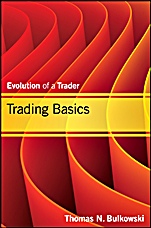
Trading Basics: Evolution of a Trader
ISBN 9781118464212
Autor: Thomas N. Bulkowski
Wydawca: Wiley
Dostępność: 3-6 tygodni
Cena: 354,90 zł
Przed złożeniem zamówienia prosimy o kontakt mailowy celem potwierdzenia ceny.
ISBN13: |
9781118464212 |
ISBN10: |
1118464214 |
Autor: |
Thomas N. Bulkowski |
Oprawa: |
Hardback |
Rok Wydania: |
2012-12-11 |
Ilość stron: |
208 |
Wymiary: |
229x152 |
Tematy: |
KF |
The series Evolution of a Trader explores four trading styles that people use when learning to invest in the stock market. Often, beginners enter the stock market by
Buying and holding on to a stock. That works well until a bear market begins. Then they try Position trading. This seeks to exit positions before a significant trend change occurs. Swing trading follows when traders try to catch short–term swings. Finally, people try Day trading by completing their trades in a single day.This series takes a detailed look at each of the four styles by offering numerous tips, sharing discoveries, and discussing specific trading techniques to help the reader be successful as they journey through each style.
The first book, Trading Basics, takes an in–depth look at money management, stops, support, and resistance, and offers dozens of tips every trader should know.
The second book, Fundamental Analysis and Position trading, explains value investing and tests fundamental factors, such as book value, price–to–earnings, and price–to–sales ratios, to see how important they are to stock selection and performance. Chapters such as How to Double Your Money, finding 10–Baggers, and Trading 10–Baggers put the fundamentals to work. Position trading introduces market timing to help remove the risk of buying and holding a stock for years.
The third book in the series, Swing and Day Trading, explains how to use chart patterns to swing and day trade. It reviews the basics, including the home office setup and the cost of day trading, and drills down into specific trading strategies such as the opening range breakout and the opening gap setup. It introduces new research on major reversal times and the time most likely to set the day s high and low. That is valuable information to a day trader.
Whether you are a novice who has never purchased a stock but wants to, or a professional money manager, these books are a necessary addition to any market enthusiast s bookshelf.
preface ix
acknowledgments xv
Chapter 1 how to retire at 36 1
Chapter Checklist 4
Chapter 2 Money Management 7
Trading: How Much Money, Honey? 8
Order Types: Read the Fine Print! 10
Position Sizing: My Story 12
Position Sizing by Market Condition: Bull or Bear? 13
How Many Stocks to Hold? 15
A Better Way? Portfolio Composition 16
Hold Time: How Long Is Long Enough? 18
Hold Time: My Trades 19
The Money Management Matrix 19
Should You Scale into Positions? 21
Averaging Down: Throwing Away
Money or Smart Choice? 28
Scaling Out of Positions: A Profitable Mistake? 31
Dollar?]Cost?]Averaging: Good or Bad? 34
Using Leverage: An Expensive Lesson! 35
Leverage Guidelines Checklist 36
Chapter Checklist 37
Chapter 3 Do Stops Work? 41
What Is Hold Time Loss? 42
Mental Stop: For Professionals Only! 44
Minor High or Low Stop: A Good Choice 45
Squaring Off Round Numbers 46
Chart Pattern Stop: Too Costly? 47
Stopped by a Moving Average 47
The Truth about Trendlines 48
Trendline Stop 49
Fibonacci Retrace Stop: Deal or Dud? 50
Fixed Percentage Trailing Stop 53
Volatility Stop 53
Chandelier Stop Leaves You Hanging 55
Testing Six Stop Types 55
What I Use 59
Chapter Checklist 61
Chapter 4 Support and Resistance 63
Types of Support and Resistance 64
Measured Move Support and Resistance 65
Minor High Resistance 66
Volume at Minor High Resistance 67
Minor Low Support 67
Volume at Minor Low Support 68
Minor High Support 68
Minor Low Resistance 69
Gaps Showing Support and Resistance 70
Myth: Tall Candle Support and Resistance 70
Horizontal Consolidation Regions 71
Another Look at Round Numbers 72
Support in Straight?]Line Runs 72
Resistance in Straight?]Line Runs 74
SAR Summary 75
Chapter Checklist 76
Chapter 5 45 Tips Every Trader Should Know 79
Determining Stock or Market Direction 97
Finding the Market Bottom 102
Visual Tips 122
Chapter Checklist 130
Chapter 6 Finding and Fixing What Is Wrong 135
What Was the Market Behavior? 136
Was the Industry Trending? 137
How Is the Timing? 139
Are All Entry Conditions Met? 142
Was the Position Size Proper? 144
Was an Initial Stop Used? 144
Did You Exit Before the Stop? 145
What Was the Risk/Reward Ratio? 146
Did You Average Up? 147
Did You Average Down? 147
Are You Buying Out of Season? 148
Trading Checklist 149
Chapter Checklist 151
Chapter 7 What We Learned 153
Chapter 1: How to Retire at 36 153
Chapter 2: Money Management 153
Chapter 3: Do Stops Work? 155
Chapter 4: Support and Resistance 156
Chapter 5: 45 Tips Every Trader Should Know 157
Chapter 6: Finding and Fixing| What Is Wrong 161
Visual Appendix of Chart Patterns 163
Bibliography 169
Other Sites of Interest 171
About the Author 173
Index 175
Thomas N. Bulkowski is a successful investor with thirty years of experience in the stock market. He is also the author of the Wiley titles Encyclopedia of Candlestick Charts, Encyclopedia of Chart Pattern, Getting Started in Chart Pattern, Trading Classic Chart Patterns, and Visual Guide to Chart Patterns. Bulkowski is also a contributor to Active Trader, Technical Analysis of Stocks & Commodities, and other publications worldwide. Before earning enough from his investments to retire from his day job at age 36, Bulkowski was a hardware design engineer with Raytheon and a senior software engineer for Tandy Corporation.
The three books in this series were written for people unfamiliar with the inner workings of the stock market, but will still curl the toes of professionals, too. Research is used to prove the ideas discussed, but is presented in an easy to understand and light–hearted manner. You will find the books to be as entertaining as they are informative and packed with moneymaking tips and ideas. Use the ideas presented here to hone your trading style and improve your success. Whether you are a novice who has never purchased a stock but wants to, or a professional money manager who trades daily, these books are a necessary addition to any market enthusiast s bookshelf.
Alan Battista, Stockineer.com Book Review
Koszyk
Książek w koszyku: 0 szt.
Wartość zakupów: 0,00 zł
Informacje


Kontakt
Gambit
Centrum Oprogramowania
i Szkoleń Sp. z o.o.
Al. Pokoju 29b/22-24
31-564 Kraków
Siedziba Księgarni
ul. Kordylewskiego 1
31-542 Kraków
+48 12 410 5991
+48 12 410 5987
+48 12 410 5989
Subskrypcje
Administratorem danych osobowych jest firma Gambit COiS Sp. z o.o. Na podany adres będzie wysyłany wyłącznie biuletyn informacyjny.
Autoryzacja płatności

Informacje na temat autoryzacji płatności poprzez PayU.

© Copyright 2012: GAMBIT COiS Sp. z o.o. Wszelkie prawa zastrzeżone.
Projekt i wykonanie: Alchemia Studio Reklamy