


Wydawcy
Katalog tematyczny
- Archeologia (109)
- Ekonomia, finanse, business (13704)
- Filozofia (1445)
- Historia (3040)
- Języki i językoznawstwo (2356)
- Lifestyle, hobby i rozrywka (475)
- Medycyna (9704)
- Nauki humanistyczne (4)
- Nauki o Ziemi i środowisku (2638)
- Nauki ścisłe (20412)
- Nauki społeczne (8486)
- Nauki techniczne (13450)
- Prawo (1696)
- Publikacje informacyjne i interdyscyplinarne (1288)
- Religia i wierzenia (917)
- Technika komputerowa (4067)
- Zdrowie, relacje międzyludzkie i rozwój osobisty (657)





Informacje szczegółowe o książce
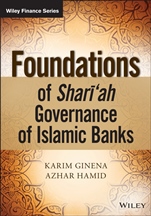
Foundations of Shariah Governance of Islamic Banks
ISBN 9781118460771
Autor: Karim Ginena, Azhar Hamid
Wydawca: Wiley
Dostępność: 3-6 tygodni
Cena: 372,75 zł
Przed złożeniem zamówienia prosimy o kontakt mailowy celem potwierdzenia ceny.
ISBN13: |
9781118460771 |
ISBN10: |
1118460774 |
Autor: |
Karim Ginena, Azhar Hamid |
Oprawa: |
Hardback |
Rok Wydania: |
2015-02-27 |
Ilość stron: |
408 |
Wymiary: |
247x177 |
Tematy: |
KF |
Praise for Foundations of shar ′ah Governance of Islamic Banks
"The Islamic banking industry, worth over 2 trillion dollars, represents a fast growing phenomenon in an otherwise depressing context of global finance. What is the source of this relative stability and resilience? shar ′ah compliance makes Islamic banking distinct, as it operates not only within a framework of certain well defined ethical imperatives but also has the unique feature of making finance asset based, leading to generation of real goods and services in society, and not simply financial expansion.
Foundations of shar ′ah Governance of Islamic Banks is a timely effort to bring into sharp focus this unique dimension of Islamic Banking. It contains a well–researched, fully documented, fairly detailed and authentic exposition of the key concepts of shar ′ah, Islamic guidelines for banking governance and some of the major efforts made over the last four decades to develop operational mechanisms to make banking shar ′ah–compliant. This book is an essential read for those who want to understand Islamic banking, and more so, for those engaged in the Islamic Banking industry anywhere in the world."
Khurshid Ahmad, Professor, Chairman, Institute of Policy Studies, Islamabad, Ex– Senator, Federal Minister for Planning, and Deputy Chairman, Planning Commission, Pakistan
"shar ′ah compliance lies at the heart of Islamic finance and is what makes it unique. The book provides a comprehensive treatment of the shar ′ah governance issues covering basic shar ′ah principles applied in Islamic finance and the processes through which these are operationalized in practice. The volume is a valuable source of information for anyone who would like to study diverse aspects of processes and practices related to shar ′ah governance in the contemporary Islamic financial industry."
Habib Ahmed, Professor of Islamic Finance, Durham University Business School
"In this ground–breaking work, Karim Ginena and Azhar Hamid have accomplished what others have only hinted at and, by doing so, have rendered a valuable service to the growing Islamic financial services industry. With scholarly attention to detail, and a fine understanding of the global context in which Islamic finance operates, the authors have provided a roadmap for governance that should find wide appreciation in corporate and regulatory circles worldwide."
Shaykh Yusuf DeLorenzo, shar ′ah board member of the Accounting and Auditing Organization for Islamic Financial Institutions (AAOIFI)
"An important academic and practical related addition to the new discipline. Tools such as shar ′ah risk assessment grid and audit checklists are particularly helpful. This book serves as a useful implementation guide and takes a fresh approach compared to the current boring, descriptive texts."
Shahul Hameed bin Mohamed Ibrahim, Associate Professor of Islamic Accounting, INCEIF, Malaysia
"Islamic banks by definition have to operate in accordance with shar ′ah law, but how is this enforced? This study explores the practical issues in shar ′ah governance which involves both external audit and internal controls. As the interpretation of Islamic commercial law is inevitably subjective, shar ′ah board members often have legitimate differences of opinion. The authors examine how these can be reconciled to reduce shar ′ah risk."
Rodney Wilson, Emeritus Professor of Economics, Durham University, UK and INCEIF, Malaysia
Part I
Chapter 1
The Roots, Characteristics, and Objectives of Shar ′ah and the Islamic Economic System
1.1 Shar ah, the Qur n, and Sunnah
1.2 What is Fiqh?
1.3 Performing Ijtih d and Differences in Juristic Opinions
1.4 Shar ah Rulings
1.4.1 Obligation–Creating Shar ah Rulings
1.4.2 Declaratory Shar ah Rulings
1.5 The Subject of a Shar ah Ruling
1.6 Characteristics of Shar ah
1.7 Objectives of Shar ah
1.8 The Islamic Economic System and its Characteristics
1.9 Objectives of Shar ah Relating to Property
Chapter 2
Corporate and Shar ′ah Governance of Islamic Banks
2.1 Corporate Governance Gains Prominence
2.2 Hisba System and an Islamic Perspective on Corporate Governance
2.3 OECD and Islamic Principles of Corporate Governance
2.4 Importance of Corporate Governance to Banking Sector
2.5 The Financial Crisis and Corporate Governance Challenges
2.6 Developing Countries and Corporate Governance Issues
2.7 Corporate Governance Concerns for Islamic Banks
2.8 IFSB and AAOIFI Issue Guidance
2.9 Adapted Corporate Governance Understanding
2.10 Stakeholders of Islamic Banks and their Governance Responsibilities
2.11 Connecting Risk Management, Corporate Governance, and Shar ah Compliance
2.12 Shar ah Governance Model
2.13 Importance of Shar ah Governance
2.14 Shar ah Supervision vs Governance
2.15 Shar ah Risk Definition
2.16 Shar ah Risk and Possible Implications
2.16.1 Credit Risk
2.16.2 Legal and Compliance Risk
2.16.3 Reputational Risk
2.16.4 Market Risk
2.17 Shar ah Risk Causes and Events
2.17.1 Internal Causes
2.17.2 External Causes
2.18 Shar ah Risk Management
2.19 Shar ah Compliance Responsibility of BOD and Senior Management
Appendix 2.1: Operational Risk Loss Event Types
Chapter 3
Legal and Regulatory Aspects of Shar ah Governance
3.1 Institutional Arrangements
3.2 Shar ah and Common Law Encounters in English Courts
3.2.1 The Islamic Investment Company of the Gulf (Bahamas) Ltd v Symphony Gems N.V. & others
3.2.2 Shamil Bank of Bahrain E.C. v Beximco Pharmaceuticals Ltd & Others
3.2.3 Investment Dar Co KSCC v Blom Developments Bank Sal
3.3 Lessons Learned from Cases and the Desirability of a Secular Interpretation of Shar ah
3.4 Malaysia: A Common Law Jurisdiction of Choice?
3.5 Role of Banking Supervisors in Shar ah Governance
3.6 Regulatory Approaches to Shar ah Governance
3.6.1 Hands–off
3.6.2 Nominal
3.6.3 Engaged
3.6.4 Proactive
3.6.5 Committed
Appendix 3.1: Legal and Regulatory Framework for IFSI in Jurisdictions with Known IIFS presence
Chapter 4
The Internal Shar ah Control System
4.1 Internal Shar ah Control Definition and Objectives
4.2 Shar ah Control System Components
4.2.1 Shar ah Control Culture
4.2.2 Shar ah Risk Identification and Assessment
4.2.3 Shar ah Control Activities
4.2.4 Shar ah Associated Information and Communication
4.2.5 Shar ah Monitoring of Activities
4.2.6 Evaluation of Internal Shar ah Control System by Banking Supervisors
4.3 Internal Shar ah Audit Function
4.3.1 Purpose, Responsibility, and Authority
4.3.2 ISAF in Practice
4.3.3 Importance of Independence and Objectivity
4.3.4 Planning for Shar ah Audit
4.3.5 Engagement Program Execution
4.3.6 Communicating Findings
4.3.7 Following Up and Post–Engagement
4.3.8 Shar ah Audit Quality Assurance Program
4.4 Proficiency and Due Professional Care of ISAF Staff
4.5 Professional Shar ah Audit Body
4.6 Shar ah Governance Manual
Appendix 4.1: Sample Shar ah Governance Manual (Also available on the book companion website at www.wiley.com/go/shariahgovernance)
Appendix 4.2: Sample Shar ah Audit Checklists (Also available on the book companion website at www.wiley.com/go/shariahgovernance)
Part II
Chapter 5
The Shar ′ah Supervisory Board
5.1 The Shar ah Supervisory Board Defined
5.2 Multiple Titles for the SSB
5.3 Importance and Purpose of the Shar ah Supervisory Board
5.4 History of SSBs in Modern Islamic Banking
5.4.1 Accounting and Auditing Organization for Islamic Financial Institutions
5.4.2 Islamic Financial Services Board
5.4.3 Organization of Islamic Conference Fiqh Academy
5.5 Key Governance Guidelines: Independence, Objectivity,
Confidentiality, Consistency, Transparency, and Disclosure
5.5.1 Independence
5.5.2 Objectivity
5.5.3 Confidentiality
5.5.4 Consistency
5.5.5 Transparency and Disclosure
5.6 Regulating SSBs
5.6.1 GCC Jurisdictions
5.6.2 Non–GCC Jurisdictions
5.7 SSB Location Within the Organizational Chart
5.8 SSB Models
5.8.1 SSB at IB Model
5.8.2 SSB at Central Bank and IB Model
5.8.3 Central Authority and SSB at IB Model
5.8.4 Market–Driven SSB at IB Model
5.9 An SSB–Free Model?
5.9.1 Need to Understand Shar ah Requirements for the Industry
5.9.2 Securing the Support of Key Stakeholders
5.9.3 Commitment to a Unified Shar ah Reference
5.9.4 Being Highly Receptive to New Developments in Industry
Chapter 6
Shar ah Supervisory Board Member Qualifications and Internal Regulations
6.1 Competence of SSB Members
6.1.1 Character, Professional Ethics, and Conduct
6.1.2 Academic Qualifications of SSB Members
6.1.3 Experience
6.1.4 Essential Skills for SSB Members
6.1.5 Professional SSBs
6.2 Establishing an SSB
6.2.1 Systemized SSB Application Process
6.3 SSB Charter
6.3.1 Number of SSB Members
6.3.2 Terms of Agreement
6.3.3 Reporting Line
6.3.4 Reappointment
6.3.5 Selection of SSB Chairman and Executive SSB Member
6.3.6 SSB Members Remuneration
6.3.7 Compensating SSB Members
6.3.8 Procedure for Dismissal and Resignation
6.3.9 Procedure for Replacing an SSB Member
6.3.10 SSB Meetings
6.3.11 Frequency of Meetings
6.3.12 Quorum for SSB Meetings
6.3.13 Decision–Making Process
6.3.14 Meeting Minutes
Chapter 7
Authority of the Shar ah Supervisory Board and Conflict Management
7.1 SSB Authority
7.2 Nature of SSB Decisions
7.3 BOD and Management Responsibility Towards the SSB
7.3.1 Address SSB Matters in Company Bylaws and Establish Shar ah Governance Framework
7.3.2 Grant SSB Access to Information
7.3.3 Seek SSB Guidance and Abide by its Fatawa and Resolutions
7.3.4 Honor SSB Independence
7.3.5 Provide Administrative Support
7.3.6 Assess SSB Performance
7.4 Conflict between SSB Members
7.5 Conflict between the BOD and the SSB
7.6 Conflict between Management and the SSB
Appendix 7.1: Performance Evaluation Form for SSB Members (Also available on the book companion website at www.wiley.com/go/shariahgovernance)
Chapter 8
Stages of Shar ah Supervision and Responsibilities of the Shar–i ah Supervisory Board
8.1 Shar ah Supervision
8.1.1 Ex–ante Shar ah Supervision
8.1.2 Intermediate Shar ah Supervision Stage
8.1.3 Ex–post Shar ah Supervision
8.2 Responsibilities of SSB Members
8.2.1 Collective Responsibilities
8.2.2 Individual Responsibilities
8.3 Chairman and Executive SSB Member(s) and their Responsibilities
8.3.1 Issuing Fatawa and Ijtih d in Islamic Finance
8.3.2 Differences in Juristic Opinion and Conflict Resolution
8.3.3 Different Approaches to Issuing Fatawa
8.3.4 Reversal of Fatawa and Implications
8.4 Annual Shar ah Compliance Report
8.4.1 AAOIFI s Report
8.4.2 Possible Opinions in the Report
Appendix 8.1: Lease Ending with transfer of Ownership Financing Instrument (Also available on the book companion website at www.wiley.com/go/shariahgovernance)
Chapter 9
Shar ah Advisory Firms
9.1 Introduction to Shar ah Advisory Firms
9.2 Services Offered by Shar ah Advisory Firms
9.2.1 Shar ah Supervision
9.2.2 Internal Shar ah Audit
9.2.3 External Shar ah Audit
9.2.4 Product Development and Transaction Structuring
9.2.5 Legal Document Preparation and Review
9.2.6 Shar ah Training
9.3 Outsourcing Internal Shar ah Functions
9.4 Regulation
9.4.1 Adherence to Directives and Guidance Issued
9.4.2 Competency
9.4.3 Monitoring
9.5 Liability
Appendix 9.1: Application Form for the Appointment of an External Shar ah Audit Office (Also available on the book companion website at www.wiley.com/go/shariahgovernance)
Index
KARIM GINENA has held both academic and industry positions in Islamic Banking. Most recently, he worked as a Senior Researcher with the Center for Islamic Economics and Finance at the Faculty of Islamic Studies, Hamad Bin Khalifa University (HBKU) in Doha, Qatar. Prior to that, he served as Head of shar ′ah Audit at Doha Bank. He is currently pursuing his PhD in Management at the University of Virginia′s Darden Graduate School of Business and is a member of the Qatar Science Leadership Program. He holds an MSc. in Islamic Finance from HBKU and a Bachelors of Business Administration from Simon Fraser University in British Columbia, Canada. Karim is a 2013 Young Policy Professional of Harvard Law School′s Institute for Global Law and Policy and is an AAOIFI Certified shar ′ah Advisor and Auditor. Karim has presented his research at international academic conferences and forums, such as at Harvard University, the American University of Sharjah and the British Academy of Management. His research has appeared in reputable journals, such as the Virginia Law & Business Review and Corporate Governance.
AZHAR HAMID is a seasoned Islamic banker and an academician. Presently, he serves Ahli Bank Oman as Head shar ′ah Audit and Compliance. Previously, he worked as Deputy Head of the shar ′ah Audit Department at Doha Bank and Manager of shar ′ah Compliance at Dubai Islamic Bank, Pakistan. Academically, Azhar held the positions of Lecturer, Islamic Bankingand Finance, and Research Assistant to the President of the International Islamic University Islamabad (IIUI) at IIUI. Azhar holds MSc. Economics and MPhil Economics degrees with specialization in Islamic banking and finance from IIUI. Azhar is a researcher of Islamic finance and writes regularly with special focus on shar ′ah governance, shar ′ah auditing and product development of Islamic financial institutions. Azhar lives in Muscat, Oman, with his wife Dr. Qurrat ul Ain Akram, a son Faateh Abdul Rahman and a daughter Falah Amayem.
Koszyk
Książek w koszyku: 0 szt.
Wartość zakupów: 0,00 zł
Informacje


Kontakt
Gambit
Centrum Oprogramowania
i Szkoleń Sp. z o.o.
Al. Pokoju 29b/22-24
31-564 Kraków
Siedziba Księgarni
ul. Kordylewskiego 1
31-542 Kraków
+48 12 410 5991
+48 12 410 5987
+48 12 410 5989
Subskrypcje
Administratorem danych osobowych jest firma Gambit COiS Sp. z o.o. Na podany adres będzie wysyłany wyłącznie biuletyn informacyjny.
Autoryzacja płatności

Informacje na temat autoryzacji płatności poprzez PayU.

© Copyright 2012: GAMBIT COiS Sp. z o.o. Wszelkie prawa zastrzeżone.
Projekt i wykonanie: Alchemia Studio Reklamy