


Wydawcy
Katalog tematyczny
- Archeologia (109)
- Ekonomia, finanse, business (13704)
- Filozofia (1445)
- Historia (3040)
- Języki i językoznawstwo (2356)
- Lifestyle, hobby i rozrywka (475)
- Medycyna (9704)
- Nauki humanistyczne (4)
- Nauki o Ziemi i środowisku (2638)
- Nauki ścisłe (20412)
- Nauki społeczne (8486)
- Nauki techniczne (13450)
- Prawo (1696)
- Publikacje informacyjne i interdyscyplinarne (1288)
- Religia i wierzenia (917)
- Technika komputerowa (4067)
- Zdrowie, relacje międzyludzkie i rozwój osobisty (657)





Informacje szczegółowe o książce
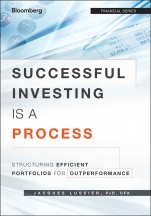
Successful Investing Is a Process: Structuring Efficient Portfolios for Outperformance
ISBN 9781118459904
Autor: Jacques Lussier
Wydawca: Wiley
Dostępność: 3-6 tygodni
Cena: 327,60 zł
Przed złożeniem zamówienia prosimy o kontakt mailowy celem potwierdzenia ceny.
ISBN13: |
9781118459904 |
ISBN10: |
1118459903 |
Autor: |
Jacques Lussier |
Oprawa: |
Hardback |
Rok Wydania: |
2013-03-15 |
Ilość stron: |
384 |
Wymiary: |
259x183 |
Tematy: |
KF |
Praise for Successful Investing is a Process
"Should I want advice about the construction and the dynamic management of an investment portfolio, Jacques Lussier would be my first telephone call."
NASSIM N. TALEB, essayist, risk scientist, and former derivatives trader; author of The Black Swan and Antifragile
"For the serious investor, Jacques Lussier provides a careful and clearly written analysis of what can and should be done to manage investments in a professional market where fees are large relative to value added. Successful Investing is a Process is always clear, always interesting and always educating."
Charles D. Ellis, founder of Greenwich Associates, Chair of the CFA Institute, associate editor of The Journal of Portfolio Management and Financial Analysts Journal; author of 16 books including Winning the Loser′s Game
"Successful Investing is a Process. It′s not just a book title but an often–ignored reality. Jacques Lussier has done a superb job of synthesizing many of the developments in modern finance theory and practice into a well–crafted ′owner′s manual′ for building a successful investing process. This is an important book for any investor or fiduciary who wants to weather the likely challenges that the coming years seem likely to impose on us."
Rob Arnott, founder of Research Affiliates, former chairman of First Quadrant, editor of the Financial Analysts Journal; co–author of The Fundamental Index: A Better Way to Invest
"Jacques Lussier is quite right. Investing IS a process, and not a formula. There is something for every kind of investment professional in this useful book. I rediscovered much I had learned over thirty years in this profession, but had perhaps forgotten. I appreciated, too, much that I do remember; it′s good to have it all in one place. But most of all I appreciate the large amount of material that I had missed. The scope of Jacques′ book is encyclopedic. This is one of those rare books that will command a permanent place on the limited real estate available on an investor′s trading desk."
Vinay Pande, Partner at Brevan Howard, former Chief Investment Advisor at Deutsche Bank
"Lussier offers credible new views on benchmarking and outperformance, gleaned from his own experience and his broad and critical survey of current academic and practitioner research, in particular the insight that investors should let the market underperform their investment protocols instead of attempting to beat the market at all costs. Lussier′s book is an impressive achievement written by an accomplished veteran of the asset management industry."
Yves Choueifaty, founder of TOBAM, former CEO of Credit Lyonnais Asset Management
Acknowledgments ix
Preface xi
Introduction 1
PART I: THE ACTIVE MANAGEMENT BUSINESS 5
CHAPTER 1: The Economics of Active Management 7
Understanding Active Management 8
Evidence on the Relative Performance of Active Managers 12
Relevance of Funds Performance Measures 15
Closing Remarks 17
CHAPTER 2: What Factors Drive Performance? 21
Implications of Long Performance Cycles and Management Styles 22
Ability to Identify Performing Managers 28
Replicating the Performance of Mutual Fund Managers 32
Closing Remarks 35
CHAPTER 3: Outperforming Which Index? 39
Purpose and Diversity of Financial Indices 40
Building an Index 41
Are Cap–Weight Indices Desirable? 43
Alternatives to Cap–Weight Indices and Implications 44
Closing Remarks 48
PART II: UNDERSTANDING THE DYNAMICS OF PORTFOLIO ALLOCATION AND ASSET PRICING 51
CHAPTER 4: The Four Basic Dimensions of An Efficient Allocation Process 53
First Dimension: Understanding Volatility 54
Second Dimension: Increasing the ARI Mean 68
Third Dimension: Efficiently Maximizing GEO Mean Tax 69
Fourth Dimension: Accounting for Objectives and Constraints 70
Closing Remarks 71
CHAPTER 5: A Basic Understanding of Asset Valuation and Pricing Dynamics 75
Determinants of Interest Rates 76
Determinants of Equity Prices 80
Historical Returns as a Predictor 86
Other Predictors 91
Review of Predictors 107
Closing Remarks 108
PART III: THE COMPONENTS OF AN EFFICIENT PORTFOLIO–ASSEMBLY PROCESS 113
CHAPTER 6: Understanding Nonmarket–Cap Investment Protocols 115
Risk–Based Protocols 115
Fundamental Protocols 128
(Risk) Factor Protocols 135
Comparing and Analyzing Protocols 142
Bridging the Gaps and Improving on the Existing Literature 144
A Test of Several Investment Protocols 148
Closing Remarks 157
CHAPTER 7: Portfolio Rebalancing and Asset Allocation 161
Introduction to Portfolio Rebalancing 161
The Empirical Literature on Rebalancing 170
A Comprehensive Survey of Standard Rebalancing Methodologies 175
Asset Allocation and Risk Premium Diversification 179
Volatility and Tail Risk Management 190
Volatility Management versus Portfolio Insurance 197
Closing Remarks 199
CHAPTER 8: Incorporating Diversifiers 203
Fair Fees 204
Risk Premium and Diversification 205
Commodities as a Diversifier 208
Curencies as a Diversifier 228
Private Market Assets as a Diversifier 244
Closing Remarks 250
CHAPTER 9: Allocation Process and Efficient Tax Management 255
Taxation Issues for Individual Investors 256
Components of Investment Returns, Asset Location, Death and Taxes 257
Tax–Exempt, Tax–Deferred, Taxable Accounts and Asset Allocation 260
Capital Gains Management and Tax–Loss Harvesting 276
Is It Optimal to Postpone Net Capital Gains? 280
Case Study 1: The Impact of Tax–Efficient Investment Planning 289
Case Study 2: Efficient Investment Protocols and Tax Efficiency 291
Closing Remarks 293
PART IV: CREATING AN INTEGRATED PORTFOLIO MANAGEMENT PROCESS 295
CHAPTER 10: Understanding Liability–Driven Investing 297
Understanding Duration Risk 298
Equity Duration 303
Hedging Inflation 307
Building a Liability–Driven Portfolio Management Process 310
Why Does Tracking Error Increase in Stressed Markets? 312
Impact of Managing Volatility in Different Economic Regimes 314
Incorporating More Efficient Asset Components 320
Incorporating Illiquid Components 322
Role of Investment–Grade Fixed–Income Assets 323
Incorporating Liabilities 324
Incorporating an Objective Function 325
Case Study 326
Allocating in the Context of Liabilities 331
Closing Remarks 335
CHAPTER 11: Conclusion and Case Studies 337
Case Studies: Portfolio Components, Methodology and Performance 340
Conclusion 349
Bibliography 351
Index 361
JACQUES LUSSIER, PhD, CFA, is the Chief Investment Strategist at Desjardins Asset Management, and has been with the company since 1995. He is the current VP of the Montreal chapter of the CFA (Chartered Financial Analyst) Society. He is a regular speaker at conferences, seminars, and webinars. Previously, Mr. Lussier taught finance at HEC Montréal. He holds a PhD in International Business with a minor in Bank Studies from the University of South Carolina, a master′s degree in Finance and a bachelor′s degree in Economics from HEC Montréal.
Koszyk
Książek w koszyku: 0 szt.
Wartość zakupów: 0,00 zł
Informacje


Kontakt
Gambit
Centrum Oprogramowania
i Szkoleń Sp. z o.o.
Al. Pokoju 29b/22-24
31-564 Kraków
Siedziba Księgarni
ul. Kordylewskiego 1
31-542 Kraków
+48 12 410 5991
+48 12 410 5987
+48 12 410 5989
Subskrypcje
Administratorem danych osobowych jest firma Gambit COiS Sp. z o.o. Na podany adres będzie wysyłany wyłącznie biuletyn informacyjny.
Autoryzacja płatności

Informacje na temat autoryzacji płatności poprzez PayU.

© Copyright 2012: GAMBIT COiS Sp. z o.o. Wszelkie prawa zastrzeżone.
Projekt i wykonanie: Alchemia Studio Reklamy