


Wydawcy
Katalog tematyczny
- Archeologia (109)
- Ekonomia, finanse, business (13704)
- Filozofia (1445)
- Historia (3040)
- Języki i językoznawstwo (2356)
- Lifestyle, hobby i rozrywka (475)
- Medycyna (9704)
- Nauki humanistyczne (4)
- Nauki o Ziemi i środowisku (2638)
- Nauki ścisłe (20412)
- Nauki społeczne (8486)
- Edukacja (229)
- Kryminologia, opieka spełeczna (284)
- Obronność (10)
- Polityka (1389)
- Psychologia (777)
- Socjologia (410)
- Społeczeństwo i kultura (187)
- Nauki techniczne (13450)
- Prawo (1696)
- Publikacje informacyjne i interdyscyplinarne (1288)
- Religia i wierzenia (917)
- Technika komputerowa (4067)
- Zdrowie, relacje międzyludzkie i rozwój osobisty (657)





Informacje szczegółowe o książce
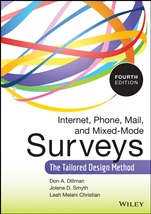
Internet, Phone, Mail, and Mixed–Mode Surveys: The Tailored Design Method
ISBN 9781118456149
Autor: Don A. Dillman, Jolene D. Smyth, Leah Melani Christian
Wydawca: Wiley
Dostępność: 3-6 tygodni
Cena: 476,70 zł
Przed złożeniem zamówienia prosimy o kontakt mailowy celem potwierdzenia ceny.
ISBN13: |
9781118456149 |
ISBN10: |
1118456149 |
Autor: |
Don A. Dillman, Jolene D. Smyth, Leah Melani Christian |
Oprawa: |
Hardback |
Rok Wydania: |
2014-10-21 |
Numer Wydania: |
4th Edition |
Ilość stron: |
528 |
Wymiary: |
260x178 |
Tematy: |
JC |
[This] is a great book. It is authoritative, engaging, easy to read, well integrated, and yet is specific enough to serve as a how–to manual for beginning researchers. Moreover, it is grounded in current literature, based on original and integrative theory, and is very up–to–date. Thomas M. Guterbock, University of Virginia Invaluable to any researcher seeking quality feedback from survey questions T his update of the classic text on survey design enables researchers to apply tried–and–true methodologies across multiple channels for the best possible response rates and most insightful feedback. At the center of this resource is the concept of tailored design, which strives to make surveys attractive and relevant while minimizing the burden on respondents. For students and professionals alike, This book offers the guidance necessary for conducting surveys via traditional paper and mail, but also includes information for the digital age with mobile devices, tablets, and online tools. With detailed case studies that take the content from theory to practice, this Fourth Edition provides detailed instruction on the latest survey design concepts. Learn: Strategies and tactics for determining the needs of a given survey, how to design it, and how to effectively administer it How and when to use mail, telephone, and Internet surveys to your maximum advantage Proven techniques to increase response rates The best way to obtain high–quality feedback from mail, electronic, and other self–administered surveys From a companion website with additional examples of questionnaires and contact materials from multiple surveys as well as other tools to help researchers design quality surveys For more than two decades, the previous editions of this book have defined excellence in terms of designing and administering research. This Fourth Edition builds upon that reputation with updated tools and strategies to help researchers generate useful.
Preface Chapter 1: Sample surveys in our electronic world Four cornerstones of quality surveys What is different about surveying in the 2010s? Why emphasize mixed–mode data collection? What is tailored design and why it is needed? Conclusion Chapter 2: Reducing people’s reluctance to respond to surveys Example of a survey with a high response rate Using social exchange concepts to motivate potential respondents Putting the parts together: some guidelines for applying social exchange Mixed–mode designs provide new opportunities for applying social exchange Returning to the WSU doctoral student experience survey: Why it obtained such a high response rate Conclusion List of guidelines Chapter 3: Covering the population and selecting who to survey Essential definitions and their use Current coverage and access considerations Common sampling frames and assessing how well they cover the population Probability sampling Post–survey adjustments and calculating sampling error Nonprobability sampling Conclusion Chapter 4: The fundamentals of writing questions Issues to consider when starting to craft survey questions The anatomy of a survey question and types of question formats Guidelines for choosing words and forming questions Conclusion List of guidelines Chapter 5: How to write open and closed ended questions Guidelines for writing open–ended questions General guidelines for writing all types of closed–ended questions Guidelines for nominal closed–ended questions Guidelines for ordinal closed–ended questions Conclusion List of guidelines Chapter 6: Aural versus visual design of questions and questionnaires The importance of visual design in self–administered surveys Visual design concepts and their application to surveys General guidelines for the visual presentation of survey questions Guidelines for the visual presentation of open–ended questions Guidelines for the visual presentation of closed–ended questions Guidelines for the visual presentation of questionnaire pages or screens A case study: the use of visual design principles to improve data quality in the American Community Survey Conclusion List of guidelines Chapter 7: Ordering questions and testing for question order effects Question order Testing questions and questionnaires Conclusion List of guidelines Chapter 8: Telephone questionnaires and implementation Types of telephone only surveys today Guidelines for designing telephone questionnaires Guidelines for administering telephone questionnaires Guidelines for establishing calling rules and procedures Quality control and testing guidelines for telephone surveys Conclusion List of guidelines Chapter 9: Web questionnaires and implementation Guidelines for designing web and mobile questionnaires Guidelines for web and mobile survey implementation Quality control and testing guidelines for web surveys Conclusion List of guidelines Chapter 10: Mail questionnaires and implementation Guidelines for designing paper questionnaires Guidelines for implementing mail questionnaires Quality control and testing guidelines for mail–only surveys Conclusion List of guidelines Chapter 11: Mixed–mode questionnaires and survey implementation When single–mode surveys are not acceptable Why consider a mixed–mode survey design Guidelines for designing questionnaires that will minimize measurement differences across survey modes Expanding the research base for designing mixed–mode surveys Guidelines for using multiple contact modes to achieve more effective communication with potential respondents Guidelines for providing alternative response modes From individual guidelines to practical study designs Guidelines for testing mixed–mode surveys Conclusion List of guidelines Chapter 12: Responding to societal change and preparing for what lies ahead Panels and longitudinal surveys Nonprobability surveys New mobile devices and technology Supplementing questionnaires with measurement using electronic devices Big data and administrative records Data security Specialized purpose surveys International and cross–cultural surveys The challenge of connecting with empowered but diverse respondents References Index
Don A. Dillman, P H D, is Regents Professor in the Department of Sociology and the Social and Economic Sciences Research Center at Washington State University. He received the Roger Herriot Award for Innovation in Federal Statistics from the American Statistical Association and the Washington Statistical Society in 2000. Jolene D. Smyth, P H D, is an associate professor in the Survey Research and Methodology Program and the Department of Sociology and is the Director of the Bureau of Social Research at the University of Nebraska–Lincoln. Leah Melani Christian, P H D, is a Director in Research Methods at Nielsen where her work focuses on panel recruitment and maintenance.
Koszyk
Książek w koszyku: 0 szt.
Wartość zakupów: 0,00 zł
Informacje


Kontakt
Gambit
Centrum Oprogramowania
i Szkoleń Sp. z o.o.
Al. Pokoju 29b/22-24
31-564 Kraków
Siedziba Księgarni
ul. Kordylewskiego 1
31-542 Kraków
+48 12 410 5991
+48 12 410 5987
+48 12 410 5989
Subskrypcje
Administratorem danych osobowych jest firma Gambit COiS Sp. z o.o. Na podany adres będzie wysyłany wyłącznie biuletyn informacyjny.
Autoryzacja płatności

Informacje na temat autoryzacji płatności poprzez PayU.

© Copyright 2012: GAMBIT COiS Sp. z o.o. Wszelkie prawa zastrzeżone.
Projekt i wykonanie: Alchemia Studio Reklamy