


Wydawcy
Katalog tematyczny
- Archeologia (109)
- Ekonomia, finanse, business (13704)
- Filozofia (1445)
- Historia (3040)
- Języki i językoznawstwo (2356)
- Lifestyle, hobby i rozrywka (475)
- Medycyna (9704)
- Nauki humanistyczne (4)
- Nauki o Ziemi i środowisku (2638)
- Nauki ścisłe (20412)
- Astronomia (294)
- Biologia (5119)
- Chemia (6540)
- Chemia analityczna (361)
- Chemia fizyczna (346)
- Chemia nieorganiczna (137)
- Chemia organiczna (535)
- Krystalografia (27)
- Minerologia (46)
- Fizyka (3309)
- Matematyka (4574)
- Nauki ścisłe, ogólnie (503)
- Nauki społeczne (8486)
- Nauki techniczne (13450)
- Prawo (1696)
- Publikacje informacyjne i interdyscyplinarne (1288)
- Religia i wierzenia (917)
- Technika komputerowa (4067)
- Zdrowie, relacje międzyludzkie i rozwój osobisty (657)





Informacje szczegółowe o książce
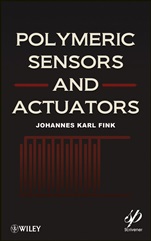
Polymeric Sensors and Actuators
ISBN 9781118414088
Autor: Johannes Karl Fink
Wydawca: Wiley
Dostępność: 3-6 tygodni
Cena: 952,35 zł
Przed złożeniem zamówienia prosimy o kontakt mailowy celem potwierdzenia ceny.
ISBN13: |
9781118414088 |
ISBN10: |
111841408X |
Autor: |
Johannes Karl Fink |
Oprawa: |
Hardback |
Rok Wydania: |
2012-12-07 |
Ilość stron: |
536 |
Wymiary: |
235x165 |
Tematy: |
PN |
The book exhaustively covers the various polymers that are used for sensors and actuators from the perspective of organic chemistry. The field of polymeric sensors and actuators is developing very rapidly as newly derived polymer materials are suitable for sensor technology. This book uniquely and comprehensively covers the various polymers that are used for sensors and actuators. The author has researched both scientific papers and patents to include all the recent discoveries and applications. Since many chemists may not be very familiar with the physical background as well as how sensors operate, Polymeric Sensors and Actuators includes a general chapter dealing with the overall physics and basic principles of sensors. Complementary chapters on their methods of fabrication as well as the processing of data are included. The actuators sections examine the fields of applications, special designs, and materials. The final chapter is dedicated to liquid crystal displays. The book concludes with four extensive indices including one special one on analytes to allow the practitioner to easily use the text. This comprehensive text examines the following sensor types: Humidity Sensors Biosensors Mechanical Sensors Optical Sensors Surface Plasmon Resonance Test Strips Microelectromechanical (MEMS) Sensors Piezoelectric Sensors Acoustic Wave Sensors Electronic Nose Switchable Polymers Audience The book has been written for industrial scientists/engineers, researchers and students in chemistry, polymer science, materials science, and electrical engineering.
Preface v 1. Sensor Types and Polymers 1 1.1 Sensor Types 2 1.2 Basic Polymer Types 19 2. Methods of Fabrication 41 2.1 Patterning Techniques 41 2.2 Coating Techniques 41 2 3 Electrospinning 46 2.4 Molecular Imprinted Polymers 48 2.5 Sensor Arrays 50 2.6 Ink J et Fabrication 57 3. Processing of Data 67 3.1 Evaluation of Multivariate Data 67 3.2 Response of a Sensor Array 68 3.3 Least Square Method 69 3.4 Linear Solvation Energy Relationships 70 3.5 Euclidean Fuzzy Similarity 71 3.6 Adaptive Resonance Theory 71 3.7 Modelling of Sensors 72 3.8 Bioinspired Models for Pattern Recognition 74 4. Humidity Sensors 77 4.1 Calibration 78 4.2 Capacitive Humidity Sensors 78 4.3 Resistance Type Humidity Sensors 81 4.4 Bragg Grating Sensor 87 4.5 Fiber Optic Sensor 92 4.6 Surface Acoustic Wave Based Sensors 92 4.7 Microwave Oven Humidity Sensors 96 5. Biosensors 101 5.1 Waveguide Sensors 102 5.2 Active Elements 104 5.3 Special Examples 107 6. Mechanical Sensors 129 6.1 Bending Sensors 129 6.2 Cantilever Type Sensors 130 6.3 Micromechanical Oscillators 130 6.4 Microelectromechanical Capacitor Array 132 6.5 Change in Thermodynamic Properties 132 6.6 Dielectric Elastomer Sensors 132 6.7 Polymers for Mechanical Sensors 133 6.8 Cardiac Infarction Monitoring 135 7. Optical Sensors 139 7.1 Conjugated Polymers 139 7.2 Amplified Fluorescent Polymers 145 7.3 Nanostructured Materials 160 7.4 Micelle–Induced Fluorescent Sensors 164 7.5 Fiber Sensors 164 7.6 Waveguides 167 7.7 Chiral Sensors 168 7.8 Molecularly Imprinted Polymers 168 7.9 Glucose Sensors 172 7.10 Hydrophilic Polymer Matrices 180 7.11 Special Analytes 181 7.12 pH Sensors 207 8. Surface Plasmon Resonance 225 8.1 Application as Sensors 225 8.2 Basic Principle 226 8.3 Theory 226 8.4 Waveguide Surface Plasmon Resonance 229 8.5 Nanoparticles 230 8.6 Surface Plasmon Resonance with Fibers 234 8.7 Combinations with other Principles 235 8.8 Examples for Use 235 9. Test Strips 241 9.1 Cations 241 9.2 Anions 243 9.3 Organic Analytes 246 9.4 Immunochromatographic Tests 254 9.5 Bacteria 260 10. Electrochemical Sensors 10.1 Basic Principles 269 10.2 Carbon Nanotube Field Effect Transistors 276 10.3 Chemical Resistors 277 10.4 Temperature Sensors 282 10.5 Smart Textiles 285 10.6 Molecularly Imprinted Polymers 287 10.7 Other Analytes 298 11. Piezoelectric Sensors 317 11.1 Theoretical Aspects 317 11.2 Automotive Applications 318 11.3 Paint Sensors 319 11.4 Molecular Imprinted Polymers 320 11.5 Food Safety Applications 322 11.6 Gases 323 11.7 Tactile Sensors 325 12. Acoustic Wave Sensors 331 12.1 Analytes 331 13. Electronic Nose 343 13.1 Methods for Validation 343 13.2 Medical Applications 349 13.3 Fire Detectors 355 13.4 Pipeline Inspection 356 13.5 Sensing Arrays with Colloidal Particles 357 13.6 Nanodisk Sensor Arrays 358 13.7 Food Testing 360 13.8 Soil Volatile Fingerprints 365 14. Switchable Polymers 369 14.1 Shape–memory Polymers 370 14.2 Chemical Switches 371 14.3 pH Sensitive Switches 384 14.4 Photo Responsive Switches 390 14.5 Molecular Gates 393 14.6 Thermofluorescence Memories 396 14.7 Electric and Magnetic Switches 398 14.8 Switchable Wettability 400 14.9 Multiple Responsive Switches 402 14.10 Environmental Uses 404 15. Actuators 415 15.1 Mathematical Model 417 15.2 Fields of Application and Special Designs 419 5.3 Materials 426 15.4 Carbon Based Conductive Materials 447 15.5 Medical Applications 452 15.6 Optical Applications 454 15.7 Pumping Applications 456 16. Liquid Crystal Displays 467 16.1 Basic Design 467 16.2 Polymers 471 16.3 Special Display Types 477 16.4 Viewing Helps 479 References 483 Index 487 Acronyms 487 Chemicals 490 Analytes 501 General Index 504
Johannes Karl Fink is a professor of macromolecular chemistry at Montanuniversität, Loeben, Austria. His industry and academic career spans more than thirty years in the fields of polymers, and his research interests include characterization, flame retardancy, thermodynamics and degradation of polymers, pyrolysis, and adhesives. Professor Fink has published several books on physical chemistry and polymer science including A Concise Introduction to Additives for Thermoplastic Polymers (Wiley/Scrivener) and Handbook of Engineering and Specialty Thermoplastics (Wiley/Scrivener).
“ It is certainly a way to learn about the vast array of materials and sensing techniques possible today.” ( IEEE Electrical Insulation Magazine , 1 March 2014)
Koszyk
Książek w koszyku: 0 szt.
Wartość zakupów: 0,00 zł
Informacje


Kontakt
Gambit
Centrum Oprogramowania
i Szkoleń Sp. z o.o.
Al. Pokoju 29b/22-24
31-564 Kraków
Siedziba Księgarni
ul. Kordylewskiego 1
31-542 Kraków
+48 12 410 5991
+48 12 410 5987
+48 12 410 5989
Subskrypcje
Administratorem danych osobowych jest firma Gambit COiS Sp. z o.o. Na podany adres będzie wysyłany wyłącznie biuletyn informacyjny.
Autoryzacja płatności

Informacje na temat autoryzacji płatności poprzez PayU.

© Copyright 2012: GAMBIT COiS Sp. z o.o. Wszelkie prawa zastrzeżone.
Projekt i wykonanie: Alchemia Studio Reklamy